

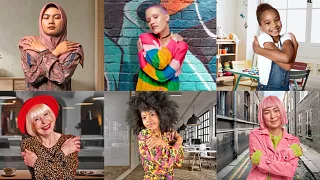
Every year 8 March marks International Women's Day to honor the achievements of women, raise awareness of gender inequality and discrimination, and promote global support for women.
What do you know about International Women's Day? We are ready to answer five important questions…
How long has International Women's Day been celebrated?
On February 28, 1909, the then-active Socialist Party of America celebrated the first National Women's Day in memory of the 15,000 women who protested in New York against harsh working conditions and lower wages.
In 1910, Clara Zetkin, defender of women's rights and head of the women's branch of the Social Democratic Party of Germany, proposed the idea of a world International Women's Day.
On March 19, 1911, the first International Women's Day was held, which was attended by more than a million people in Austria, Denmark, Germany and Switzerland.
It wasn't until 1975 that the United Nations recognized and began to celebrate International Women's Day. Since then, the UN has been the main sponsor of the annual event, calling on more countries to recognize «the acts of courage and determination of ordinary women who have played an outstanding role in the history of their countries and communities.»
For those who wonder and feel underprivileged (get over it), there is International Men's Day, which is celebrated on November 19 in more than 80 countries around the world. It has been celebrated only since the 1990s and is not recognized by the UN.
What is the symbol and color of International Women's Day?
The symbol of International Women's Day is the symbol of the female gender. It is usually accompanied by purple, green and white.
According to the International Women's Day website, purple stands for dignity and justice, green for hope, and white for purity.
«The colors came about thanks to the Women's Public Political Union (WSPU) in Great Britain in 1908,» the holiday's website explains.
Is it a public holiday?
In different countries this day marked differently.
International Women's Day is recognized as an official national holiday in Afghanistan, Armenia, Belarus, Cambodia, Cuba, Georgia, Laos, Mongolia, Montenegro, Russia, Uganda, Ukraine and Vietnam.
In some countries such as Albania, Macedonia , Serbia and Uzbekistan, it is combined with Mother's Day to emphasize the importance of women as mothers.
In China, many women are exempted from work for half a day, and the Italian holiday Festa della Donna is celebrated with the gift of mimosa flowers.
Why is this a historical holiday in Russia?
In 1917, as a result of the celebration of Women's Day in Russia, women received the right to vote.
That year, women in Russia marked this day with a strike for «bread and peace» to to protest World War I and advocate for gender equality.
Tsar Nicholas II was far from delighted and ordered the commander of the Petrograd Military District, Lieutenant General Sergei Khabalov, to restore order. After the abdication of the king from the throne, the interim government gave women the right to vote as a result of their protests.
What is the theme this year?
Since 1996, every International Women's Day has an official theme.
First theme , adopted by the UN in 1996, was «Celebrating the Past, Planning for the Future».
Last year's theme for International Women's Day was #Breakthebias, which highlighted the issues women face due to gender bias.
p>
This year, the International Women's Day website says it's #EmbraceEquity. According to the website, the emphasis in the 2023 agenda is that gender equality should be part of the DNA of every society: «It is very important to understand the difference between equality and equal rights.» The goal of the 2023 campaign theme #EmbraceEquity is to get the world talking about why equal opportunity is not enough.»
All images associated with this year's IWW feature the «embrace» gesture to promote equality.
Another highlight of this year is the UN theme «DigitALL: Innovation and Technology for Gender Equality», aimed at making people aware of the importance and contribution of digital technologies in uncovering issues of gender inequality and discrimination.
» From the early days of computers to the current era of virtual reality and artificial intelligence, women have made an invaluable contribution to the digital world we all live in,” the UN said. appreciated them.»