

Expert: “Demand for oil will decrease, the ruble will weaken even more”
The banking crisis in the US led to the collapse of the leading stock markets and indices, such as the American Dow Jones industrial index and the pan-European Stock 600 index. Despite the measures taken by Washington, the situation is far from being resolved. Whether it will be a remake of the events of 2008-2009, when the collapse of the Lehman Brothers bank set off the mechanism of a global recession, will be shown in the coming days. As for the consequences for the Russian economy, they are not yet obvious.
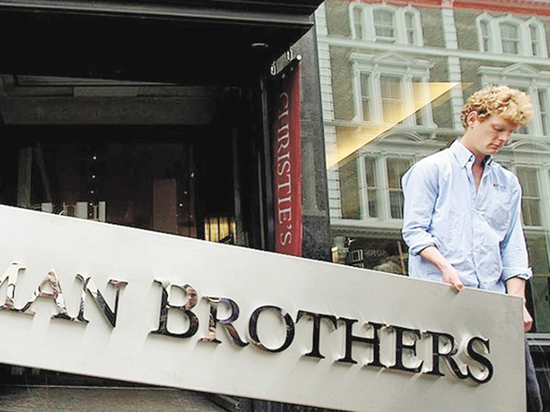 It will be repeated Is it now the situation 15 years ago, when the collapse of Lehman Brothers started the global crisis?
According to the winged aphorism, history repeats itself twice: the first time in the form of a tragedy, the second — in the form of a farce. The chief administrative officer of the «burst» now Silicon Valley Bank, Joseph Gentile, until 2007, served as chief financial officer at Lehman Brothers. The institution was one of the top 20 financial institutions in the United States.
How big is the force majeure event? Is it possible to draw direct parallels with the events of 2008? Rather no than yes, experts say. As of mid-February 2023, the number of banks in the United States is 4718. At the same time, a little less than 25 credit institutions are classified as “problematic” in America (three of them ceased to exist the other day). For comparison, after the global recession fifteen years ago, there were 884 problem banks in the country.
“I would not draw analogies with the sad story of Lehman Brothers,” says financial analyst Sergei Drozdov. — Then it was not a few regional banks in the United States that were hit, as they are now, but large systemically important financial institutions around the world, whose portfolios were overloaded with securities. They refused to lend to each other, mutual distrust sharply intensified, they began to get rid of shares en masse. And the Fed reacted belatedly, its employees ran to Congress, coordinated the necessary support measures for a long time. Today, this is unlikely to happen again, this was shown by the covid 2020, when the American regulator, taught by its own bitter experience, very quickly coped with problems in the economy.
As for the potential risks for Russia, Drozdov connects them primarily with oil prices. When stock indicators fall, oil prices come under pressure, the interlocutor of MK argues. These raw materials are traded through futures and options — these are highly volatile instruments that react sharply to any changes in the world of finance. And now, at the moment, thanks to the efforts of speculators, oil has fallen in price by 5%. But the point is also that the current quotes in the region of $80 per barrel of Brent include a risk premium associated with the geopolitical situation. If not for the armed conflict in Ukraine, oil would be cheaper. And by summer, the price of a barrel may rise to $100 if there are no serious shocks on world markets. So Russia need not worry in this case.
“In addition, if non-residents (foreign investors) were present on our stock market, as before, this would put pressure on the ruble and shares owned by banks — Drozdov says. — But today, stock exchanges in the Russian Federation are insured against falling precisely because there are no large foreign players on them, who often, feeling some kind of threat to themselves, immediately sold Russian bonds, bought foreign currency and pushed the ruble down. There is simply no one to do it now.”
According to the head of the analytical department of AMarkets Artem Deev, the current week will show whether the US authorities will be able to contain the panic and prevent the domino effect in the banking sector. Otherwise, Russia will face the long-term negative consequences of the crisis — in the form of a decrease in external demand for its energy resources and, accordingly, export earnings. Finally, the budget deficit will grow even more and the ruble will weaken.