

New Study: Hard Times Make Earth Happier
A new study shows that the COVID-19 pandemic has not affected the happiness of people around the world. The World Happiness Report notes a higher level of benevolence in all regions of the Earth.
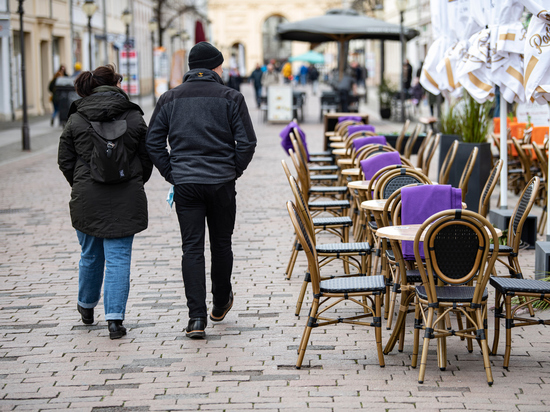
While the pandemic has claimed 6.7 million lives, locked down entire countries, and caused a global economic downturn, COVID- 19 did not affect the happiness of mankind, an international study showed, writes The Guardian.
Surveys of more than 100,000 people in 137 countries showed significantly higher levels of goodwill in all regions of the world than before the pandemic. And when people were asked to rate their lives on a scale of one to 10, on average people in 2020-2022 gave the same high ratings as they did in 2017-19.
The situation was slightly worse in Western countries and slightly better in the rest of the world, but overall, “undoubted difficulties were offset by an increase in the extent to which respondents were able to discover and share the ability to care for each other during difficult times,” according to the 10th World happiness.
Global rates of “unhappiness” have declined, and despite higher deaths among older people, people over the age of 60, on average, reported an improvement in their happiness compared to younger groups.
p>
“It's amazing,” admits John Helliwell, professor of economics at the University of British Columbia and co-editor of the report. “Ultimately, people discovered their neighbors. People began to correspond [with other generations] more regularly, so that the sense of isolation was not as strong as one might expect… Even in these difficult years, positive emotions remained twice as common as negative ones, and the feeling of positive social support turned out to be twice as strong as feeling alone.”
Acts of everyday kindness that have been shown to increase levels of happiness, such as helping a stranger, donating to charity and volunteering—activities spurred by quarantine needs—have now exceeded pre-coronavirus levels.
The study found that the effect of happiness from “there is someone to rely on in difficult times” increased during the pandemic, and since 80% of the people surveyed said that they really have someone to rely on, this had a significant effect.
In the overall table of the “league of happiness”, Finland remained in first place for the sixth year in a row, and Afghanistan remained in last place, which it held until the return of the Taliban (“Taliban” is a terrorist organization banned in the Russian Federation) in 2021. And in the UK, happiness rates have been declining for the fourth year in a row, The Guardian notes. The United Kingdom is in 19th place, sandwiched between Lithuania and the Czech Republic in the top 15% of the happiest countries, ahead of France but behind Germany, the US, Australia, Ireland and all the Nordic countries.
The Gallup poll evaluates what influences people's life evaluation scores. GDP per capita, social support, healthy life expectancy, freedom to make life choices, generosity, and freedom from corruption have been identified as major factors in happiness. However, some of those most affected by COVID, including the homeless and those institutionalized, were not included in the survey samples.
The study was compiled by economists including London School of Economics professor Richard Layard and Columbia University professor Geoffrey Sachs. This is perhaps the most high-profile recent attempt to quantify subjective well-being in an attempt to convince politicians to place more value on happiness. In the UK, the Office for National Statistics has been measuring happiness for more than a decade, The Guardian recalls.
Critics warned that respondents might mean something different than the researchers when answering questions, making global comparisons difficult. For example, some people in Finland suggested that “satisfaction” rather than “happiness” might be the best way to describe their condition.
The findings of the study demonstrate a clear contrast between the West and the “global South”. Fifteen of the 20 happiest countries are in Europe. They are joined by the United States, Canada, Australia, New Zealand and Israel, although the study was conducted before the latest outbreaks of violence in the Middle Eastern country. Thirteen of the 20 least happy countries were in Africa, along with Bangladesh, India and Jordan.
The study asks about recent emotions, both positive and negative. Positive emotions — laughter, pleasure and interest — were more than twice as common worldwide during the pandemic as negative emotions of worry, sadness and anger.
The study also showed that the Netherlands was a country where happiness distributed most evenly and there was the smallest gap between the happiest and least happy. People were generally found to be happier in countries where the happiness gap was smaller, though not in Afghanistan, where the happiness gap was almost as small as in the Netherlands, but poverty was so widespread. The African countries of Liberia, the Republic of the Congo and Mozambique had the largest gaps in happiness.
Ukraine is in 92nd place in the ranking, while Russia is in 70th place, writes The Guardian.