

The conflict in Ukraine is just one of the first points in the confrontation between the West and the Moscow-Beijing axis
“Wine mixed with the blood of the parties to the treaty is poured into a large clay bowl … Then a sword, arrows, an ax and a spear are immersed in the bowl. And then both the parties to the agreement themselves and the most respected of those present drink from the cup, ”this is how the famous historian of antiquity Herodotus described the diplomatic rituals adopted in his time in some territories. In the 21st century, everything is both much simpler and much more complicated.
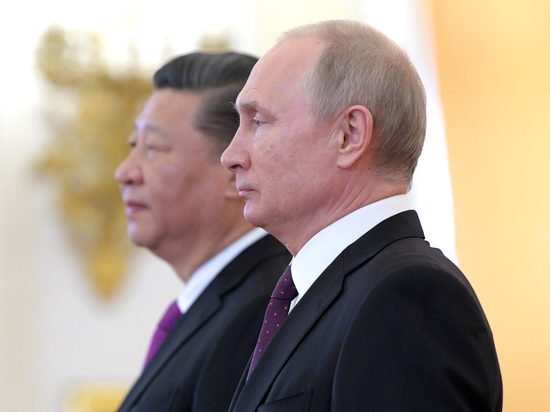
Chinese leader Xi Jinping at a solemn meeting with Vladimir Putin in the Kremlin: «I know that in the future the next presidential elections will take place in your country. Thanks to your strong leadership, Russia has made significant progress in recent years in achieving results and prosperity for the country. I am sure that the Russian people will strongly support you in your good undertakings.
Not quite a typical scene for the working apartments of the President of the Russian Federation — or, rather, typical, with the only difference that usually such words of support are spoken in the Kremlin by its owner, and not by foreign visitors.
February 2014. Vladimir Putin at a meeting with Egyptian Defense Minister Abdel-Fattah al-Sisi: “I know that you, dear Mr. Minister of Defense, have decided to run for the presidency of Egypt. This is a very responsible decision — take on a mission for the fate of the Egyptian people. On my own behalf and on behalf of the Russian people, I wish you success.
Why did the roles change this time? Not only and not so much because on the eve of President Xi’s visit to Moscow, the West, through a tribunal in The Hague, declared Putin “an outlaw president”; and the Chinese leader wanted to show that in his eyes this «law» is not a law. A demonstrative invitation from Vladimir Putin to visit Beijing this year would suffice for this. What Xi did on Tuesday.
GDP came to power in Russia much earlier than Xi Jinping in China. When, on December 31, 1999, the Prime Minister of the Russian Federation, Vladimir Putin, became also acting. president of the country, the future chairman Xi was just a graduate student at Beijing Tsinghua University and acting. Governor of Fujian Province.
But it just so happened that by March 2023, Xi Jinping had already gone through all the formalities related to being reappointed as China’s top leader, and Putin will have a similar (I’m getting better, far from similar, but with the same guaranteed result) procedure next spring. The signal that President Xi sent with his words of support, I would decipher as follows: we have a long, long road ahead of us. And we will definitely pass it together!
As I have written many times, Putin — a man with a keenly developed sense of his historical mission. Xi Jinping — he is also a man with a keenly developed sense of his historical mission. And it just so happened that the ideas of the two leaders about their missions and about the future paths of development of the two countries are not only very well combined with each other, but are complementary.
Russia has already openly «applied» to redefine the Western-centric world order. China is acting more cunningly: maneuvering, refraining from very abrupt movements, trying to preserve for itself a free hand and the advantages of peaceful development for a longer time. But in fact, your strategic choice — in favor of the struggle against the supremacy of the West in world affairs — Chairman Xi has already done the same.
Both countries regard each other as a strategic rear. And that, perhaps, says it all. The same Xi Jinping said immediately upon arrival, almost on the gangway of the plane: «China is ready, together with Russia, to stand guard over the world order based on international law.»
We are forced to recover again: of course, not all of them. We do not know (and it is not certain that we will soon find out) what seems to be important, relevant and burning now: the exact content of the talks between Putin and Xi on the Ukrainian issue. In the run-up to the arrival of the Chinese leader in Moscow, the United States bombarded every day the idea of an urgent ceasefire in Ukraine, which is the «supporting structure» of the country. Chinese peace plan.
But let's ask ourselves a question: is the idea of abandoning the attack on Artemovsk and so on really so sweet to the Kremlin? After all, «a respite for rearmament and regrouping of forces» in this case, not only Moscow itself will receive, as the West worries about this, but also official Kyiv. We do not know the answer to this question. But long before Xi arrived in Russia, he was definitely known in the top Chinese leadership. The level of confidence in the relationship between the two leaders does not allow us to draw any other conclusion here.
This raises an intriguing new question: what is China's peace plan for Ukraine really aiming at — to achieve a quick breakthrough, as has just happened, thanks to the efforts of Chinese diplomacy, between such traditional rivals as Iran and Saudi Arabia? Or Beijing calculated everything in advance and got exactly what it expected: a categorical Western “no”; in response to calls for an immediate ceasefire in Ukraine — they say, look, here they are the real enemies of the world and warmongers? If the second assumption is correct, what will Beijing's next move be? I would not count on China's complete solidarity with Russia's position. China will gain nothing in this case. And the Chinese do not have the habit of scoring goals against their own goals. But they have a penchant for long and multi-way political combinations.
Let's be honest: we can't calculate Beijing's next moves in relation to the conflict in Ukraine. But we can be sure: in the eyes of Putin and Xi, what is happening in Ukraine — this is just one of the reference points in that opposition to the Moscow axis – Beijing with the West, which is now only gaining momentum.