

How good is the situation on the Russian labor market
A record low unemployment in Russia was recently announced at a meeting of the government interdepartmental working group on the restoration of the labor market. In January 2023, the unemployment rate in Russia, measured according to the methodology of the International Labor Organization (ILO), reached 3.6% (less than 2.8 million people). At the same time, the figure for the registered unemployed was made public — 563.6 thousand people.
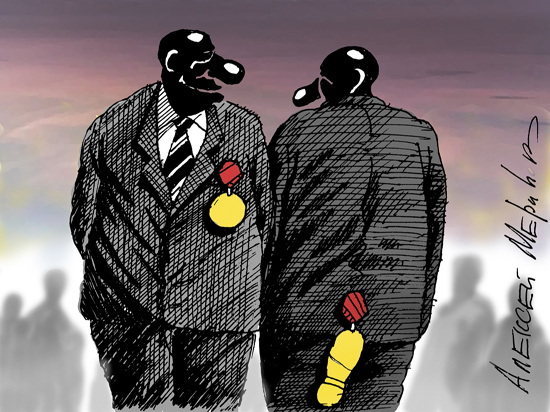
Is this a lot or a little? Why are the numbers different? What is this “ILO methodology”? And in general, is it worth rejoicing at record low unemployment, or is it not so simple?
To answer all these questions, let's go back to the numbers. The maximum unemployment rate (according to the ILO methodology) in Russia was registered in 1999, when it averaged 9.4 million people. That is, today's figure is less than the maximum by 3.4 times. As regards the number of officially registered unemployed, this indicator peaked in 1996 at 2.6 million people, which is 4.6 times higher than today's level. So indeed, unemployment is now at an all-time low.
With the registered unemployed, everything is more or less clear: those who have lost their jobs are citizens registered with state institutions of the employment service. But according to the ILO methodology, the unemployed include persons aged 15–72 years who, during the period under review, simultaneously satisfied a number of criteria. First, they did not have a job (profitable occupation); secondly, they were looking for work, that is, they turned to employment services, placed advertisements in the media and the Internet, directly turned to employers, used personal connections, etc.; thirdly, they were ready to start work within a week. Information on the number of such unemployed is prepared on the basis of sample sociological surveys.
As you can see, the indicators of registered unemployment and unemployment according to the ILO methodology differ significantly, since not everyone, for one reason or another, wants to be officially registered as unemployed. And it is right that the records are also kept according to the ILO methodology — this gives a more realistic picture of employment in the country.
Now about whether it is always unequivocally good when unemployment is low. Here it is necessary to pay attention to such an economic indicator as “the load of the unemployed population registered with the employment service bodies per 100 declared vacancies”. In January 2023, this figure, according to Rosstat, was 42 people. That is, there were almost 2.5 times more vacancies compared to the number of registered unemployed.
And what can be unemployment with such a shortage of personnel? Of course, it should be at an all-time low. What we are seeing. But for some reason, they don’t talk much about this, the other side of the low unemployment indicator. A year ago, in January 2022, the load of the unemployed population registered with the employment service was 47 people, and two years ago, in January 2021, this figure was 163 people. We see that the situation has deteriorated significantly over the past two years, and it’s time to talk about a real shortage of personnel.
One should not think that the shortage of personnel is felt exclusively in some rare specialties or in those employed in individual industries. It may seem that, for example, there is definitely no shortage of teaching staff in higher education institutions. But it is not. Moreover, the problem of shortage of personnel in this area is only becoming more acute. So, if in 2021 the share of actually occupied rates in the number of rates for the staff of faculty deans was, according to Rosstat, 90.8%, then in 2022 this figure dropped to 89.9%. The situation is even worse for teachers: if in 2021 the share of actually employed rates for this category of workers was 83.4%, then in 2022 this figure dropped to 80.7%. In general, the situation with personnel was deteriorating in all categories of the teaching staff, in all without exception, deans and teachers are no exception in this respect. Therefore, we have such a general picture, which was mentioned above.
The shortage of teaching staff is not just a shortage of personnel for a certain category of workers. Just professors and teachers should train qualified personnel, improve the professional level, but they themselves are not enough. It turns out symbolically, revealing!
Today we need to talk not so much about formally low unemployment as a great socio-economic achievement, but about the growing shortage of personnel. The shortage of personnel is a serious problem for the economy, which is under the pressure of unprecedented sanctions. The economy is already in crisis, and then there are serious resource constraints in the form of a shortage of personnel…
Why suddenly the problem of shortage of personnel became so obvious? There are several reasons, as is often the case. And far from «suddenly» this problem has escalated. The population of Russia has been rapidly declining in recent years. At the end of 2022, the natural decline in the population (the excess of the number of deaths over the number of births) amounted, according to Rosstat, to almost 600 thousand people. This, of course, is better than it was at the end of 2021 (then the natural decline in general exceeded one million), but still a lot.
Previously, the migration increase at least somehow compensated for the natural decline in the population, but in 2022 this almost did not happen. The migration increase, which amounted to 34.9 thousand people, compensated for the decrease by only 5.8%.
It can be stated that the times when Russia could hope for a migration increase in the labor market have actually passed. At first, the pandemic led to the fact that the excess of the number of arrivals over the number of those who left was not as large as in previous years. Well, then 2022 aggravated this problem, when there were already two emigration waves — after the announcement of a special operation and partial mobilization, respectively. By the way, the Bank of Russia also drew attention to this problem, which admitted in December last year that the current state of the labor market in Russia limits the possibility of expanding production against the backdrop of the events that have taken place.
But what about migrants? Why don't they save domestic employers? As mentioned above, the migration growth in 2022 was minimal, and only at the expense of the CIS member states. If specifically by country, it can be said that Tajikistan mainly ensured Russia's migration growth, which amounted to 87.3 thousand people in this country (according to Rosstat). And, let's say, in Turkmenistan there were minus 3.7 thousand people, in Uzbekistan — minus 8.5 thousand people, in Kyrgyzstan — minus 8.8 thousand people, in Kazakhstan — minus 4.9 thousand people, in Armenia — minus 10, 7 thousand people… This situation has developed mainly because in the spring of 2022, when the ruble collapsed, it became simply economically unprofitable for migrants to work in Russia. Then, as the ruble strengthened, the situation began to change, but the year as a whole still turned out to be a failure. Plus, Russians also left the country in 2022.
If you try to objectively assess the significance of the record low unemployment rate, then you need to look, for example, at the so-called underemployment. If a person works for 0.25 wages, then formally he is not unemployed, but is he much different from that? But such a practice, usually forced, is not so rare in our current economic realities. The current shortage of personnel, which largely determines the low unemployment rate, is a serious problem.
When the current record low unemployment rate in Russia is assessed in these circumstances, the attitude towards it becomes less enthusiastic. In general, even the experience of the planned Soviet economy, in which, as you know, there was no unemployment at all, clearly demonstrated that general employment does not provide any guarantees for the socio-economic well-being of the country.