

Expert: «Product range will be reduced, prices will rise»
It seems that Russia is losing one of the largest channels of parallel imports, with which there have been no problems so far. From April 1, Kazakhstan will launch an online tracking system for goods delivered to the country for subsequent re-export. The goal is obvious — to avoid secondary sanctions and not to quarrel with the West. The authorities in Astana took this painful step for Russian business and the consumer market after the recent visit of US Secretary of State Anthony Blinken.
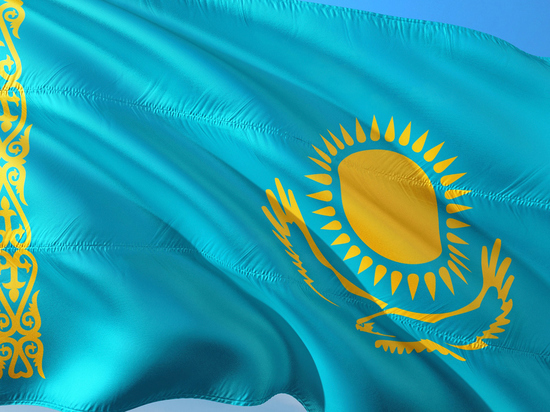
According to the Financial Times and Eurasianet, citing senior Kazakh officials, the system «will allow real-time tracking of the entire chain of movement of goods from border to border.» As one interlocutor noted, “Our government has repeatedly stated that Kazakhstan does not impose any restrictions on trade with Russia. However, it will not allow circumvention of Western sanctions and will not become a platform for such circumvention.”
According to the Bureau of National Statistics of Kazakhstan, in 2022, exports to Russia increased by 25% (from $7.02 to $8.78 billion) compared to 2021. In particular, the number of washing machines imported from the country to the Russian Federation has increased from almost zero to 100,000. And the supply of advanced semiconductors jumped in price terms from a miserable $12,000 to a quite serious figure of $3.7 million.
No less curious statistics are provided by Bloomberg: in the first half of last year, Kazakhstan's demand for electric breast pumps from the European Union grew by 633%, although the birth rate in the Central Asian republic decreased by 8.4%. Well, in January-August, Russia purchased these Western devices (for expressing breast milk) from a neighbor in a volume that more than doubled the level of purchases for the whole of 2021.
According to FT and Eurasianet interlocutors, in recent For weeks, Russian companies have literally flooded their partners in Kazakhstan with requests for supplies of a wide variety of products — from telephones, bearings and materials for making bank cards to aircraft parts, turbines and rare earth metals.
At the same time, Europe and the United States are seriously concerned about the fact that their exports to Kazakhstan, Armenia, Kyrgyzstan and Turkey have grown sharply simultaneously with the collapse of direct Western supplies to the Russian Federation. Russia's neighbors «suddenly have a lot of new needs», –EU special envoy for sanctions David O'Sullivan sarcastically remarked. It seems that the February visit to Astana of the US Secretary of State Anthony Blinken was devoted to the solution of this very issue. The point is obvious. It is unclear, however, how effective this system of online tracking of goods “from border to border” will be.
“Kazakhstan exports to Russia primarily Western-brand cars and other vehicles, followed by chemical products, –says the head of the analytical department of AMarkets Artem Deev. – It is likely that a reduction in supplies may occur in these segments — that is, fewer cars of German, American, Japanese production will enter our country.
But the purely technical issues related to the control of such operations are not yet fully understood. To bypass government restrictions in Kazakhstan, there are many different schemes. After all, we are talking about a super-profitable business for a huge number of local firms and individuals.”
In addition, Deev recalls, Russians can buy a new car in the Kazakh city closest to the border: this is a purchase from the owner, not from the salon dealer company. Such deals, as they were «in the shadows», will remain.
“According to the European Bank for Reconstruction and Development (EBRD), exports from Europe to the countries of Central Asia and the Caucasus of goods subject to anti-Russian sanctions grew by 30% more than in the case of other products, – says TeleTrade analyst Vladimir Kovalev. – Thus, Kazakhstan was included in the new chains of parallel imports.
Introduced from April 1 by Astana, the system of online tracking of goods will most likely lead to a reduction in the volume of deliveries to Russia, as well as the range on a number of positions. Prices will also rise. Well, the Russian business will try to find other ways to import the necessary goods through third countries. First of all, through Armenia, Kyrgyzstan and Uzbekistan, which are members of the EAEU and its customs union. These channels still exist, but their capacity will need to be increased.”