

A human rights activist spoke about how not to fall for the bait of financial swindlers and greedy bankers
Financial fraud continues to flourish in the expanses of our country. Millions of people fall victim to them every year. Although the Central Bank, Rospotrebnadzor and the Ministry of Finance are making a lot of efforts to protect the rights of borrowers — from training programs on financial literacy to orders and bills aimed at protecting the rights of borrowers. However, there are still many unscrupulous practices in lending and providing other financial services. It is surprising that sometimes gullible citizens are «undressed» not only by swindlers-criminals, but also by credit organizations themselves. Dmitry Yanin, Chairman of the Board of the International Confederation of Consumer Societies (ConfOP), spoke about this in an interview with MK.

“There are a lot of problems in the lending sector right now. The fact is that the fines that regulators impose on market participants are meager compared to the profit that banks receive by infringing on the rights of borrowers. A typical example of such a violation of consumer interests is the imposition of additional services: from insurance to the sale of other products, including investment accounts, legal services, to those who need money and apply to a bank or MFI. This problem, despite fines, penalties and sanctions against financial organizations, despite all attempts by human rights activists to draw attention to violations, despite the requirement to adopt laws prohibiting the imposition of additional services, remains relevant to this day.
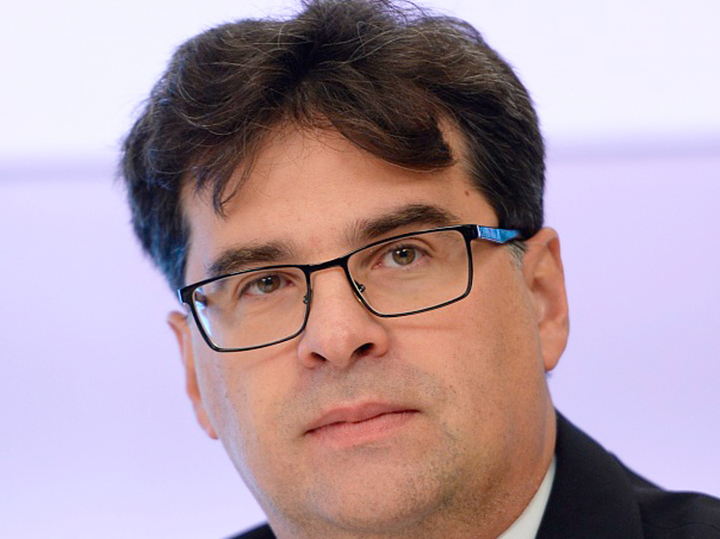 Dmitry Yanin.
— Changes in legislation are blocked by interested market participants. At the same time, for the insurances sold together with loans, which are included in the package with the main contract, there are practically no payments to customers who really got into difficult life circumstances later — we studied this issue. An attempt by people to avoid the imposition of insurance leads to an increase in the cost of credit. Sometimes monthly payments increase many times if the client takes out a loan without insurance.
— The only way to change existing practices is through legislation. It is necessary to introduce a complete ban on issuing loans with an additional burden, whether it be insurance, legal services or any other service. If the borrower wants, he can insure his life in the company where the conditions are most suitable for him. To understand the scale of interest of financial organizations in maintaining the existing practice, I will give one figure. From the sale of insurance under a loan agreement, the bank receives on average 80% of the cost of the service that it imposes on the consumer.
— Exactly! And we checked the usefulness of this service: we analyzed how much of the money collected from insurance was returned to consumers. According to our estimates, the level of return on bancassurance to customers does not exceed 5%. And the remaining money that the citizen paid remains with the banks. For comparison: according to OSAGO, an average of 80% of the collected premiums are returned to people. We believe that the imposition of additional services is one of the main problems of the lending market. It is very serious because it is about what millions of Russians use.
Of course, but there are others. For example, the so-called zero or low-interest mortgage. Such programs created an «overheat» in the real estate market last year. Builders and developers have played a big role in this. They began to actively promote housing at subsidized rates. Recall the so-called mortgage programs from the developer at 0.01%, 0.1%, 1.99% per annum for a certain period or even for the entire period of payment of a housing loan. What's the catch here? The builder or developer, together with a partner bank, offered to purchase real estate at a reduced interest rate, but — which, of course, the advertisement did not report — for a higher cost per square meter. The original price of such an apartment was greatly inflated. If a person acquires such housing, and then something happens in his life, then he will not be able to sell it as expensively. As a result, the borrower may find himself in a situation where he sold the apartment, say, 30% below the market value and still owes the bank.
The Central Bank of the Russian Federation also sees this problem and is making efforts to stop the lawlessness. Here, I hope, restrictions will be adopted that will not allow banks to camouflage a rather expensive loan product into an affordable program for borrowers with low incomes, to overstate the cost of an apartment through an interest rate with the help of a developer. This scheme should be banned. In addition, it is necessary to tighten the conditions for issuing mortgages and, in general, the conditions for issuing loans to borrowers with a high debt burden.
— A person does not have to pay 70-80% of their monthly income to banks on loans. It is not normal. In international practice, a debt burden that exceeds 30% of the monthly budget is already considered unacceptable.
I will note some more tricks that allow you to earn extra money on the borrower. For example, the inclusion of the same insurance in the body of the loan. As a result, a person has to pay not only the cost of the policy, but also the interest that has accumulated. It is not uncommon for people to be included in collective insurance programs, which can then be very difficult to refuse.
It is also not easy to return money for insurance in case of early repayment of a loan. Profit from the sale of services imposed upon lending by banks is extremely high.
— Approaches in lending should be changed. Such an attempt was made several years ago. There was an idea to prohibit the sale of any additional services when issuing a loan. But already at the stage of consideration in the State Duma, the banking community convinced the deputies of the need to adopt the law in this edition.
If the Central Bank of the Russian Federation wants to solve problems in the field of lending, then it will have to fight the banking lobby and insist that the deputies return to the wording that was originally contained in this bill and prohibit any other sales when issuing loans.
p>
Today, the result of the unscrupulous practice of issuing loans is that the monthly payments on loans from Russians are much higher than declared. This leads to conflicts in debt collection, where the leader in the number of unacceptable practices is microfinance organizations that do not comply with the legislation governing the collection rules.
— Again, with the peculiarities of Russian legislation. Credit institutions always have the opportunity to declare that the money was transferred to the fraudster through the fault of the client, he did it voluntarily and did not adhere to the minimum security requirements. It is easy for banks to forward all questions to the police: they say, when swindlers are detained there, then compensation will be made.
— Division of responsibility by banks. Of course, people should be advised to be careful and learn financial literacy. However, the result with payments to victims of fraudsters will change if laws are passed, according to which banks will need to identify in more detail the senders and recipients of the payment, establish a clearer procedure for online transfers for customers. If banks immediately return money to the victims, and then look for criminals on their own, then they will very carefully monitor online transfers. They will find an opportunity to call back a client who has made a suspicious payment, analyze the typicality of his transactions and behavior, complicate identification, promote the setting of limits on transfers, lending and online transactions, and impose a moratorium on suspicious transactions until the circumstances are clarified. Market-wide measures can also be proposed.
— For example, introduce a moratorium on all calls, including marketing calls to bank customers by the credit institution itself, and warn all customers about this. Then most citizens will realize that if they call «from the security service of the bank», then these are definitely scammers, because no bank has the right to call any client for a certain period of time.
— It depends on how the mechanism for generating this database of the Bank of Russia will be arranged, how efficient it will be and whether it will lead to the fact that fraudsters will overtake the regulator, and conscientious consumers will face a lengthening of the receipt of services. I would not like to end up with a situation where conscientious clients will receive their usual services for longer, and fraudsters, due to their efficiency, will learn to bypass the created prohibitions. How much this initiative will help people return money more often is not yet clear.
“This is not only a problem for Russia. Education is important and necessary. But it is not worth expecting that the desire to improve financial literacy will cover all segments of the population. One should accept the fact that a certain part of Russians are simply not interested in the topics of cybersecurity, personal data protection, even when it comes to their own wallet. It is necessary to look for other methods of solving the problem. It is necessary to achieve greater responsibility of banks, to work on increasing payments to victims of fraudsters who used social engineering methods. As soon as this is introduced, banks will change the approach to working with clients and their transfers, up to securing personal consultants.
— For example, aged people often become victims of swindlers. They are vulnerable to crooks using social engineering techniques. You can introduce card limits for online transfers or attach a special assistant to pensioners who would call back in case of a strange card transfer. Let me give you an example from our practice. We were approached by an elderly woman who transferred money to phone scammers. She has a higher education, in principle, she has always been very careful about finances. When we asked her why she decided to transfer only one phone call, the answer was curious: “I got the feeling that I was taken care of. This is so lacking.» The fraudster told her: «They want to steal all your money, we want to protect your savings.» And she took it as a concern…
— Any incoming call on the topic of finance should be perceived as fraudulent. The speaker's haste and the requirement not to tell anyone about what is happening should be especially alarming. If they begin to persuade you to make a transfer immediately and keep all information secret even from loved ones, if they send any SMS with links and ask you to follow them, insist on an immediate withdrawal of money from an ATM — immediately hang up. Then you can call your bank back and clarify what actually happened.
— Solving problems with imposed additional services when lending. In addition, MFIs in their current form should be banned immediately. The state continues to encourage usury by keeping loans at rates around 300% per annum as part of a legal practice. If the regulator is not ready to completely ban the activities of such companies, then it is necessary to at least bring their work closer to the standards of developed countries. The marginal rate on microloans should be limited to 50-60% per annum.