


«Pensions should be indexed according to the dynamics of wage growth, then they will be higher»
Discussions about the pension reform, which has been going on in Russia for four years, do not stop to this day. Many politicians and deputies believe that it did not give a visible economic effect. And they are asking the government to return the old retirement age to us again. RANEPA scientists summed up the interim results of the past four years of pension reform, identified the strengths and weaknesses of this undertaking by the authorities.
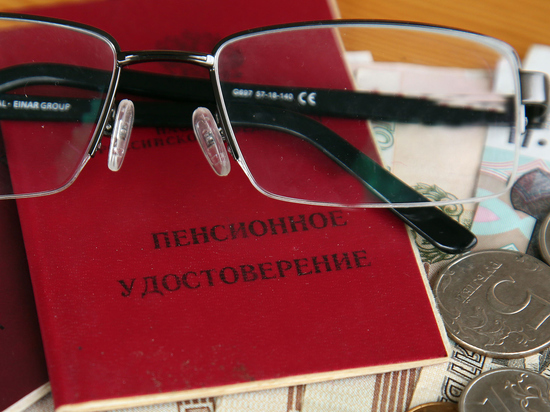
Recall that the pension reform started in Russia on January 1, 2019. And it consisted, in fact, in one point: to increase the age of entry to a well-deserved rest. For men, from 60 to 65 years, and for women — from 55 to 60. As with every reform, the pension reform, of course, has its pros and cons. Among the undoubted positive, the authors of the study note the increased economic activity of the older generation and the reduction in the burden on the pension system itself. And in terms of the negative, an increase in unemployment of the older generation and wage inequality is recorded.
Putting, so to speak, on the scales of history the “pluses” and “minuses” of the reform in order to check in which direction they will swing, economists are in no hurry. It's just that the majority of votes indicate that it is useful and timely.
Let us also refrain from evaluations, and rather turn to dispassionate figures. If in the period from 2007 to 2018 the number of pensioners increased by almost 7 million people, to 36.7 million, then only over the past year this army decreased by 2.5 million, and amounts to 34.2 million. For the authorities, one can say a clear plus: direct savings in pension payments.
On the other hand, among citizens of pre-retirement age, the number of unemployed has increased as expected. In men aged 60-64 years, by almost 1%, and in women aged 55-59, by 0.5%. All of them, of course, are listed on the labor market as combat units, therefore they receive unemployment benefits in employment services.
Here I would like to note that the reform itself is unlikely to have increased the «economic activity» of veterans, such as , labor productivity increases with the modernization of production. There is no merit here, everything happened mechanically. A man at the age of 60 did not go on a well-deserved rest, but continues to work, as if he does not need a pension.
To date, this is the sharpest public reaction to the government's decision. Here we can also add non-indexation of pensions for workers, but the decision on it was made back in 2016 and it has nothing to do with the reform.
At the same time, according to the plan of the authorities, an increase in the age limit opened up wide opportunities for a sharp annual raising pensions for Russians.
For example, last year, insurance pensions in the country increased by almost 20%: from January 1, 2022, for the unemployed by 8.6%, and from June 1 by another 10%. According to Rosstat, in January of this year, the average pension was 19,322 rubles.
According to , the number of pensioners has decreased in the country, which has led to a reduction in the cost of their maintenance. However, there was no breakthrough in the provision of pensions for Russians, and there was no surge in the growth of payments either.
— The replacement rate for lost earnings should be at least 40%. It's minimum. Today it is in Russia at the level of 38-39%, — the professor explains.
— Pensions are guaranteed by the state, it would just take more money from the federal budget to pay them.
— It won't work. There is a rather acute problem of shortage of labor resources. Over the past 5 years, the reduction of the labor force in the country amounted to 1.2 million people. If we take such a step, who will work and where? So you can forget about the old retirement age.
— It is necessary to introduce a system in which everyone pays insurance contributions to the pension fund. We have a lot of perks. The self-employed are exempted from contributions, and there are about 6 million of them in the country. Most likely, in the future they will receive not an insurance, but a social pension from the federal budget — a lower one. These people need to be integrated into the pension system.
There are tax breaks for IT specialists, small businesses, agricultural workers… This reduces the amount of insurance contributions received and the pension fund is increasingly dependent on the federal budget.
It would be possible to cancel these benefits, but reduce the rate of deductions from the employer from 22% to, say, 14-15%. But so that everyone pays.
And the second point: the indexation of pensions should be carried out not according to the dynamics of the subsistence minimum, but according to the dynamics of the growth of average wages. Then pensions will be higher.
— I would not touch this topic at all. I agree that it is unfair not to index the pensions of some of the older people who honestly earned these pensions. But with limited resources, choices have to be made. The state supports non-working pensioners, provides them with a certain standard of living. In any case, a working veteran has a higher income than a non-working one.