


The depreciation of the ruble did not lead to queues, but this is not the problem
Since the beginning of the year, the ruble has fallen by 12% against the dollar and, judging by the latest news, this is not the limit. Since the opening of trading on Friday on the Moscow Exchange alone, it has lost almost 0.9% of its value and has broken through the psychological mark of 83 rubles per unit of US currency. The last time the Russians saw this was a year ago, on April 6, 2022. The euro is also strengthening and has already come close to the levels of 12 months ago — to 91 rubles per unit of the European currency. «MK» decided to see how the collapse of the ruble is reflected in the activities of bank exchangers. The correspondent visited several exchange offices in the capital.
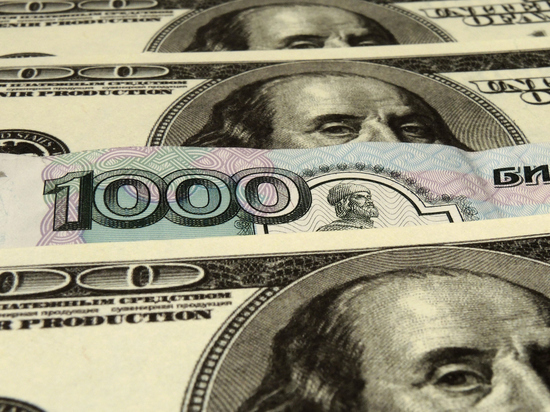
During our «raid» we visited 8 exchange offices in bank branches (other exchangers are officially prohibited): the picture turned out to be very mixed. In the branches of the largest state-owned banks, you can buy both dollars and euros. True, the rate there is very different from the official one — by an average of 2.5-3 rubles up. If the achievement by the dollar of the “psychological” mark of 82 rubles was an event on the Moscow Exchange, then in the largest bank in the country the US dollar in the branch outside the Garden Ring is sold for 85.16 rubles, in the office a little closer to the center — for 85.25 rubles, and far from center somewhere at 85.04 rubles. At the same time, it is not profitable to sell dollars there, since the purchase price by the bank is approximately 9 rubles lower and amounts to 76.16, 76.06 and 78.9 rubles, respectively.
— Yes , Certainly. We also have the euro, if you're interested, — the teller said with a sweet smile.
The second largest state-owned bank in Russia also has dollars and euros, and even the exchange rate there is more favorable for the buyer. Cash dollars can be bought for 84.43 rubles per unit. But if you want to sell American money, then you will be calculated at 79.92 rubles per dollar. The situation is similar in a large state-owned bank associated with agriculture. There are no queues at the exchange offices, the operators are sure that everything will be just as calm in the future.
Cashiers of small private banks show more doubts. There is currency there, but when communicating with visitors, they give out much more emotions.
— Yes, now I can sell you $ 1.5 thousand, but I don’t know what will happen in May. Now there is no hype, but there is still uncertainty, so buy, don’t put it off for later, the exchange rate is growing,” an aged teller carefully advised me.
However, not everyone has a good situation with cash currency. So, in the branch of an average bank with foreign participation in the capital, neither dollars, nor euros, nor other monetary units were available. They simply don’t sell currency there, they only buy it from citizens.
It is curious that there was no currency in the branch of the largest commercial bank in Russia either, although the office visited by the correspondent was not far from the center.
>
— We sell only the currency that we received. Like everything else, really. No one has sold this week yet. On the last one, yes, it was, but everything was already sold out, — said the teller to a man in a leather jacket and jeans, who was just trying to buy dollars.
— Will there be money in a week? My wife and I are flying to Egypt at the end of April and we want to take at least $700 with us,” the man explained.
It's hard to say, it's unpredictable. Sometimes in one day several thousand are brought and then they lie, and sometimes for 100 dollars a week someone changes and that's it. You come in and ask when you can, then there are more chances to find currency at the cash desk, — the employee at the window advised.
— And in your other branches, can you tell me?
— I can’t , we do not have a single database where you can see which branch has currency and which does not. Only if you yourself go around and ask. The nearest branch is 7 stops away. I can give you an address. Need?
But the man thanked me and refused.
— A very strange situation, to be honest, — he complained, turning to me, — Such a well-known bank, but they cannot establish a unified system of information. It seems to be profitable for them, they sell above the exchange rate, I would go and buy it right now just to close the issue, otherwise — well, they …
At the same time, as it turned out, the man was already in another large bank, but the dollar selling rate did not suit him there (he was offered to buy American currency at 85.9 rubles), he decided to look in other places where at least below 85 rubles per dollar , and judging by our conversation, failed. He also noticed that there was no queue at all at the branch of another bank: he was the only client there who came with a similar question.
Retail selling rates of currencies by banks are almost always higher than exchange rates. “First of all, banks themselves can sell currency on the exchange at its exchange rate, and it is not profitable for them to do this at a lower price or even equal to the exchange price, since they incur other costs for currency transactions — for premises, equipment, software, salaries …” — explains the difference in the stock exchange and banking rates TeleTrade analyst Vladimir Kovalev. And the physical supply of hard cash in the country is limited, because due to sanctions, banks cannot import them, which also plays a role, the expert is sure.
And yet, none of the experts talk about the shortage of cash currency. “There are no queues at the exchange offices,” said Maxim Osadchiy, head of the analytical department of BKF-Bank. According to him, in large banks spreads (the difference between buying and selling currency) are wide because these credit institutions abuse their dominant position. As a rule, the larger the bank and the wider its network, the larger this indicator. “In conditions of turbulence in the financial market, spreads are expanding,” the expert noted. “The embargo on the import of cash dollars and euros into Russia, introduced by the US and the EU, respectively, continues in March last year.” In his opinion, the spread difference in the market as a whole is small. According to Moscow banks, the best purchase is 82.05 rubles per dollar, the best sale is 82.79 rubles, the exchange rate is 82.4225, the expert gave an example.
In his opinion, the best savings strategy is —< /span> is to keep 30% in rubles, dollars and euros, and the remaining 10% in gold. This approach will allow any Russian citizen not to react to negative market news about a decrease or increase in the exchange rate. “If you are not a professional, then you can’t guess whether you need to buy or sell, so it’s better to divide. Osadchy added. “But there was a nuance: if you can keep rubles on a deposit in a bank or buy ruble bonds, then after February 24 last year, keep dollars and euros, if you live in Russia, it’s better to just cash.” They will not bring interest income, but they will be more whole, they will not freeze, the expert said.