

Exporters will have to sell raw materials abroad for a long time
The unexpected decision of OPEC + to reduce oil production, taken earlier this week, was perceived by the West as an expression of support for Russia, whose export earnings our enemies are trying to undermine them with their sanctions. However, it did not help our economy too much. The ruble continues to depreciate, domestic exporters are forced to sell «black gold» at significant discounts, and the budget deficit has reached almost 3 trillion rubles in three months.
On how recent events in the global oil market may affect the situation in Russian economy, MK asked Oleg Zhuravlev, an expert in the fuel and energy sector, Doctor of Science, CEO of Wormhols Implementation.
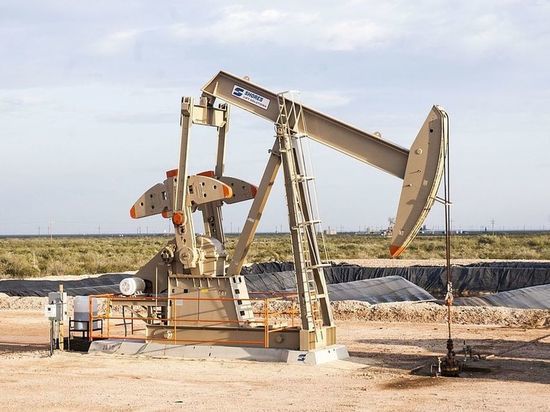
< p>— Immediately after the decision of the Middle Eastern countries to reduce production capacity, the cost of «black gold» rose by about 5-7%, exceeding $85 per barrel, and has been at this level for a week now. For Russia, an increase in quotations of raw materials is clearly beneficial, since such a trend in the future will reduce the budget deficit and give businesses a chance to increase export earnings.
In the coming months, it is worth waiting for the strengthening of prices for hydrocarbons. In the second half of the year, the price of Brent could sustainably fix above $90, as against the backdrop of OPEC + production cuts, a simultaneous increase in demand from China is expected, the economy of which is gradually recovering. It is obvious that after the removal of anti-COVID restrictions, energy consumption will increase in the Middle Kingdom, which will force price growth on commodity exchanges.
Another plus is the fact that with a decrease in production and a possible shortage of oil supply on the international market, there is a possibility of a reduction in the discount of the Russian brand Urals in relation to the reference grade Brent, which domestic producers have to give to Asian buyers to increase the attractiveness of their product, for political reasons included in the list of «toxic» products.
According to industry experts, in March the discount of the main Russian export variety to the North Sea brand decreased to $29.6 per barrel. This is already good. Moreover, for example, it recently became known that Japan, which is a member of the G7 and previously joined the introduction of a “ceiling” for Russian oil prices (approved at $60 per barrel), continues to buy our raw materials at almost $70 , which makes the United States extremely outraged.
—The price ceiling for Russian oil has no economic prerequisites, since the decision to introduce it is purely political and is aimed at reducing our country's oil and gas revenues. A number of Western states express a desire to further weaken the financial situation of the domestic economy.
In particular, Poland and the Baltic states, which have refused to buy «black gold» from our companies, are demanding a lowering of the «ceiling». However, most of the countries that have joined the pressure of sanctions are not yet in a hurry to follow the lead of Moscow's most implacable opponents. If the «ceiling» drops below the production cost, as well as logistics and transportation costs, then the supply of raw materials from the West Siberian fields will stop.
Our country has already warned importers that it will not supply oil to those buyers who agree with price restrictions. Then there is a significant risk of increasing the shortage of hydrocarbon supply in the world market. The decision of OPEC + to cut production clearly demonstrated the threat of such unfortunate consequences for the majority of buyers, which will definitely not help reduce inflation and overcome the crisis either in the US or in Europe.
However, one should not hope for an increase in the «ceiling» of prices for Russian oil either. The next package of sanctions that the collective West is preparing is aimed at combating ways for Russian exporters to circumvent existing restrictions. This indicates that the anti-market limits have been introduced in earnest and for a long time. There is no reason to expect any concessions in the near future.
Secondary sanctions threaten importers who continue to cooperate with Russia. As long as the opportunity remains, China and India will not miss their advantage and will buy oil from Russia at the highest possible discount. For these reasons, the discount is likely to decrease slightly, if at all.
— The OPEC+ countries act within the framework of their interests, which are dictated not only by economic factors. Most likely, oil-producing countries feel the injustice of their position as technological, financial and resource colonies. The position of the White House in the Middle East has shaken a bit due to the deterioration of the economy in the United States and the expansion of energy consumption from China and India, on which the producers of the Persian Gulf are already ready to make a new promising bet.
Saudi Arabia's refusal to increase production in favor of Washington's interests makes it clear that the representatives of the American authorities have fewer and fewer allies who are ready to act to the detriment of their own interests.
However, Western countries, of course, should not be discounted. Rising energy prices will remain dependent on higher interest rates in the US and Europe, which continue to constrain business activity in many developed countries. The decision of OPEC +, first of all, is dictated by the desire to maintain oil prices at an acceptable level for producers. It is unlikely that the Saudis or other members of the alliance are trying to raise the cost of a barrel to sky-high levels that can scare away buyers. At the same time, no one now doubts that the Middle East and Russia share a common goal of stabilizing oil prices and preventing a collapse in quotations in the near future.
— The strengthening of the ruble depends not only on Urals prices, but also on many other factors, such as the end of the tax payment period, the sale of business by foreign companies that left the domestic market, the imbalance of imports and exports, the government's foreign exchange operations, and much more. Therefore, I would rather talk about how oil revenues affect not the exchange rate of the national currency, but the state of the federal budget.
— Since April, Russia has included a directive method for determining the maximum discount for Urals to Brent when calculating taxes. From month to month, the size of the discount should decrease so that the cost of our barrel approaches the level of oil prices included in the budget. According to the new formula, the quotes of Russian raw materials from July 2023 should not fall below the cost of Brent minus $25 per barrel.
Meanwhile, the introduction of the Urals directive discount to Brent when calculating taxes will increase pressure on companies that will be forced to maneuver between profit and increased tax burden. For this reason, one should not expect a significant change in the situation with the budget deficit, which, however, as the Ministry of Finance announced the day before, decreased slightly in March to 2.6 trillion rubles.
The government is already doing its best to mitigate the consequences of negative external factors on ordinary Russians. There are calculations that the new formula for determining the price of oil proposed by the government will bring the budget up to 500-600 billion rubles of additional oil and gas revenues. However, even this amount will not patch up all the holes in the treasury, so you should not count on a surplus yet.