


Beijing has sent another powerful signal to the West
Already next Sunday, the Chinese Defense Minister will arrive in Moscow on an official visit — in previous years, such news would have been classified as on-duty, even routine official chronicles. However, such news against the background of SVO is something fundamentally different.
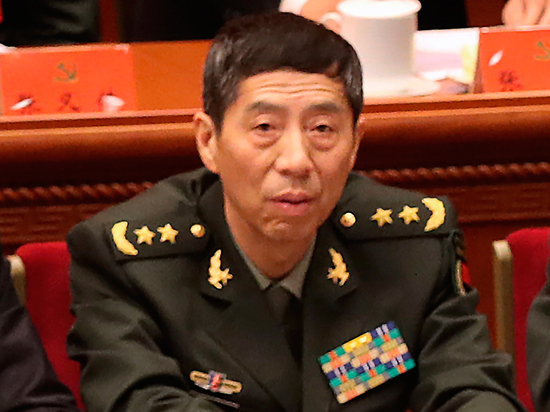 Li Shangfu
“In recent years, under the strategic leadership of the leaders of the two states, relations between the armed forces of China and Russia have maintained a high level of functioning, new progress has been made in strategic communications and practical cooperation,” every line in this official message from the Chinese defense department about the visit of their chief to the Russian capital sounds as a challenge to the West and a real slap in the face of official Kiev.
Of course, between «sound» and «appear» there is a huge distance. Minister Li Shangfu's voyage to Moscow should hardly be considered a turning point, a milestone that will be followed by China's renunciation of its official neutrality in the Ukrainian crisis. But the symbolic significance of this trip is also difficult to underestimate.
Sometimes, even small-time functionaries, who, until then, almost no one had heard of outside their home countries, can make a significant — and usually negative — contribution to international politics. This week, Oleksandr Merezhko, the chairman of the committee on international affairs of the Verkhovna Rada of Ukraine, acted as such a “Herostratus on duty”.
The parliamentarian, who until now was known in narrow circles as the author of the concept of “inter-civilization law”, suddenly decided to share his opinion on the political course of the Chinese Communist Party (CCP) on social networks. And this is what that opinion looks like: “The CCP keeps shouting that Taiwan belongs to them. But this is a communist delusion based on denial and a deeply discredited political program.” Merezhko added: «The undeniable truth» is that «China has no legitimate claim to Taiwan.»
To say that this step is a blockhead and extremely harmful to the interests of official Kyiv itself is to say nothing. To loudly declare that «China has no legal claims to Taiwan» is the same as coming to someone's house for a friendly visit and at the same time, right in front of the head of the family, trying to get into the hostess's bra while holding her beloved by the tail domestic cat.
Even in the country that is the main political, economic and military «sponsor» of the authorities of the rebellious island, the United States does not dare to open statements in the style of «Taiwan is not China».
Of course, the visit of the Minister of Defense of China to Moscow is not Beijing's «response» for the stunning bungling of the Kiev functionary. I brought these events into a “logical pair” for another reason: in conjunction with each other, they make it much clearer than individually that they make it possible to understand where the wind of world politics is blowing.
In one of my recent texts, I already quoted an article on Russian-Chinese relations on the website of the American Carnegie Endowment for International Peace (the Moscow office of this organization ceased its activities last year by order of the Russian Ministry of Justice due to «revealed violations of the current legislation»).
Here is another important quote from this article: “Chinese President Xi Jinping came to Moscow at a time when, probably, no one else, even among the BRICS partners, would have dared to do so. And he has good reasons for this: the desire to study the invaluable Russian experience of surviving under the toughest sanctions without an economic collapse, as well as the prospects for developing the Russian market left by Western companies. Any of these points is much more important for Beijing than, for example, hypothetical arms deliveries that disturb the minds of Western politicians.
Very persuasive and logically written. But how does the visit of the Chinese Defense Minister to Moscow fit into this «convincing and logical» picture of what is happening? How exactly can it help official Beijing “learn the invaluable Russian experience of surviving under the toughest sanctions without an economic collapse” or help Chinese businesses replace Westerners in the Russian market?
The “convincing and logical” picture of what is happening just above is at least not complete. It lacks key details — details that are currently known to Putin and Xi himself, as well as to a limited circle of people in the leadership of the two countries.
About what kind of dog is buried in these details, we can only judge by indirect signs. The visit of the newly appointed Minister of Defense of the PRC, which was not caused by any economic necessity, is one of such signs.
An important nuance that will make it possible to better understand the scale and significance of what is happening. From the point of view of the vertical of command and control of the armed forces, only the President (aka Supreme Commander-in-Chief) is higher than the Minister of Defense of Russia. In China, things are different. In accordance with the principles of the party leadership, everything is controlled by the Central Military Council, which is also subordinate to the Minister of Defense.
However, the Minister of Defense is still the Minister of Defense. The friendly visit of the holder of such a position to Moscow is still a very powerful political signal. What exactly is the meaning encoded in this signal and how events will develop further — all these are questions of tomorrow. China's drift towards military support for Russia may well remain a drift. But this does not make what is happening less important, interesting and meaningful.