


The Death Penalty Abolition Bill, which lay dormant for 22 years, was «killed» by one of its creators
It happens, and often, that a ringing void is covered with a bright sensational wrapper of news. Noise from nothing. And it happens the other way around: a nondescript cover, behind which lies an abyss of meanings, abundant food for the mind. Here is a clear example of the latter category: the State Duma Council recently decided to «return to the initiator» the draft law «On Amendments and Additions to the Criminal Code of the Russian Federation», introduced back in 2001.
At first glance — the boredom of death. What could be more depressing than the story of a bill that lay dormant for over 20 years? And at the moment of birth, he was, I think, of little interest to anyone — otherwise he would have had a different fate — and today he appears at all, in the words of the poet Mayakovsky, a petrified «g». In the Duma, by the way, a campaign has been going on for a long time to clear the local «Augean stables» of stale, «hung» bills, under which, apparently, this document also fell.
But take a closer look and the picture changes. To treat the project as a waste of legislative production does not allow, firstly, its topic, which has not lost its relevance in 22 years. The urgency, on the contrary, has only grown. The authors proposed to consolidate the moratorium on the death penalty in force since 1997 by amendments to the Criminal Code — to exclude this type of punishment from the Criminal Code, replacing it in the relevant articles with life imprisonment.
“By signing in 1997 Protocol No. 6 of the European Convention for the Protection of Human Rights and Fundamental Freedoms regarding the abolition of the death penalty in peacetime, the Russian Federation declared its desire to abandon this type of punishment in the future,” the explanatory note to the bill said. “The abolition of the death penalty will fully comply with the principles of humanism, democracy and law set forth in the Constitution of the Russian Federation, in addition, it is aimed at realizing the main natural human right — the right to life.»
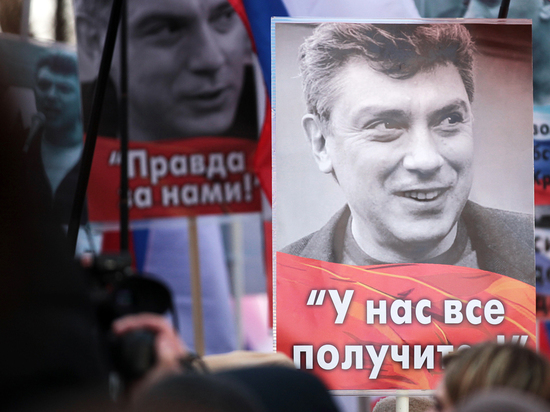
Second — a list of authors: Boris Nemtsov, Yegor Gaidar, Sergei Yushenkov, Sergei Kovalev, Irina Khakamada, Boris Nadezhdin, Nikolai Travkin, Yuli Rybakov, Pavel Krasheninnikov, Elena Mizulina … In total — 31 people, almost the entire Duma faction of the Union of Right Forces «in the Duma. Yes, yes, there was once such a faction in the State Duma. Now, as they say, they don't make them.
There are no others anymore: Nemtsov and Yushenkov were killed, Gaidar and Kovalev died a natural death. And those are far from the Duma. And others, like Elena Mizulina, although not very far away, in the Federation Council, but already in a completely different political camp, defend not liberal, but traditional values. Which, by the way, is also reflected in the passport of the document: in 2014, Elena Borisovna removed her last name from the bill.
Out of the entire vast team of authors in the Duma, there was only one initiator — Pavel Krasheninnikov. Yes, and he, as you know, changed his party colors a long time ago: since December 2003, Pavel Vladimirovich has been a member of the United Russia faction.
It is interesting that the initiator of the return of the project to the initiator is the initiator himself: the decision of the State Duma Council is based on the decision of the responsible Duma committee — the Committee on State Building and Legislation headed by Krasheninnikov — which, of course, bears the signature of Pavel Vladimirovich.
Well, that is, the main Duma state builder repeated the well-known feat of the uncompromising Taras Bulba: «I gave birth to you, I will kill you.» True, if Gogol's hero more or less clearly substantiated the motives for filicide («What, son, did your Poles help you?»), then Krasheninnikov's explanation cannot be called exhaustive.
The document is to be scrapped due to the fact that «it provides for amendments to certain provisions of the Criminal Code of the Russian Federation that have become invalid,» the committee's decision reads. Although none of the articles of the Criminal Code listed in the bill, which were proposed to be corrected, did not disappear from the code. No, it is possible that some changes in these articles have occurred since the introduction: 22 years is a rather long time. But the main thing remains: the death penalty still appears everywhere.
In short, while the explanation does not look like a very clever pretext. Which, however, does not change the essence of the matter at all. What's on the forehead, what's on the forehead. If the document had remained in the database, the result would have been the same — zero. And from a historical and philosophical point of view, it was the removal that brought more benefit. In fact, after all, the bill was buried long ago, sunk into oblivion. It was the decision to hold a formal funeral that brought him out of there, which made him remember not only the bill itself, but also the time when it was born. And evaluate, feel the path that the country has traveled during this time.
It is as if you were walking along the seashore, not thinking about anything like that, and suddenly a rushing wave brought a sealed bottle under your feet with an ancient manuscript placed there. And you, having opened the vessel, with bated breath, unfold the half-decayed paper, trying to make out the blurry lines and imagine the author and his era…
Although, perhaps, a more accurate image is not a manuscript found in a bottle, but time capsule. There used to be such a fashion in the world — to send «letters to the future.» It was especially widespread in the USSR. The message, intended for future generations, was placed in a waterproof container and usually laid at the base of buildings under construction, monuments and similar objects — with an indication of when, after what time to open.
Reading these letters from the past today, one is amazed at the naive faith of their authors in a bright communist future and in the inexorability of progress: “We believe that you have excellently equipped our beautiful blue planet Earth, mastered the Moon and landed on Mars, that you continue to storm space … Today is an extraordinary day for you — the centenary of Soviet power. We warmly congratulate you on the great and glorious anniversary. We know that our time is interesting, yours is even more interesting. We are building communism, you live under communism…»
The authors of the bill did not believe in communism, of course, but they were also naive. As confirmation, one can cite the election program of the «Union of Right Forces» of the 2003 model: «The political party» Union of Right Forces «goes to the polls with the firm intention of winning. This victory is needed not only and not so much by politicians of liberal convictions, but by the people of Russia. Democracy, reforms and liberalism are beneficial to every citizen of our country… The «Union of Right Forces» is the party of the future. Our time has come, because we are right.»
As you know, the SPS failed miserably in those parliamentary elections, and did not get into the Duma again: the third convocation, 1999-2003, was the first and last in the history of the party. And five years later, the story itself ended: in October 2008, the Union of Right Forces announced its dissolution. In 2015 Boris Nemtsov was assassinated, in 2020 the Constitution was amended, in 2022 Russia withdrew from the European Convention on Human Rights… In general, absolutely everything went wrong.
But in 2001, objectively speaking, Russian liberals had grounds for hope. And not so small. To clarify: the draft law on the abolition of the death penalty was submitted to the Duma on July 4, 2001. And two weeks later, on July 18, the president held his first big press conference, at which he named further liberalization of the economy and democratization of political life among his main strategic goals.
And here, for example, is his answer to the question of how Russia will react to NATO expansion: “I personally have never spoken about an adequate response to a possible NATO expansion. Please, ask those who formulated the position of the Russian Federation in the forehead «I never formulated it that way. I can only tell you that we do not consider NATO as a hostile organization and do not see a tragedy in its existence.» Moreover, Vladimir Putin allowed such a solution to common European problems: «A possible option is the inclusion of Russia in NATO. This also creates a common space for defense and security.»
And two months later, on September 25, 2001, Putin spoke with a speech — in German! — in front of the deputies of the German Bundestag, in which he described the collapse of the Soviet regime and the end of the Cold War: “Under the influence of the laws of the development of the information society, the totalitarian ideology of the Stalinist type could no longer resist the ideas of freedom and democracy. The spirit of these ideas took possession of the minds of the vast majority of Russian citizens.< /p>
It was the political choice of the Russian people that allowed the then leadership of the USSR to make decisions that ultimately led to the demolition of the Berlin Wall.It was this choice that greatly expanded the boundaries of European humanism and allows us to assert that no one will ever be able to deploy Russia in the past».
In general, there were interesting times. Times when hopes were high and worries incomparably less. It's hard to believe now that times like this ever existed. They don't make them anymore.