


MOSCOW, May 5, Nikolai Guryanov. American scientists have used CRISPR/Cas9 genetic editing technology against the immunodeficiency virus. The authors of the study claim to have created a «simple and cheap» way to fight the disease. However, Russian colleagues are skeptical.
Is this even legal?
In most cases, HIV enters the cell by interacting with the CCR5 co-receptor, a protein built into the cell membrane. All the few cases of cure for the virus are associated with transplantation of bone marrow or stem cells obtained from donors who have a special mutation in the receptor gene — CCR5-Δ32. It makes the carrier immune to HIV. However, this therapy is not suitable for everyone and is fraught with serious side effects. Thus, not all AIDS patients survived a bone marrow transplant.
Scientists are looking for safer ways to influence a key protein. Special hopes are associated with the technology of «genetic scissors» CRISPR/Cas9. Its creators — Frenchwoman Emmanuelle Charpentier and American Jennifer Doudna — received the Nobel Prize.
True, it is not entirely clear how to apply this tool against AIDS. The norms of law and ethics prohibit editing the genome of human embryos. However, in 2018, Chinese scientist He Jiankui allowed the birth of two twin girls, whose embryos were secretly genetically edited — the researcher modified CCR5 to protect against HIV. For this, the biologist was sentenced to three years in prison.
Now a team of researchers from the United States has found a new — legal and allegedly safe — way to change the desired coreceptor using CRISPR/Cas9 technology.
Double whammy
Previously, Kamel Khalili (Temple University) and Howard Gendelman (University of Nebraska) and colleagues developed the so-called long-acting slow-release antiretroviral therapy (LASER-ART) by testing it on humanized mice .
This technique differs from conventional antiretroviral therapy (ARVT), which is widely used in the containment of HIV, in that it keeps virus replication at a low level for a long time. This allows you to reduce the frequency of taking the medication. The scientists then combined LASER-ART therapy with CRISPR/Cas9 technology, which aims to remove the already embedded virus genome from the body of laboratory animals.
< /span>
In the new experiment, the researchers improved the method by adding inactivation of the CCR5 gene, also using CRISPR/Cas9 technology. To deliver the components of the editing system, an adeno-associated virus was used, which easily penetrates the human body without harming it, and integrates into the genome at the right place.
As a result, LASER-ART, combined with the «disabling» of the cell receptor and the removal of the viral genome from the cell, led to a complete cure for HIV — although not all infected animals, but only 58 percent. At the next stage, the authors of the work plan to test the development on primates.
Won't we stand up for the price?
The method is promising, but it has weaknesses, notes the head physician of the Hemotest laboratory «Maxim Maskin.
“Firstly, 58 percent is not such a large percentage, although these are the first experiments, and the results of subsequent experiments may be different. Secondly, there are no data yet on immunity to the virus in mice that defeated HIV at the experiment stage,” he says. Thirdly, the degree of toxicity of such therapy is unknown: side effects for humans can only be judged at the stage of clinical trials, and they are still far away.
Doctor of Chemistry, Head of the Department of the Research Institute of Physical and Chemical Biology named after Belozersky Moscow State University, RSF grantee Marina Gottikh believes that although the work of Khalili, Gendelman and colleagues is of interest, it will not be possible to cure HIV using their method yet. The authors of the study themselves admit that the problem with the delivery of the drug to HIV reservoirs — brain cells and lymphoid tissues, where the pathogen can «sleep» for a long time — has not yet been resolved, which means that a relapse of infection cannot be ruled out. «Currently, we do not have systems for delivering CRISPR/Cas9 components to the brain, and this is a big problem,» the Russian scientist explains.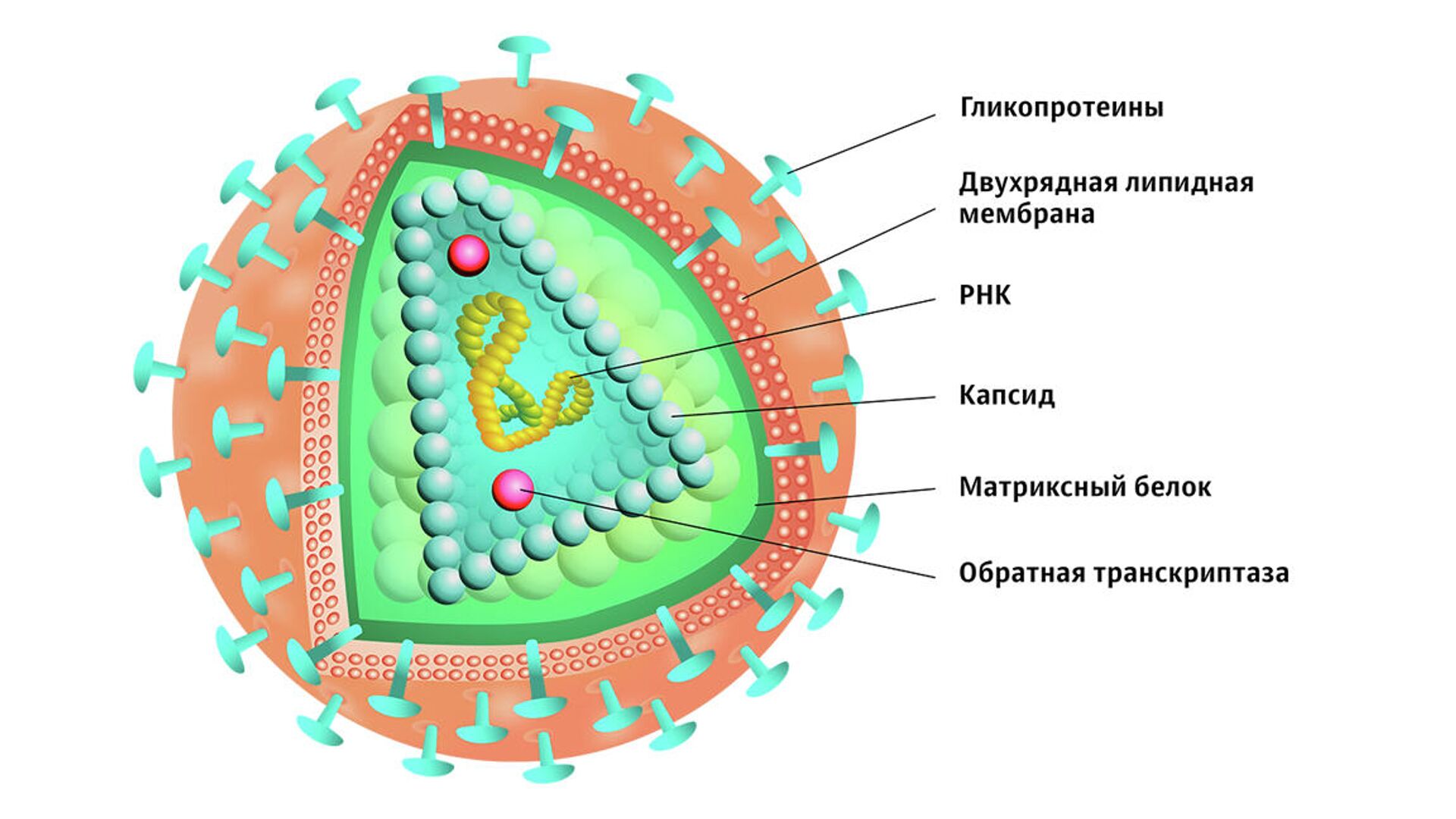
By wordsKhalili, if their development is successful, medicine will receive a «simple and relatively inexpensive» way to fight HIV. However, according to Gottich, the price of such a tool, on the contrary, may be excessively high. As an example, she cites the drug for the treatment of spinal muscular atrophy «Zolgensma», which is also delivered by adeno-associated virus. One injection costs more than 150 million rubles.
«But this is a rather rare disease, about two hundred children are born with it in Russia a year,» the scientist clarifies. «It is clear that no country's budget is enough to cure all HIV-infected people with a similar approach.»
Gottich characterizes the new work of American researchers as a useful «gymnastics of the scientific mind.» «The more new methods we create,» she notes, «the sooner it can bring us one way or another closer to the goal.» there are more promising approaches. «Personally, I believe more — at least for now — in small molecule inhibitors of HIV infection,» says the scientist. Such compounds disrupt the interaction of viral proteins with cell proteins and thereby prevent the infection from multiplying.
“This method is being actively developed for one simple reason. Viral enzymes, which the existing ART is aimed at suppressing, very quickly change, mutate, become insensitive to the action of inhibitors, so you have to constantly change the set of drugs,” explains Gottich. interfere with the interaction of viral and cellular proteins, resistance should not develop, at least not quickly.»
Thus, the HIV drug Maraviroc, which is already used in clinical practice, does not allow the gp120 viral protein to interact with the CCR5 receptor on the cell surface.
December 1, 2022, 05:00 «data-id=»1831476315″ data-url=»https://ria.ru/20221201/spbpu-1831476315.html» data-title='»Patient Zero»: paradoxes and phenomena of AIDS in the USSR'>
Lenacapavir, a drug that prevents the insertion of the pathogen genome into the genome of an infected cell, is undergoing the third stage of clinical trials. Experts believe that this medication can be used every three to six months (now patients take pills and receive injections much more often). At the same time, the drug should not only suppress the development of infection, but also prevent infection.
A group of scientists from Moscow State University led by Gottich is developing their own unique drug. A DNA copy of the human immunodeficiency virus genomic RNA is inserted into the cell by an enzyme called integrase. She has so-called cellular partners — proteins with which she interacts. One of them, Ku70, is required to repair damage in the cellular genome that occurs when the virus DNA is inserted. Without this «repair» the infected cell dies along with the infection. By blocking the interaction of integrase with the «repair» protein Ku70, scientists do not allow HIV to multiply.
The development proved to be good on the HIV model, after which it was transferred to the D.I. Ivanovsky Institute of Virology of the Russian Academy of Medical Sciences for testing on a «live» pathogen.