


Leading specialist in the field of aeronautics Sergey Bendin spoke about the use of balloons in the military sphere
More and more experts are paying attention to the fact that balloons and airships could be used instead of early warning aircraft in the special operation zone. Sergei Bendin, acting head of the Moscow branch of the Aeronautics Commission of the Russian Geographical Society, told MK about combat balloons with an electronic warfare system on board about why they need state support.
Compared to aircraft, aircraft are lighter air, a large flight resource. They can stand for months at a height above a given area in an unmanned mode, keeping the sky and territories under control. This will provide our military with protection from drones, as well as distribute local Internet and deploy local communications.
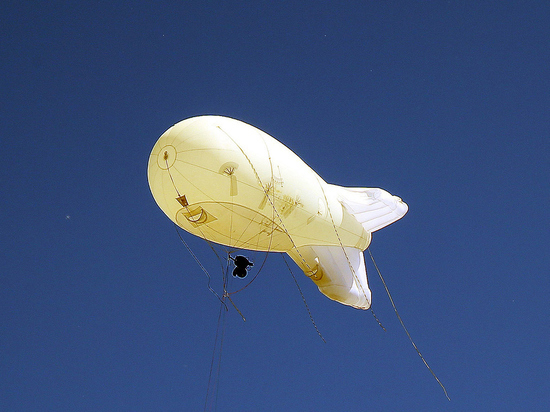
Actually, balloons and airships are air «bubbles» that «float» rather than fly.
“These aircraft are lighter than air, their shell is filled with light gas, which, according to the law of Archimedes, tends to rise,” explains Sergey Bendin. “This is a gift of nature, a free resource. If a balloon is equipped with a power plant — an engine, then it becomes an airship. And it can move both horizontally and vertically. Moreover, it rises up completely free of charge — due to the buoyancy force.
The expert recalls that in 1931 the village of Dolgoprudny near Moscow became a city thanks to the state enterprise «Airshipstroy». And in 1956, OKB-424 was formed here. This was due to the fact that the Americans drove over the Soviet Union at altitudes of up to 35 kilometers along known air currents a whole armada of automatic photo reconnaissance balloons. Up to 20 such devices were often launched per day
Until the beginning of 1956, more than 500 balloons were launched from Norway, Scotland, Germany and Turkey towards the USSR. They were able to capture a significant part of our territory. Several balloons descended due to a malfunction, they were picked up, their equipment was removed from them, they looked at the footage and were shocked. On them it was clearly possible to distinguish even the side numbers of aircraft standing at airfields.
— We joined the race. A special decree was issued, a secret design bureau OKB-424 was created in Dolgoprudny, subordinate to the USSR Ministry of Aviation Industry, and high-altitude reconnaissance balloons began to be produced there. But not only them.
A manned stratospheric balloon «Volga» was also built, which was passed according to the documents as a «product of the SS». With the help of it, on November 1, 1962, in natural conditions, it was decided to test the spacesuits that were developed for astronauts.
Test paratrooper Major Yevgeny Andreev separated normally from a height of 25,458 meters and flew to the ground. And Colonel Pyotr Dolgov hit the back of his head on the edge of the hatch. The suit's helmet, which was made entirely of Plexiglas, had a three-millimeter hole punched through it. There was a depressurization (pressure at a 25-kilometer altitude is more than 40 times lower than the earth, the blood, in fact, boils). Dolgov landed already dead. After this tragic incident, spacesuit helmets began to be made of metal with a view only from the front.
And then OKB-424 developed various types of repeater balloons, combat balloons for various purposes, which were produced in large series. The requirements were strict: the entire process of launching the balloon, including the deployment of equipment at the «point» and the installation of equipment, had to fit in 12 minutes.
In Dolgoprudny, balloon systems were produced that raised radar stations (RLS) and electronic combat (EW).
At the disposal of the Air Force of the Ministry of Defense were serial tethered balloon systems with a shell volume from 80 to 12,000 cubic meters, and many of these design structures had slightly funny names: «Eel», «Realiya», «Vyp-M», «Mezhbrovye», » Propeller, Telescope. These were huge complexes the height of a 20-story building.
Most of these complexes were based on a car chassis, and therefore, these devices could be quickly deployed in the field. And from heights from 200 meters to four kilometers, conduct over-the-horizon observation of space or suppress enemy radio channels at different frequencies.
Few people know that the Ministry of Defense of the Russian Federation has an aeronautical unit, which is located in the city of Volsk. This place in the Saratov region was not chosen by chance. The city is located at the 52nd degree of latitude, it was this line that crossed the territory of the Soviet Union along its widest part.
By the way, the specialists of this military unit provided and maintained a tethered balloon to eliminate the accident at the Chernobyl nuclear power plant. Powerful 40-kilowatt lamps were lit on board such an apparatus at night, which made it possible to illuminate the space above the fourth power unit, when a sarcophagus was being built there using a special crane with the help of telecontrol.
Rescuers nicknamed this balloon «Chandelier». And in Afghanistan, tethered balloons provided air combat operations and surveillance of territories with potential threats.
 Sergey Bendin
— In this aeronautical part, tests were carried out, including high-altitude balloons, — says our interlocutor. — These were balls made of special polyethylene with a volume of one million cubic meters. Such high-altitude laboratories were launched into the stratosphere with a special payload.
Tests were carried out in a regular manner — over and over again. But then, for some reason, in high offices, it was decided to curtail all this. They say that we no longer need balloons and airships at all, because here we have aviation, powerful detection systems, and intelligence works differently for us.
I do not agree with such a formulation of the question, with the fact that we do not need it. The troops need balloons and airships very much now. And they are needed in the civilian sector.
For example, the same transport airship, if it were now mass-produced, then air transport tasks would cost the country an order of magnitude cheaper, the profitability of an aeronautical carrier would be much higher than an aircraft. If a plane costs a dollar a ton-kilometer, then an airship costs a maximum of 10 cents.
According to the expert, combat aeronautics has great prospects. For example, in Syria, balloon systems were used to provide radar surveillance of our air base in Khmeimim. During the visit of Russian President Vladimir Putin there, the cameras of many TV channels noticed this observation balloon high in the sky. Now, in the zone of the special operation, balloons and airships could provide the distribution of the local Internet for closed communication, to maintain communication with units, to exchange data between command posts and roadblocks or reconnaissance groups.
— Local, closed telecommunications channels are very necessary there, — says Sergey Bendin. — Aeronautical complexes can provide all this. On the one hand, these can be tethered balloons, which should not be in the affected area, but stand somewhere 10-20 kilometers from the front line. This is easy to do. And they will not only provide operational communication channels, but also control the entire over-the-horizon airspace, detect approaching targets in the airspace or maneuvering tanks.
On manned or unmanned airships, which will also be out of line of sight of the enemy, it would be possible to place powerful electronic warfare systems that will ensure the suppression of enemy electronic communications and data transmission channels. For example, such an unmanned electronic warfare airship, hovering in the sky, could provide our military with protection from enemy drones.
“Most often, an unmanned observer quadcopter or kamikaze drone is controlled via a communication channel by an operator. This means that this channel needs to be suppressed, to create a destructive level of radio interference in it. Or even with the help of special onboard equipment of the airship to ensure the interception of its control. The airship is a very mobile device, so it can be moved to the desired zone. An airship with a radar on board will be able to play the role of a mobile repeater in the theater of operations, providing signal coverage for an area of tens of square kilometers,” the specialist continues.
The expert says that he has already heard enough of the opinions of critics who say that a balloon or an airship in the special operation zone will be shot down, riddled with bullets.
— They won't. The dimensions of balloons or airships can be 5 meters, 20 meters or even much more — it all depends on the purpose of the project. Today, for example, projects are underway for airships with a shell more than 200 meters long, it's like two football fields. Even if you shoot through the shell of even a medium-sized balloon system, it will descend for a long, long time, parachuting with a large area of the shell.
But in order to make an aimed shot, these aeronautical systems still need to be detected. For the standard air defense systems in service, such devices are mostly radio-transparent, but only if they are not hung with a mass of metal structures that are visible to radar markers.
Balloons and airships received a second life with the advent of new, modern materials, as well as sensor and telecommunication technologies. But how much did this affect the very design of aeronautical equipment?
— Engineering solutions in the field of design and construction of aeronautical equipment are based on advanced scientific research. In any case, any balloon — tethered, free or controlled, that is, an airship — is a high-tech product, — Sergey explains. — The basis of the shell is Kevlar, or a material similar in properties, on which certain layers of polymers are rolled. There can be up to eight of these specialized layers, depending on where and how this aircraft will be used.
We like to remember how airships exploded and burned in flames. Now they are explosion and fireproof. The inert gas helium is pumped into them, the production of which, with the development of technology, has become noticeably cheaper. Chemists have learned how to obtain inhibited hydrogen, thus eliminating its explosiveness. Scientists carried out such research work in Chernogolovka.
According to Sergey Bendin, now all attention should be paid to the development of the stratosphere.
— It is believed that 30 kilometers above the territory of any country are sovereign airspace, and above it, as it were, does not belong to anyone. But whoever establishes even relative control over this high-altitude layer of the atmosphere will receive geopolitical and economic preferences.
If some grouping of unmanned aeronautical platforms with the appropriate equipment on board is placed in the stratosphere, then through such a stratospheric base it will be possible to monitor the situation on vast sections of the continents, conduct surveillance and collect information. For any country, and even more so for Russia with its vast expanses, this is very important. Obviously, such an issue should be considered from the standpoint of geopolitical influence and national security.
There is a second point, this is the optimization of modern astronautics. The stratospheric cosmodrome will make it possible to simplify and reduce the cost of launching orbital satellites. Instead of a three-stage rocket, which has a huge cost, a less complex single-stage apparatus will be required. This will cost much less and the risk of unsuccessful launches will decrease.
In 2006, within the framework of the innovative project «High Start», the famous Russian aeronaut Stanislav Fedorov, on his thermal airship «Polar Goose», set an absolute world altitude record, reaching marks 8180 meters. So the aeronautics of Russia has already shown the world its determination to go into the stratosphere.
The High-Altitude Launch program was developed with an eye to the development of astronautics in the key of its popularization, which would allow not only crews of astronauts, but also groups of tourists to be sent into space from the “jump” cosmodrome. Yes, and when returning to earth, as planned, from the stratospheric transshipment base, people would be sent by transfer down in special balloons. Unfortunately, this interesting program did not receive funding and was closed.
The expert draws attention to the fact that in the stratosphere, at an altitude of 20 kilometers and above, there are very strong air currents.
“These jet streams circle the earth like ocean currents. Corresponding maps have been drawn up for a long time. Even during the Second World War, the Japanese carried out targeted bombing of the United States, launching their balloons with explosives along such currents. They calculated when and along what trajectory they would fly, and after what time the onboard bomb release machine would automatically work. The Japanese used these winds in the stratosphere.
Sergey Bendin believes that we need stratospheric vehicles now like air.
— The same satellite, for example, is in orbit. And the unmanned stratodirigible will all this time stand at a height within a given «perimeter». Obviously, such a high-tech aeronautical platform will require the use of innovative materials and innovative engineering solutions.
For example, they must be powerful enough to dampen headwinds and crosswinds, keeping the device in the zone of high-altitude standing. And such an unmanned airship should be easily controlled by a remote operator. I track Western stratospheric projects. Their task is to stand in a given square, in a conditional spatial cube at a 20-kilometer altitude — with virtual edges a kilometer, a kilometer, a kilometer.
From such a high-altitude «platform» it will be possible to obtain strategic information through observation, environmental monitoring, as well as provide support for telecommunications services and data transmissions. And now all this is being actively promoted in a number of countries, of course, mainly by the military. I am sure that Russia should not be in this unannounced race of high-tech airship projects in the tail.
The design race for the development of stratospheric airship projects is observed in France, Germany, the USA, and China. The French were especially successful in this regard. Take, for example, their StratoBus stratospheric vehicle, which, as follows from the available information, has incorporated the best practices and technologies of unmanned aerial vehicles, airships and artificial satellites, as well as achievements in the field of cybernetics and artificial intelligence. Its body is planned to be made of thin woven carbon fiber, and the device itself will be a large solar array. These devices are going to be used to monitor state borders, the water basin.
“Most importantly, these devices in unmanned mode make it possible to distribute the Internet and telecommunications quite cheaply. It should be noted that China has already made significant progress in this regard. China is actively developing a broad program to conquer the stratosphere, a number of launches of prototypes allows you to come close to the construction of serial stratodirigibles.
Russia is silent. Then we will catch ourselves and start catching up, as was the case with drones. In France, for example, the large airship project Flying Whales (“Flying Whales”) is financed by a specially created fund. They actively expand the topic of airships. We have a large country, and, in my deep conviction, we need to build balloons and airships only within the framework of the state program. We need to repeat the experience that was in the USSR in the 30s. Create «Airshipstroy 2.0».
Sergey Bendin believes that it is very important for Russia to establish air traffic for transport airships with a large payload — tens and hundreds of tons per flight.
— Not small airships for 10-14 people, like, for example, the mass-produced Zeppelin airship, but real air trucks. Moreover, the issue of air cargo transportation is very acute in our country.
The airship must carry a load that will not fit in an airplane, which will not be lifted by a helicopter. And deliver the cargo to where the plane will not land, and the helicopter will not fly. Airships have their niche. For example, they can deliver goods to some point in the taiga, where the laying of the road is difficult, as well as to northern villages, to oil rigs in the ocean. That is, to become such a “jumping bridge”. Moreover, 70% of the territory in Russia does not have a road transport infrastructure. Aviation has dipped a lot, there are not enough planes, funds to maintain airfields, runways.
The expert mentions another interesting idea that he likes.
— This concerns the unloading of ships in the raid. Parking in the port, port service is a very expensive pleasure. There is a schedule for when you can get up at the pier. But the airship can fly to the ship, standing in the ocean on the roads. Take the same containers, containers with liquefied natural gas (LNG) directly from it, reload it on board, and bring it straight to the addressee, bypassing warehouses and transshipment bases as part of logistics.
Most airships, according to According to the expert, they should work in unmanned mode. This is the time imperative.
— Drones are easier to certify, cheaper. This will also spur our digital industry, give impetus to improve on-board electronics, flight control systems, life support, and so on. So far, we are talking, of course, about the development of airships with a person on board, but this also provides for the possibility of remote piloting. This is a trend of innovative airship building. And in Russia too.
Helicopter pilots can easily master the controls of a modern airship within a month or two. At the very least, the developers of aeronautical equipment are guided in their projects by the existing level of knowledge of flight personnel. Moreover, the aerostatic principle of flight provides a significant simplification both from the point of view of safety and from the point of view of controllability.
Given the events taking place in Ukraine and in the world, we can recall that airships can be used for mine clearance.
p>
— This, for example, was done in the 2000s by the UN mission in Yugoslavia as part of the Mineseeker program (“Mine Detector”). The airship flew at an extremely low altitude, high-precision equipment was suspended from it, which “saw” metal and plastic mines laid under the sheet. Compared to an airplane and a helicopter, the airship had a low hourly fuel consumption, it could work for a long time, up to several days.
It had virtually no vibration. The airship could take off and land on unequipped platforms. This method made it possible to save considerable funds that were allocated for mine clearance, and most importantly, to save human lives.
Airships will undoubtedly be used to probe the surface of the earth, its bowels and atmosphere. And the military has its own interest in airships. The future, according to Sergey Bendin, belongs to multifunctional air platforms.
These will be airships of a new generation, a kind of mobile airbase for combat drones and unmanned aerial vehicles. One of these airship airbases based on a thermally ballasted lenticular airship of the Aerosmena family is being developed by our engineers.
The airship, advancing to the desired zone, will be able to launch from the board in the desired sequence and, in accordance with the received flight tasks, launch from the board at a certain rate, entire squadrons of drones with a targeted payload. Having completed the task at a distance of the «last mile», at a distance of tens of kilometers, the surviving vehicles will be able to return to the board of such an airmobile base, to a drone carrier, in order to renew ammunition or take another payload to perform new flight missions.