


Land authorities demand from Berlin to increase financial support for migrants
German regional leaders demand from Berlin to increase financial support for refugees, including those from Ukraine. The heads of the 16 German states of the country are calling on Chancellor Scholz to increase the daily allowance for food, housing and training for asylum seekers.
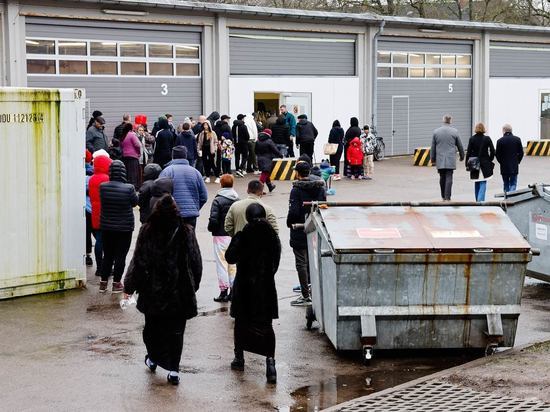
German lawmakers are at odds over how to deal with the country's large number of refugees, and regional leaders are urging the German government to provide more financial support.
The leaders of Germany's 16 states will meet on Wednesday in Berlin with Chancellor Olaf Scholz and urge him to ensure that the federal government takes on more responsibility for immigration, including an increase in the daily allowance allocated to cover the costs of individuals.
The meeting comes amid growing calls for help from mayors and communities across Germany who say they can't keep up with food, housing and education for an ever-increasing number of asylum seekers.
Some 102,000 people applied for asylum in Germany in the first four months of this year, compared to 218,000 in all of last year. This is about 78% more than in the same period last year. This is in addition to the approximately one million refugees who have arrived from Ukraine since February 2022, including 350,000 children. These numbers are still well below the estimated one million people who arrived during the summer and fall of 2015 during the refugee crisis, but still much higher than they have been in recent years, notes The Guardian.
< p>The mayor of Bremen, Social Democrat Andreas Bovenshulte, appealed to the German government to intensify its actions. “We can't take on the costs of accommodating and caring for people on our own… the government should take on more responsibility and at least take on half of the costs,” said the burgomaster.
The head of the East German state of Saxony-Anhalt, Rainer Haseloff, said democracy would be at stake if the government in Berlin failed to bring the situation under control. “If we in Germany do not show ourselves capable of action, then the credibility of our democracy will be increasingly undermined,” said Haseloff, who belongs to the opposition Christian Democratic Union (CDU).
Hesse President Boris Rein called on the government to launch a “repatriation offensive”, arguing that too many asylum seekers remain in Germany even after their asylum applications have been rejected.
The German government, in turn, questioned the calls of regional leaders for more financial assistance, expressing its concern that they had previously used money intended to finance refugees for other purposes. The regions rejected this claim, writes The Guardian.
One contentious issue is the amount of money the government has paid to support Ukrainian refugees, about 1 million of whom have arrived in Germany since February 2022. In an internal document seen by the German media, the German government claims that last year it spent about 3 billion euros to cover 90% of Ukrainians' welfare costs. It says that this year it will increase its contribution to these costs by 2 billion euros.
But the Länder state that the government does not take into account other significant costs, such as integration courses, preschools and schools. They add that they also have to deal with a growing number of refugees from countries other than Ukraine, whose expenses they are required by law to cover in full. It is expected that this year these expenses will amount to about 15.6 billion euros.
The finance ministers of the German states are complaining about the huge budget deficit. In 2016, as part of the financial program to finance refugees, the government allocated 9.1 billion euros to states, but, according to ministers, this figure fell to 2.75 billion euros, and next year it should fall even more, to 1.25 billion Euro. According to the current legislation, it should remain at this level.
At the meeting, the Länder leaders will advocate for a return to the previous funding model, which ended in 2021. Under the scheme, individuals received 670 euros a month, but due to inflation, that figure should now be 1,000 euros, executives say. In addition, they would like the government to pay a certain amount to unaccompanied minors, as well as to fully reimburse the living expenses of refugees.
The left-wing opposition party Die Linke has accused the government of failing to develop an effective refugee policy. Dietmar Bartsch, its parliamentary leader, urged Scholz to seek greater solidarity from EU partners to ensure a fair distribution of refugees across the bloc. He criticized proposals — backed by the pro-business liberal Free Democratic Party — to build fences on the EU's external borders. “They won't help, because you can put up fences as high as you want — migrants will keep coming. And we will simply lose our humanity by creating them,” he told DLF.