


The reasons for the sharp decline in fresh water bodies are named
The world's largest lakes are shrinking sharply, and scientists have found out why. More than half of the world's largest lakes and reservoirs have lost significant amounts of water over the past three decades, largely due to climate change and overuse, according to a new study.
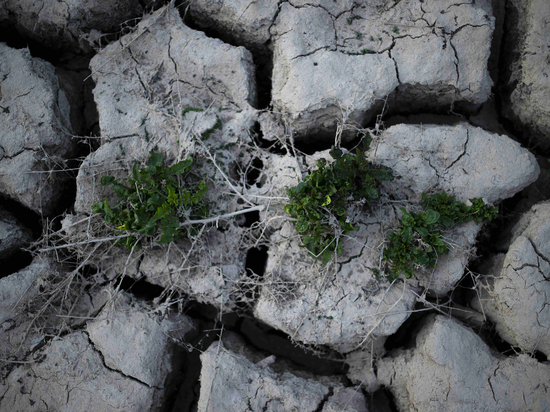
According to a study by a group of international scientists published on Thursday according to Science magazine, about a quarter of the world's population lives in the dry lake basin.
As CNN points out, although lakes cover only about 3% of the planet's surface, they contain nearly 90% of its liquid surface fresh water and serve as critical sources of drinking water, irrigation and electricity, and provide vital habitat for animals and plants. However, they are in trouble. Water levels in lakes fluctuate in response to natural climatic fluctuations in the form of rain and snowfall, but they are increasingly influenced by human activities.
All over the world there is a sharp reduction in the area of the most significant lakes. Lake Mead, on the Colorado River in the southwestern United States, has plummeted due to megadrought and decades of overuse. The Caspian Sea, located between Asia and Europe, the world's largest inland body of water, has long been shrinking due to climate change and water use.
The shrinkage of many lakes has been well documented, but the magnitude of the change — and the reasons behind it — have been less well understood, says Fangfan Yao, lead author of the study and visiting fellow at the University of Colorado Boulder's Cooperative Institute for Environmental Science Research. .
Researchers used satellite measurements of nearly 2,000 of the world's largest lakes and reservoirs, which together make up 95% of the total lake water on Earth.
By studying more than 250,000 satellite images taken between 1992 and 2020, along with climate models, scientists have been able to reconstruct the history of the lakes over decades. According to the authors of the report, the results were «staggering».
Scientists found that 53% of lakes and reservoirs lost significant amounts of water, with a net reduction of about 22 billion metric tons per year — an amount that the authors of the report compared with the volume of 17 lakes.
According to the report, more than half of the net volume loss in natural lakes can be attributed to human activities and climate change.
The report found losses in lake water storage everywhere, including in the humid tropics and cold Arctic. This suggests that “drying trends around the world are larger than previously thought,” says Yao.
Different lakes were affected by different factors. Water mismanagement has been the main cause of the drying up of the Aral Sea in Uzbekistan and California's Salton Sea, while changes in rainfall and runoff have reduced the area of the Great Salt Lake, the report says.
Lakes are shrinking in the Arctic due to a combination of changes in temperature, precipitation, evaporation, and runoff.
“Many of the impacts of human activities and climate change on water loss in lakes were previously unknown,” says Yao, “such as the drying up of Lake Gud-e- Zareh in Afghanistan and Lake Mar Chiquita in Argentina.”
Climate change can have a variety of effects on lakes. The most obvious, according to Yao, is an increase in evaporation.
The study found that as lakes shrink, this can also contribute to the “dryness” of the surrounding watershed, which in turn increases evaporation and accelerates their decline.
For lakes in colder parts of the world, winter evaporation is a growing problem , as warmer temperatures melt away the ice that normally covers them, leaving the water open to the effects of the atmosphere.
These changes can have cascading effects, including reduced water quality, increased blooms of toxic algae, and the death of aquatic organisms.
“An important aspect that is not often recognized is the deterioration of water quality in lakes due to warmer climates, which puts a strain on the water supply of the communities that depend on them,” Yao said.
In terms of reservoirs, the report found that the biggest factor in their decline was sedimentation, where sediment flows into the water, clogging it and shrinking space. According to Yao, this is a «creeping disaster» that has been happening for years and decades.
For example, Lake Powell — the second largest artificial reservoir in the US — has lost almost 7% of its capacity due to the accumulation of sediments .
Climate change could affect precipitation, he added. For example, wildfires, which become more intense as the world warms, burn forests and destabilize the soil, contributing to increased sediment runoff into lakes and reservoirs.
“The result of sedimentation will be that reservoirs will be able to store less water, thereby becoming less reliable for supplying fresh water and hydroelectric power, especially for us here in the US, given that our country's reservoirs are quite old,” notes Yao.
Not all lakes are shrinking; according to the report, about a third of the decline in lake numbers has been offset by increases elsewhere.
Some lakes are experiencing growth, with 24% experiencing significant increases in water storage. According to the report, these tend to be lakes in less populated regions, including areas in the northern Great Plains of North America and the interior Tibetan Plateau.
Some of these gains are being affected by the effects of climate change as melting glaciers fill the lakes, creating potential risks for people living downstream from them.
In terms of reservoirs, while nearly two-thirds experienced significant water loss, overall there was a net increase with more than 180 reservoirs refilled, the report says.
Catherine O'Reilly, professor of geology at the State University Illinois, which did not participate in the study, noted that this new study provides a useful set of long-term data that helps understand the relative importance of factors leading to lake decline.
“This study really highlights the effects of climate in such in a way to bring it closer to our home – how much water do we have access to and what are the options for increasing water supplies?” she told CNN.
“It’s a bit scary to see how many freshwater systems can’t store as much water as they used to,” Professor O’Reilly added.
Because in many parts of the world getting hotter and drier, lakes need to be properly managed. Otherwise, climate change and human activity “could lead to drying up sooner than we think,” Fangfang Yao predicts.