


A report on a trip to the peninsula by «savages» in the spring of 2023
As soon as the buds swell in Moscow, I pack my suitcase to the south. This year, I did not betray myself, despite the talk about the spring counter-offensive of the Ukrainians in order to “return the Crimea”. My friends and I went there by car, went through security checks on the Crimean bridge, and on the peninsula we learned how Crimeans feel about what is happening around Ukraine and its threats to “return Crimea”.
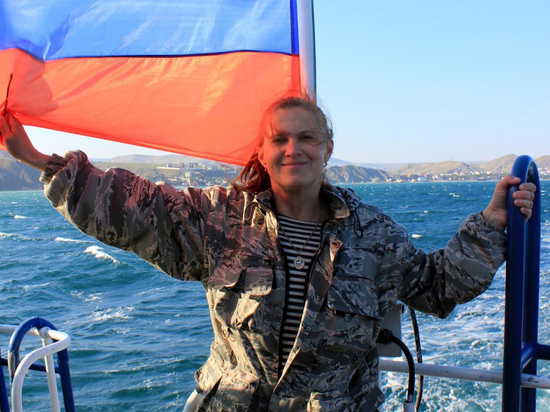 Svetlana Petrushova: we've arrived!
At first I planned to go to the sea by train. But here there was a misfire. Already in early April, there were no fast trains for the required dates. Moreover, tickets to the Crimea for such trains were already bought out several months in advance.
There were places only for what stops at each pillar. A familiar conductor complained to me about another mess: “Listen, is it humane to marinate people in cars for almost two days?! After all, absolutely all passengers go to the final station. And if fast trains fly without stops, then ordinary trains move like electric trains, with many stops. People fall out on them only to smoke, to breathe air.
So why not let more fast trains go?! They are now sorely lacking. Now the heat will begin, and the suffering of passengers will be aggravated. I'm upset, sorry for the people, I want to know about this at the top. Help!»
Back in early March, my friends Artur and Karina, due to the high price of tickets for a compartment car, took reserved seats on a passenger train. For two adult tickets for May to Simferopol with an inconvenient arrival time, they laid out 10 thousand rubles. But in the end they said that there were no problems on the road.
Those who spontaneously wanted to visit the peninsula on the May holidays by train had little choice: the remains of seats on the upper side shelves or a luxury compartment for 144 thousand rubles.
After a failure with train tickets, it was decided to start in the Crimea by car. From Moscow, in the company of my friends Dasha, Evgeny, Lena and the poodle Mani, at 8.30 in the morning we set off. Sunday according to the calendar.

At this time, the roads are not at all congested. The navigator argued that there was no difference between the route through toll and regular sections of the road. But we chose the paid option. And in the end — they guessed it, because after a couple of hours the picture changed dramatically: the free route showed a huge delay.
Fares have gone up since last year. In a special smartphone application, we had a 7% discount connected. But already for the first 200 km, 650 rubles were written off from the account. As it turned out later, the fare on a scarf on weekends turned out to be higher than on weekdays. At 300 kilometers of the track, new asphalt was laid. Then there were sections with repairs, and, therefore, with a slowdown. As a rule, they are reflected on maps.
We took ordinary water with us, thermoses with tea, nuts, dried fruits, cheese and cucumbers. For the first few hours on the M-4 highway, we were moving at an average speed of 110 km per hour.
Evgeny constantly struggled with the desire to step on the gas, but the pre-installed application strictly threatened with a finger. It informed about nearby cameras. And there is a full set of them all along the road to the south!
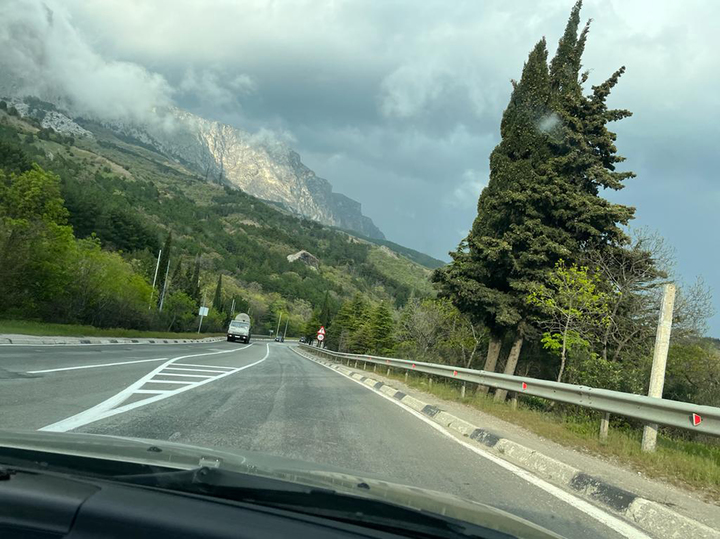
A large traffic jam on the «high-speed» highway had to be bypassed through Maslovka, Staraya Stanitsa and Kamensk Shakhtinsky. This road turned out to be more or less tolerable: without potholes, but all in patches. “Patches, bad weather on my way, what happiness is — I’ll explain later.”
In order not to get into a traffic jam and turn off in time, you need to carefully and in advance monitor the detour routes on the navigator map. In the Rostov region, on the way we met many bright examples of military-patriotic wall painting. But it was not possible to photograph them because of the approaching twilight and speed. I noticed that further along the route (already on the second day) in the Krasnodar Territory, for some reason, there were no such drawings along the way.
Then endless road repairs began, interspersed with bumps on the highway. At about 10 pm on the M4 highway near Novobataysk, we got into a dead 15-kilometer traffic jam due to the repair of the highway, the accident of a fuel truck with KAMAZ and a delay at a paid checkpoint.
There were thoughts of spending the night in the car, but along with them and the idea to go around on a strip closed for repairs. We chose the second one and did not lose. As it turned out, the accident turned out to be nonsense. And if the traffic police officers managed the situation, forming a flow of cars along the closed lane, people would save several hours.
We got to the place of spending the night in the village of Dinskaya at about one in the morning.
Why Dinskaya? Yes, because, firstly, here we booked hotel rooms in advance. And secondly, this place is painfully attractive: the land in Dinskaya is all saturated with history, and military history at that. And what about without it?
At the end of the 18th century, a southern defensive line was created here. The process was personally led by the commander Alexander Suvorov. Guess who they were defending from? Türkiye and England opposed the strengthening of the Russian state in those days. They kindled the hatred of the peoples of the Caucasus towards the Russians. That is why, under the command of Suvorov, the Kuban defensive line was created in these parts.
So we slept that night in a new place very calmly. By the way, a room for three with breakfast cost 3900 rubles, the supplement for the dog Manya is 400 rubles. I will clarify that our smaller brothers also need hot meals. Therefore, as a precaution, we took with us a portable burner with a small gas cylinder. In the room, she managed to cook not only a hot breakfast for Mani, but also brew a couple of cups of coffee and vitamin tea with hawthorn for each of us.
Note: any drink with vitamin C perfectly restores strength. Ideally, it is best to take a lemon with you. And tea with lemon and hawthorn 30-40 minutes before bedtime acts as a mild sleeping pill.
As a result, we started from Dinskaya at 9 am . It is about 250 km to the Crimean bridge from this point.
They were overcome without any problems: the navigator offered several route options. One of them went around Krasnodar. We chose him. Although, according to the navigator, there was no significant difference in travel time on both roads.
We «feed» the iron horse, the 95th, at a price of 55 rubles per liter. Chose gasoline brand «ecto». Previously, they refueled in the Tula region at a price 2 rubles lower.
At the entrance to the Crimean bridge, cellular communication was lost. Every 50 meters along the road there were representatives of the security service. We were stopped and asked how many things we were carrying. Then they explained how to get through the inspection.
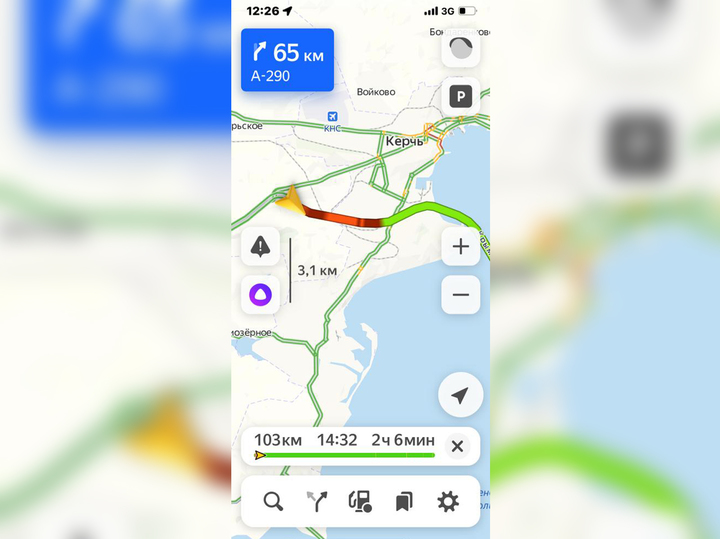
And there were several options: to stand in line for several hours to scan a car (without taking things out) or transfer all bags and suitcases to a special screening line with a pass through the frame and a subsequent thorough instrumental check of the car itself.
We chose the second option, since we had few things with us. The whole test took half an hour. I will dwell on it separately.
The longest part was getting all the luggage out of the car and then putting everything back. Passed through the frame quickly. Checking the car took no more than ten minutes.
Unlike last year, the inspection of things and the car was carried out with high quality. There are a lot of employees responsible for this work.

If a year ago the cars were checked selectively and sluggishly, then this year everything goes cheerfully, quickly and extremely meticulously. So «a fly will not slip through, a mosquito will not fly by.» In the car, they crawl into all nooks and crannies with a metal detector: under the hood, in the glove box, side compartments of doors and seats. We even looked into the compartment with a spare wheel. This approach increased confidence in the future.
I drew attention to an important detail. If a year ago our car was inspected by a tired woman at the age of sixty, then this time the composition of the inspectors has significantly rejuvenated by 10-15 years at least. Among them appeared more middle-aged men. By the way, I counted several dozen checkpoints on the day of travel. A woman was checking our car.
After we got off the bridge, the cell phone and GPS started working.
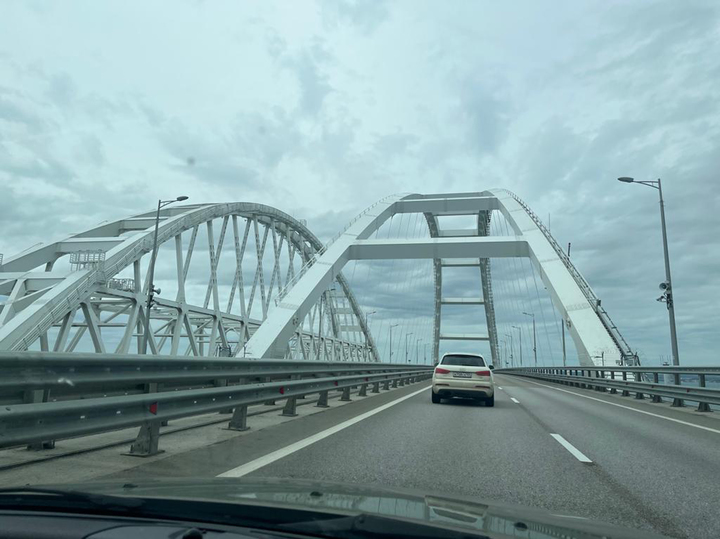 Crimean bridge.
The first point of our journey was the Yalta region. Therefore, we chose a longer route, but along the Tavrida highway, bypassing the serpentine. They didn't regret it. The optimal fuel consumption at a stable speed of 100-110 km/h and a sufficient car load (4 people and a full trunk) was 8 — 8.5 liters per 100 km.
In general, gasoline prices are practically the same as in Moscow are different. Fuel quality is good. The total amount of expenses for gasoline was 7600 rubles, expenses for a scarf — 3265.
The surroundings of Yalta greeted us with rain and rainbows. There were absolutely no problems with food. If you want, eat complex food at democratic prices. And it's delicious, it will cost 600-700 rubles a day per person. Or you can spend money on a cafe with a claim of 1,700 — 2,000 rubles a day per person.
There is a third option: buy food and cook in the mini-kitchen in the hotel. This is the cheapest, and for ten days it will cost no more than 5,000 rubles per person.
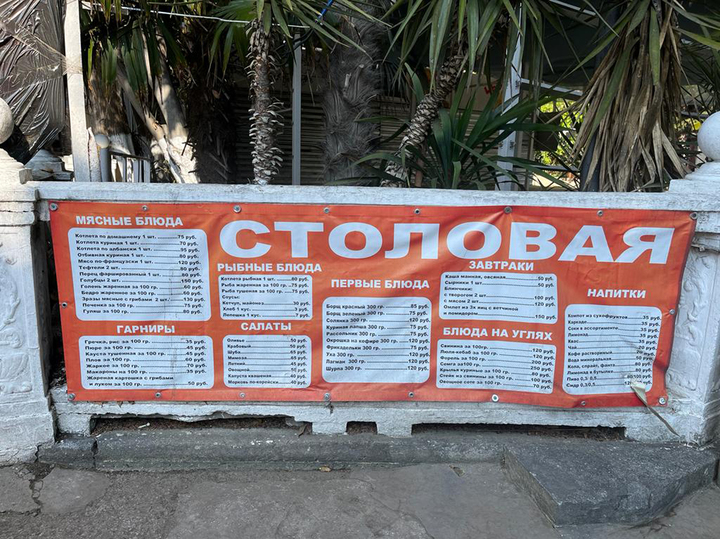 How much to eat?
Towards the May holidays, our company has replenished. Familiar arrived at SAAB 9.5. Fuel costs — 7800 rubles. We made a night stop in the vicinity of the city of Shakhty.
Double room — 2000 rubles per night, surcharge for a small dog Kuzya -100 rubles. Here in the cafe they had a dense and tasty meal within the range of 500 rubles per person. On the Crimean bridge, Yaroslav and Masha were delayed, like us, for half an hour.
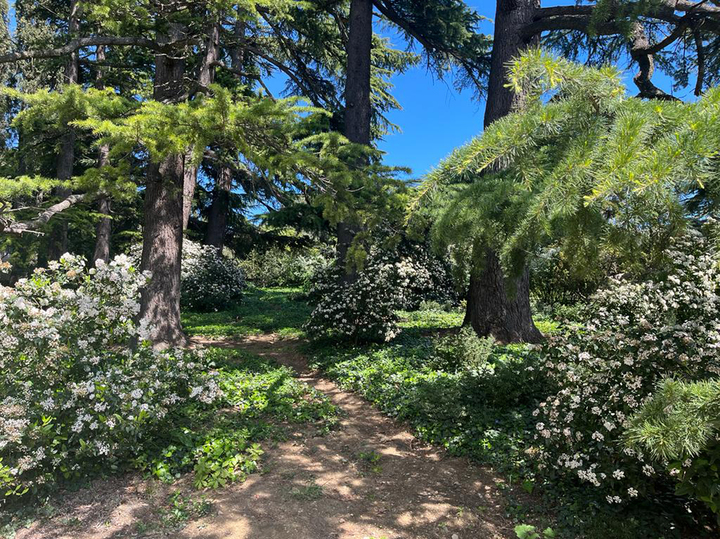
For several days, our entire large company explored the surroundings of Ai-Petri and Miskhor Park. In the park itself, I was very surprised by the old column with a marble slab, where information about the history of this place was carved. The description was completed with the words “Damage of the park-monument is prosecuted under the Law of Ukraine”. However, there is absolutely no lighting in the park. The walkways don't seem to have seen repair since the Union.
In the same condition — and most of the berths. Some are completely destroyed by storms. This is a big problem across the Crimea. So it is not so easy to find places where boats and motor ships leave from. Many require capital investment. “Yes, where can I get them?!” — say the locals.
Parking in Yalta turned out to be difficult. Parking apps don't work. But it's free on weekends.

The best time to visit Nikitsky Park is on a weekday. On weekends and holidays it is crowded here: the townspeople love this place.
The ownerless parts of the territories of the Crimean cities, abandoned corners of parks, littered with garbage, were very upset. There were places where the central paths were removed, the flower beds were well maintained, and in the corners along the fences everything was thrown with empty bottles, plastic cups and dirty bags.
But compared to last year, there has been a positive trend. Some rubble has been cleared up. For example, the descent from the highway to the Rusalka beach. Although many more places, for example, along the sidewalk along the Alupka highway, remain under rubble. By the way, not a single urn was found here.
On the territory of Vorontsovsky Park at the entrance, repair work is underway: tiles are being laid, communications are being carried out.
Over the course of our trip, we visited different corners Crimea: in Koreiz, Yalta, Bakhchisarai, Sudak, Alushta. The price level in grocery stores is about the same as in Moscow. True, in the southern coastal cities (South Coast) they are noticeably overestimated. In some places even one and a half times.
But the markets are a separate story. For example, in the Central Market of Yalta, two-thirds of fruits and vegetables are displayed without price tags at all. You have to ask. Moreover, the cost is not immediately called. At first, they smile and look at you appraisingly. But when the figure is announced, the joke comes to mind: “Sometimes you want to drive into the market in a tank and ask how much, how much?!”
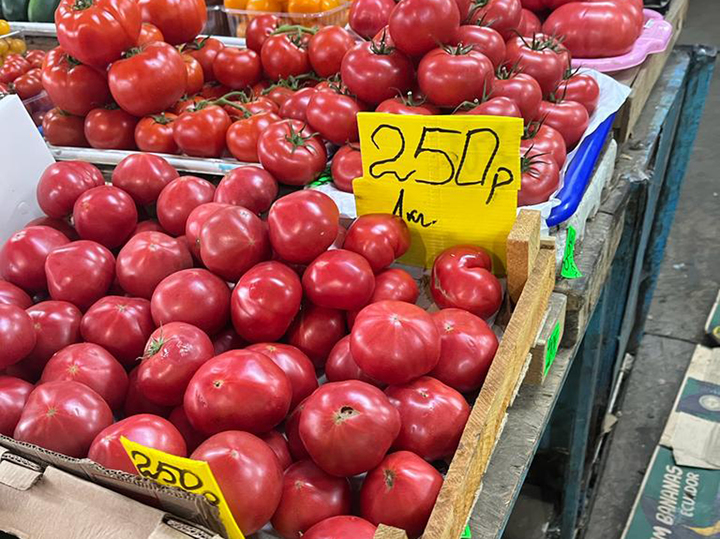
Well, judge for yourself: strawberries were offered for 500-600 rubles, Yalta onions — 150-200 rubles. Naturally, this is the price per kilogram. It’s better not to look at dried fruits at all: the lowest price for figs starts at 600 rubles per kilo, dried peaches turned out to be “cosmic” in price — 1500 rubles per kilo.
“What do you want, this is the most expensive city in the South Coast,” said the grandmother at the exit from the market and sold us strawberries for 400. It turned out to be delicious. And I suddenly remembered last year's strawberries from the Kherson region at 70 rubles per kilogram. Sweet and fragrant. In anticipation of a car with Kherson products, a crowd of suffering people always gathered. The goods were dismantled instantly, in boxes, and people asked: “When else can we expect you?” However, this question is still relevant today.
In other cities, prices were lower compared to Yalta. For example, in Sudak, young potatoes could be bought for 60-80 rubles per kilogram. In Bakhchisarai, cucumbers cost 200 rubles, and potatoes cost 20 rubles more. But locals are waiting for state farm tents and spontaneous food stalls to open, where local farmers bring goods.

In those cities that we traveled around, there was a festive expectation of something good. It was in the air. Everywhere something was whitewashed, painted, storm drains cleaned, bushes trimmed, repaired. Residents of the private sector swarmed around on their patches of land, where greenery was growing, gardens were blooming. Round ovaries of fruits were already green on some trees. A year ago, at this time, fruit and vegetable and excursion tents were already standing here. Cafes started up. And now — silence.
I note that last year at the same time there were noticeably more people, but the locals do not lose heart. The owners of private hotels and inns take the situation for granted. They are sure that at least some vacationers will come anyway.
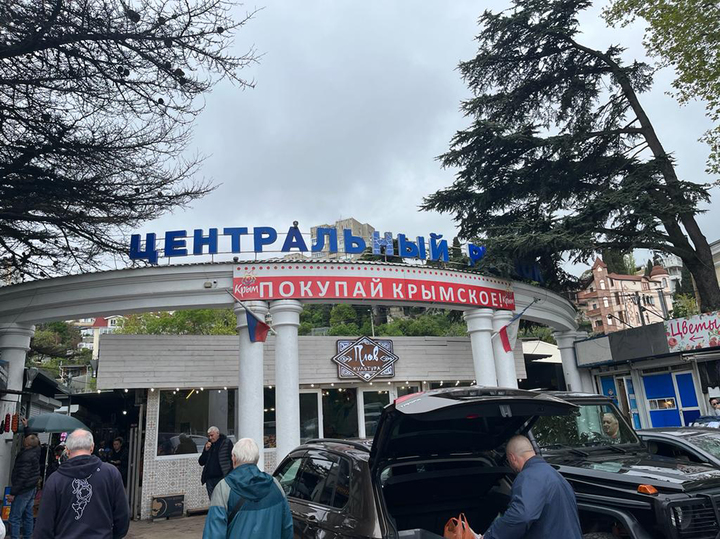 Central market in Yalta.
During the entire time we traveled around Crimea, several dozen drones tried to attack it from the side of Ukraine, which were neutralized.
I spoke with different categories of citizens. The overall picture is that people evaluate the threats of Ukrainians as the buzzing of a bored fly. Many men sign up as volunteers for the front, collection points for our military have been formed in the cities. No one believes that a Ukrainian nationalist will ever set foot here, and even more so representatives of the «collective aggressive West.»
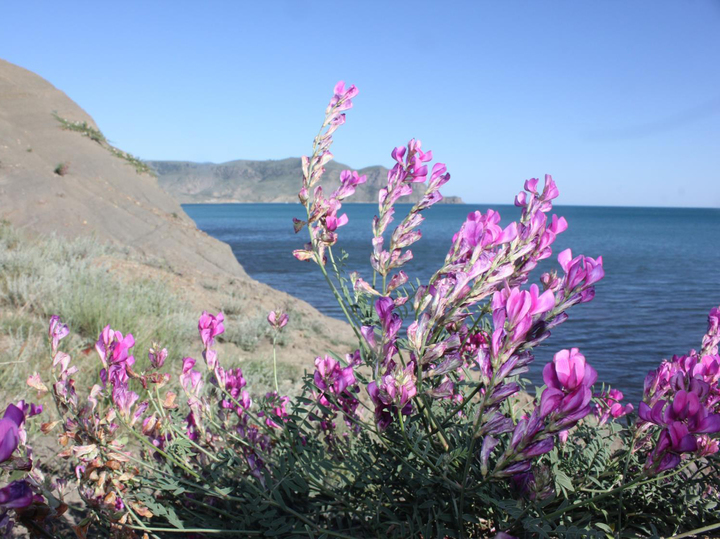
— Yes, all this collective West, inciting the Ukrainians, will break their teeth about us, — says a resident of Bakhchisaray, 60 years old named Andrei, who works as a security guard at school, — refugees from Kharkov are now living with me. A good family, their daughter is a student. Studying remotely. Polite, calm, very worried about the situation.
In the evenings until midnight we talk with them about life, go fishing together. There are many Ukrainians in our city. I can't say anything bad about them. All this talk about capturing the peninsula is nonsense. And if anything, the people here are ready to defend their land.
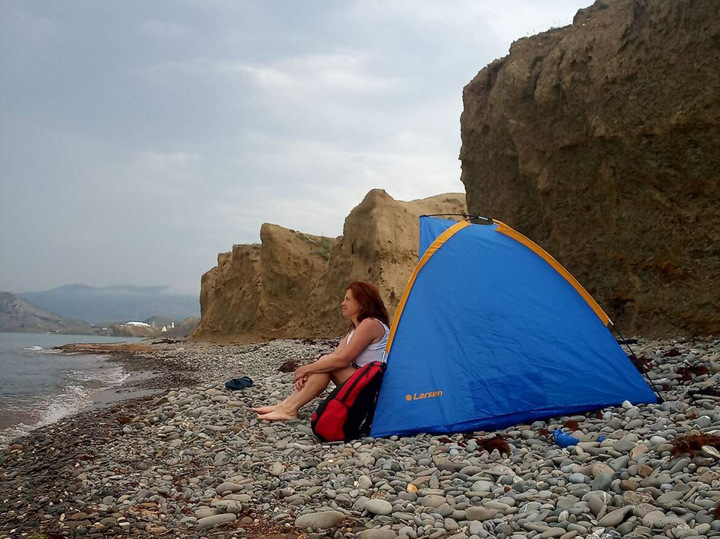
There are a lot of people in Alushta who moved here from the Siberian outskirts in 2014. I spoke with some of them.
— I know three such families. I lured the Afanasievs, and they already persuaded their relatives to buy a house here. There are many people who come from there. Mostly pensioners, I know some businessmen. They keep construction companies here, — says a local resident, electrician Vitaly. “But I haven’t heard any news for a long time. For what? A lot of work. Also farming and gardening. Tired of being distracted by external life. Do what you must, and be what will be.
They did not take me as a volunteer, I have a problem with my heart. I got upset, of course. And the son is at the forefront. There is news, and thank God.
— We noticed an interesting phenomenon. Throughout December and January, the real estate market stood still. Nothing was sold or bought: land, hotels, apartments. And in February, the people “fell off the chain,” says realtor Rinat. — Prices for everything have doubled or more.
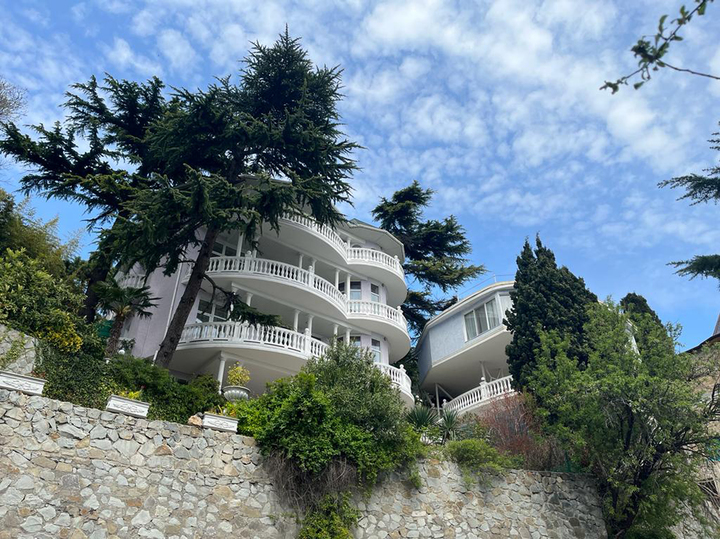 Boarding houses around Yalta awaiting tourists.
If a house with land in a quiet village in winter cost half a million, today its price has risen to 1,200,000 rubles. I'm just making a deal. They began to willingly dismantle apartments at high prices. The people are firmly convinced that everything in Crimea will be stable. Life will only get better.
Near the tent with bread at the church gates, I talked with Sudak and parishioner Lena.
— Tauric Chersonese near Sevastopol — the holiest Russian place. Prince Vladimir was baptized here. Here the Baptism of Rus' took place, — says Elena. — Therefore, the Crimea is a sacred place in Russia. Crimea is the heart of Russian Orthodoxy. And there is nothing to add!
I met the Krakhmalevs, Viktor and Ninel, on the Sudakskaya embankment.
— We came here from Omsk almost ten years ago, when the Crimea returned to Russia. My husband and I were born in Ukraine: I am in Kharkov, my husband is near Chuguev.
As for the latest news about downed drones over the peninsula and the like — yes, we no longer pay attention to this. When such an incident occurred over Feodosia in April, they were a little worried. Feodosia is next to us. And then they assessed the situation, got used to it.
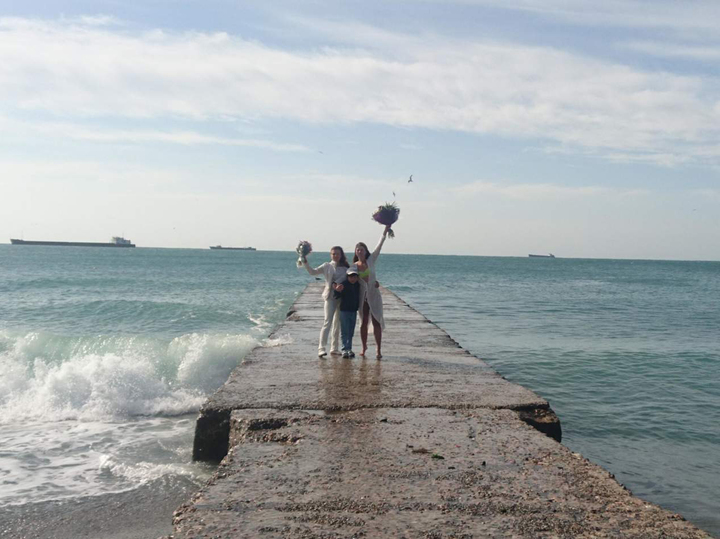
Here, our military helicopters fly over the sea, and we are even calmer from this rumble, ”Ninel says. — The mood is upbeat, cheerful, spring. Fields are plowed everywhere. Sowed even on a larger scale than last year. Work goes on a wave of positive, optimism. There is absolutely no fear.
We have neighbors whose relatives live in Kyiv. They used to greet us, were friendly, and now they even stopped talking. Recently, somewhere absent for about six months. Came unhappy, then left again. In general, there are such people, but they are few.
Those who rent apartments do not wait for the season. But we often walk along the embankment and meet vacationers: someone drove into a holiday home, someone rents a house. Visitors, according to our observations, are slowly pulling themselves up.
At the entrance at the gates of the sanatorium in Sudak, there is a tanned man of about fifty in camouflage uniform. He introduced himself as Ivan, was born in Stary Krym.
— We have talk among the men here to form a detachment and go to guard the borders peninsulas. My brother is a military pensioner, he still has connections. He will help to formalize all this, so that everyone will be given a weapon, — says Ivan. — And there will be more than one regiment like us who want to.
My father in Grushevka leads schoolchildren on excursions along the partisan paths. During the Great Patriotic War against the Starokrymsky and Feodosia detachments of partisans, the Germans threw a whole regiment with cannons and mortars, surrounded. But they couldn't destroy it. Such an inexplicable force flows in my veins, which is taken from this land. The Germans then could not understand why, having a hundredfold superiority in technology and weapons, they could not crush a handful of Russian people.
Ivan shook his fist in the air and added, as if he saw an invisible enemy in the distance: “Let them just stick their heads in! Can you smell what it smells?!»