


«We must rethink our understanding of human migration»
Giant sloth bone jewelry found by archaeologists indicates that humans settled the Americas earlier than previously thought. Scientists have studied jewelry made from now-extinct creatures and put forward the theory that humans arrived in the Western Hemisphere 27,000 years ago.
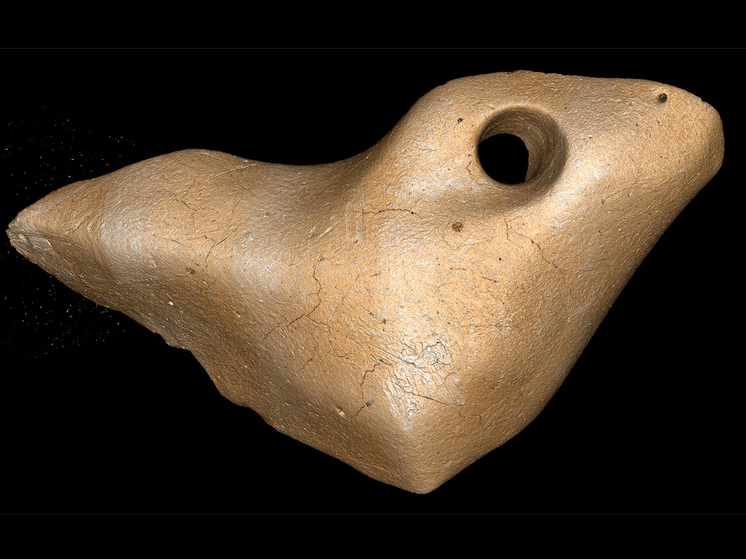 Photo: Proceedings of the Royal Society
A new study suggests that humans lived in South America at the same time as the now-extinct giant sloths, supporting evidence that humans arrived in America earlier than previously thought.
According to the Associated Press, scientists analyzed triangular and teardrop-shaped pendants made from the bone material of sloths. They concluded that the carved and polished shapes and drilled holes were the result of elaborate craftsmanship.
The researchers reported that the dating of the ornaments and deposits at the site in Brazil where they were found indicates an age of 25,000-27,000 years ago. This happened several thousand years before some earlier theories suggested that the first humans arrived in the Americas after migrating from Africa and then from Eurasia.
During the second migration, the same human lineage settled in Japan, which could help explain the similarities between prehistoric arrowheads and spears found in the Americas, China, and Japan.
“Now we have hard evidence– along with other finds from South and North America – that we need to rethink our understanding of human migration to the Americas,” said Mirian Lisa Alves Forancelli Pacheco, study co-author and archaeologist at the Federal University of San Carlos in Brazil.
In the past decade, other studies have challenged the conventional wisdom that humans reached the Americas only a few thousand years before rising sea levels closed the Bering Strait land bridge between Russia and Alaska, possibly around 15,000 years ago. , notes the Associated Press.
The jewelry was discovered about 30 years ago in a rock shelter called Santa Elina in Central Brazil. The new study is the first to carefully analyze them and rule out the possibility that people found and carved them thousands of years after the animals died.
A team of researchers from Brazil, France and the US said their analysis shows that this handicraft was made within days or years after the animals died and before the materials were fossilized. The researchers also ruled out natural abrasion and other factors that could explain the shapes and holes. They reported their findings on Wednesday in the UK journal Proceedings of the Royal Society B.
“We think these were personal items, possibly for personal decoration,” said Thais Rabito Pansani, co-author of the study. and paleontologist from the Federal University of São Carlos in Brazil.
Once upon a time, giant ground sloths were among the largest creatures in South America, reaching 3-4 meters in length and usually walking on all four legs, using their sharp claws to burrow. They weighed more than 450 kg, and their skin included bone structures under the fur – something similar to the bone plates of modern armadillos.
Two years ago, another group of researchers reported that fossilized human footprints found near White Sands, New Mexico date back to 21,000-23,000 years ago, although some researchers dispute these dates. Other evidence from Mexico suggests human presence some 26,000 years ago, while finds from Uruguay may indicate human occupation as long as 30,000 years ago.
Jennifer Ruff, a genetic anthropologist at the University of Kansas, who was not involved in the aforementioned study, considers the new article to be an «important addition»; to the conversation, but like any conclusions on this topic, it can also cause opposition.
However, evidence from a variety of places is forcing scientists to rethink old assumptions that people arrived here only during one large wave of migration across the Bering Bridge, said Briana Pobiner, co-author and paleoanthropologist at the Smithsonian Institution's National Museum of Natural History in Washington.
Some may have become extinct, «but it is very likely that several waves of people”, she notes.