

The world hydrocarbon market has changed direction
The situation with the oil and gas revenues of the Russian treasury, with their volumes and dynamics, remains vague. The statements of Anton Siluanov, the “chief in charge of the budget”, do not clarify it at all. In May, the minister acknowledged that revenues from commodity exports, taking into account the situation and all discounts, lag behind the annual plan. A month later, he asserted from a high rostrum that the target figure of 8.9 trillion rubles would be achieved. What happens to budget revenues from oil exports in reality? We talked about this with Igor Yushkov, an expert at the Financial University under the Government of the Russian Federation.
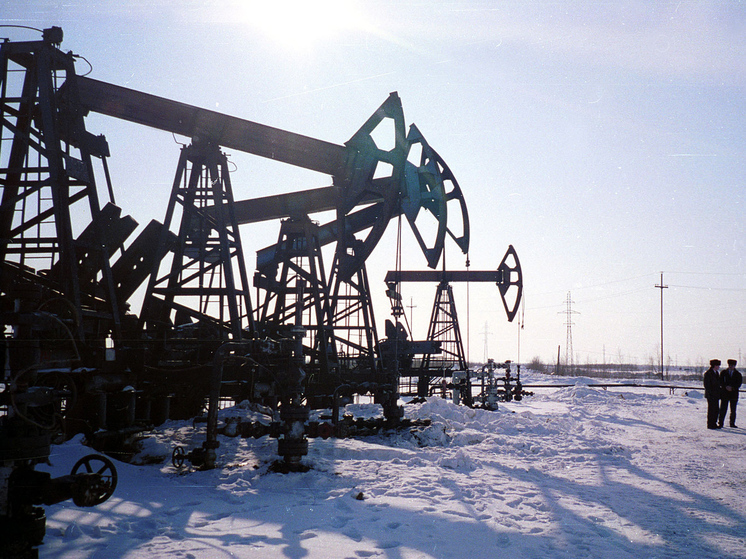
— Oil is a more profitable commodity than natural gas: both companies and the state as a whole earn more from it. A significant share of revenues to the federal budget comes from the mineral extraction tax (MET) and export customs duties on raw materials. In this regard, the gas industry has always lagged behind the oil industry, and now the gap has become huge, as supplies of «blue fuel» to Europe have collapsed: in 2021 they were under 160 billion cubic meters, in the past about 80 billion, and by the end of the current year, about 20-25 billion will be released. Accordingly, by reducing the export of pipeline gas, Gazprom was forced to reduce production, as a result, both the mineral extraction tax and the export duty fell. Let me remind you that in the spring of 2022, Ukraine blocked one of the two transit routes through its territory, and since the beginning of summer, the volume of pumping through the Nord Stream 1 pipeline began to decrease, which completely stopped on September 3.
As for the parameters of oil and gas revenues, it is important to remember the high base of last year, with which we compare. Yes, minus 46% for January-June is an outwardly frightening value. But in January-February 2022, gas supplies to Europe were in full, and the price of Russian Urals oil was high even in March, $70-80 per barrel. The discount (compared to Brent) appeared only in April-May, it reached $30–34, but at the same time the prices for Brent went above $100. Therefore, even taking into account the discount, Russia earned a lot from exports. In May-June there was a decline in production and exports, which lasted for several weeks, and then our markets shifted to Asia, and the situation in terms of sales returned to normal. It's not about them, but about the low price of Russian oil: last year, the Ministry of Finance calculated the export duty and severance tax on the basis of $85 per barrel, today it is about $55. As for the indicator of 8.9 trillion rubles planned for the current year, I think that we will hardly achieve it.
— To determine the rates of export duties and taxes, it is the price of the Ministry of Finance that is important, and not the one at which Russian companies sell oil (besides, this is a trade secret). After the introduction of a limitation on the size of the discount this year, the department began to actively push the oil companies to reduce the discount themselves and thereby minimize losses. The problem here is this: the Ministry of Finance is still guided by the Urals quote, the assessment of which is prepared for it by the international pricing agency Argus, headquartered in London. There are doubts about the representativeness of this indicator. But under all circumstances, the discount on Russian oil is indeed decreasing as the risks associated with buying go away. At first, immediately after the imposition of sanctions, they were afraid to take it, because it was not clear what exactly was prohibited and what was allowed, what would be the consequences for potential violators. To date, the picture has become clearer, and logistics and bank settlement mechanisms have also improved. Previously, high risks were largely offset by high discounts, but today the situation is different.
— I doubt. The ceiling was conceived as follows: if you want to find a carrier who will agree to transport your oil, then you must sell it at a price below $60 per barrel. However, we do not see this. In reality, the global tanker fleet has split in two, as it were: one part of the shipowners does not want to deal with Russian raw materials, not fully understanding how to report on transportation, how to prove that the price ceiling rules have not been violated. At the same time, a shadow (or, as it is also called, “twilight”) fleet has been formed, which is engaged in the transportation of only sanctioned oil: Russian, Iranian, Venezuelan. In this case, shipowners ignore the ceiling, not being afraid of being subject to secondary sanctions, and either Russian companies or Asian companies take care of transportation insurance. Accordingly, the factor that would force Moscow to sell oil below the level of $60 per barrel disappears. But here the questions arise, how much do the services of the shadow fleet cost us and how do these payment schemes work? After all, Russian companies may claim that their costs associated with expensive transportation are growing, which means that they have the right to pay the state a lower export duty and severance tax. And if the ceiling is lowered, exporters will have even less money, and they will have to reduce investment in new projects.
The core idea of the ceiling: it is necessary to set such a price for Russian oil so that suppliers remain profitable and continue to saturate the world market with raw materials, but at the same time so that the state does not earn. At some point, the European Commission promised to review the price limit every two months, reducing it by 5% of the average cost of Urals. But it is clear that such a mechanism will ultimately deprive the ceiling of meaning, turn it into a fiction. And that Russian companies will reduce shipments, there will be a shortage on the world market, Brent quotes will grow. For the G7 countries, all this can turn sideways. Let me remind you that last year’s embargo by the United States (in April 2022) led to a decrease in Russian exports and a jump in the price of Brent above $100 per barrel.
— Indeed, in terms of volumes, we quickly reorganized from Europe to Asian markets and today we export about the same amount as in 2021. The main discovery of the last year was India. Previously, we delivered there an average of 20,000 barrels per day, these are tiny volumes. Today, India is the largest buyer of Russian oil, which is transported by sea, and overtakes even China in this indicator. In terms of total supplies, China is still in first place due to pipeline routes: the Eastern Siberia-Pacific Ocean (ESPO) oil pipeline and transit through Kazakhstan (10 million tons per year). India has managed to digest all the volumes that previously went to Europe by sea. Oil products obtained from Russian crude oil at its refineries, it mainly exports to Europe and the United States. In fact, it has replaced us in the oil product markets in the Old and New Worlds.
In general, the trade in petroleum products is a profitable business. For example, the states of northern Africa (Libya, Egypt, Algeria, Tunisia, Morocco) produce them at home from Russian raw materials bought at a discount, and then resell them at a high profit. In this case, we are satisfied with the short transport arm. It is much more convenient to transport oil from Novorossiysk to any point on the North African coast than through the Suez Canal to India. But now it is necessary to tighten the economic and financial component of this reorientation from the European market to other regions. The issue of reducing the discount is closely related to the global task of increasing efficiency, building our own infrastructure around raw material exports, and providing ourselves with a certain number of tankers. This will allow you to earn more in total, not to give money to the side. For decades, Russia has been selling oil using foreign infrastructure: third-party traders and insurers, ships.
— First of all, it is necessary to take into account the interests of companies. Yes, there is a temptation to take a purely administrative path — to rewrite the formula for calculating the MET and export duty, or simply tell the oil industry: pay according to the formula «price for Brent minus $10», and we (the state) will deduct tax and duty from the resulting figure. This would lead to an increase in federal budget revenues, but the activities of Russian companies would become unprofitable. They would be taxed inappropriately high, and in reality they would sell oil at a lower price at a loss. Such a policy of squeezing money out of producers is fraught with a drop in production and exports. No one will engage in a business that is obviously unprofitable for themselves. In general, in order to earn more, it is not enough to reduce the discount, it is also necessary that oil becomes more expensive. This will increase production volumes. Meanwhile, within OPEC+, Russia committed itself to reducing them, and in February, Deputy Prime Minister Alexander Novak announced an additional reduction (and on a voluntary basis) of 500,000 barrels per day. All this is done in order not only to keep prices from falling further, but to push them up. And then there will be no need for a radical reduction in production, and Russia will be able to earn not only from the price, but also from sales volumes. But here another condition arises: accelerated and dynamic development of the world economy, higher demand for energy resources from China, the USA, and Europe.
— We do not yet have a new infrastructure, we simply did not have time to create it since the imposition of sanctions. Russia did not build new oil pipelines and ports, and as for the tanker fleet, these are second-hand ships bought abroad. The route Eastern Siberia — the Pacific Ocean is not expanding. Transneft began to add special anti-turbulent additives that simply increase the throughput of the existing pipe, but there are no new pumping stations or new branches. If we talk about sea deliveries, yes, transportation costs have increased, but by how much, it is not clear: now almost all raw materials are transported by the shadow fleet. In general, the global fuel market has become less efficient. Previously, it was built from the point of view of elementary economic logic: since we are neighbors with Europe, it means that we supply there. Similarly, Middle Eastern producers focused almost exclusively on Asia: Iraq and Saudi Arabia were the largest oil exporters to India. Now in India, Russia is playing their role, and Russian raw materials on the European market have been replaced by Middle Eastern suppliers. And it turns out that it takes more time, effort and tankers to transport the same volumes. The profitability of the commodity business with supplies to India and China today is clearly less than it was with supplies to Europe at comparable prices.
— Of course, if there were no restrictions, Russia could earn more. On the other hand, Western countries would have imported oil at lower prices if they had not imposed sanctions. Increased transportation costs are only partially offset by lower profitability of manufacturing companies. To a large extent, they are shifted to the buyer. For example, India, when it processes Russian raw materials and sells oil products to the United States, incurs quite large costs. The sanctions boomeranged the Western economy, provoking a surge in inflation and forcing regulators — both the European Central Bank and the US Federal Reserve — to raise rates. Europe has been in recession for two consecutive quarters, and economic growth has slowed in the US. It is clear that for Russia the sanctions are much more negative than good. They hinder our development, create problems for us, and it would be better if they did not exist at all. Meanwhile, someone sees them as almost complete advantages: they say that the sanctions accelerated the development of certain segments of the oil industry, forced the rapid production of catalysts for oil refining, made it clear how important it is to have your own tanker fleet and your own insurance companies. However, ideally, all this should have been done earlier, even before the sanctions. The business did what was easier for it, preferring not to invest in enterprises for the production of various elements for oil refining, but to buy this equipment on the side. In short, until the thunder struck…
May 31, 2022 122.84
July 14, 99.57
August 17, 93.65
September 27, 86.27
December 9, 76.10
January 23, 2023, 88.19
February 2 82.17
March 17 72.97
April 12 87.33
May 24 78.36
June 12 71.84
July 13 81.36