


Private business looking for ways to pay staff
The Ministry of Labor called the amount of expenses necessary to raise the minimum wage in 2024. According to the agency, budgets of various levels and private businesses will have to allocate more than 193 billion rubles for these purposes. Civil servants need not worry — federal and regional authorities will allocate money for additional payments. But private business money will not fall from the sky. And those who work in this sector for the «minimal wage», apparently, will be forced to switch to part-time work or even be on the verge of being fired.
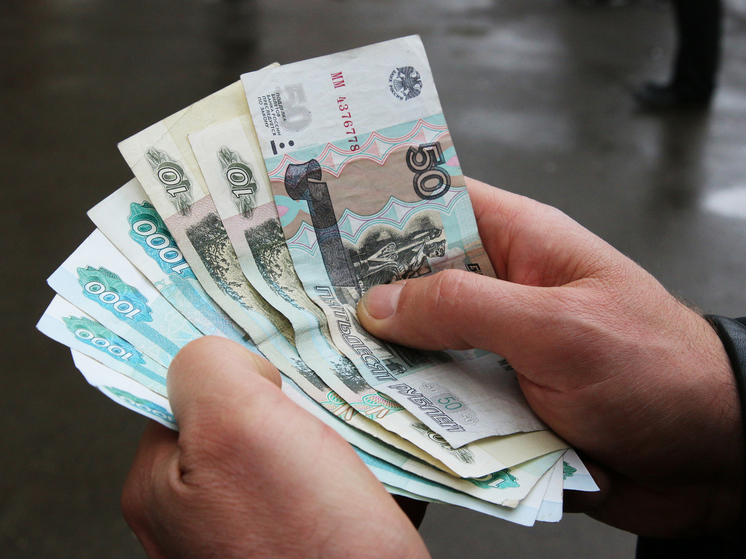
The main financial burden associated with the increase in the minimum wage, which will increase by 18.5% from January 1, 2024 up to 19,242 rubles, will fall on the regional and municipal budgets. Additional expenses of these branches of government will exceed 126 billion rubles. About another 20 billion rubles will come from the federal treasury. Expenses for the real sector of the economy are envisaged in the amount of about 45 billion rubles.
For the third year in a row, the state has been pursuing a policy of outstripping growth in the minimum wages of Russians: in 2022, the minimum wage was increased twice — by 8.6% and 10%, and from June 1, 2023 it was increased by another 6.3%. According to government calculations, as a result of the implementation of such decisions by 2030, the minimum wage in nominal terms should double. As Vladimir Putin noted in June of this year at the St. Petersburg International Economic Forum, the state is not going to abandon the idea of indexing the minimum wage and intends to continue to increase its gap from the subsistence minimum. According to the glory of the state, the increase envisaged in 2024 will be “much higher than both the inflation rate and the growth rate of wages in the country as a whole.”
Experts believe that if public sector workers have every reason to hope for the fulfillment of the government's promises, then the financial situation of Russians employed in private enterprises still looks rather unstable. According to Sergey Smirnov, a leading researcher at INION RAS, private business is far from always obliged to fully focus on government initiatives regarding the payroll fund for its workforce, since it has the opportunity for certain maneuvers in this matter. “Of course, the best way to increase the wages of employees is to expand sales markets and increase profits, but not all companies in the current economic situation will be able to find ways to strengthen their financial well-being in the shortest possible time,” the expert believes. “Most likely, entrepreneurs in the real sector of the economy will act on the contrary and try to minimize the cost of paying employees, in particular, they will transfer part of the staff to part-time work.” Russians, for whom the private sector serves only as a form of secondary employment, that is, a place for part-time work, will not be left without a penny, as they will continue to receive salaries in the public sector, but they will also be forced to give up additional income.
Each of the categories of Russian business will have to adapt in its own way to government requirements regarding the monetary remuneration of employees, says Pavel Kudyukin, a member of the Council of the Russian Confederation of Labor. Large and medium-sized businesses should not have any particular problems with increasing the amount of cash settlement with the team, since companies of this economic class can afford to cut margins — to optimize and reduce production costs. “In the end, they can cut the salaries of top managers, who often receive inadequately high salaries, fees and other types of bonuses,” the expert recommends. In turn, small businesses are at risk of suffering much more due to financial constraints. However, it is quite possible that they will not have to fork out, because they hire staff not according to the standards of a civil law contract and may not pay attention to government decisions related to increasing the minimum wage. The same applies to the self-employed, who often pay remuneration in «envelopes».
In general, according to Sergei Smirnov, domestic entrepreneurs will be able to find sources of financing for the payroll fund or regulate the payment of maintenance to their employees, so it is hardly worth expect massive cuts. Nevertheless, many Russians who receive the minimum wage will be placed in rather harsh conditions, pushing them to quit of their own free will.