


The result was achieved thanks to the joint efforts of specialists from three institutes
For the first time, scientists of the 68th Russian Antarctic Expedition of the Arctic and Antarctic Scientific Research Institute (AARI) together with colleagues from other scientific organizations.
 Photo: Arctic and Antarctic Research Institute
The joint experiment “Plants”, in which specialists from the Agrophysical Institute and the Institute of Biomedical Problems of the Russian Academy of Sciences took part, has been taking place at the Antarctic station since February 2020. Previously, 80 (!) varieties of various vegetable crops have already been grown here, for example, undersized tomatoes of two varieties and pepper, sorrel, arugula and collard greens, watercress, leafy mustard and turnips, as well as amaranth (cereal), chard (herbaceous plant), purslane, parsley, dill, basil, spinach and others. In April of this year, a watermelon was planted at Vostok station for the first time.
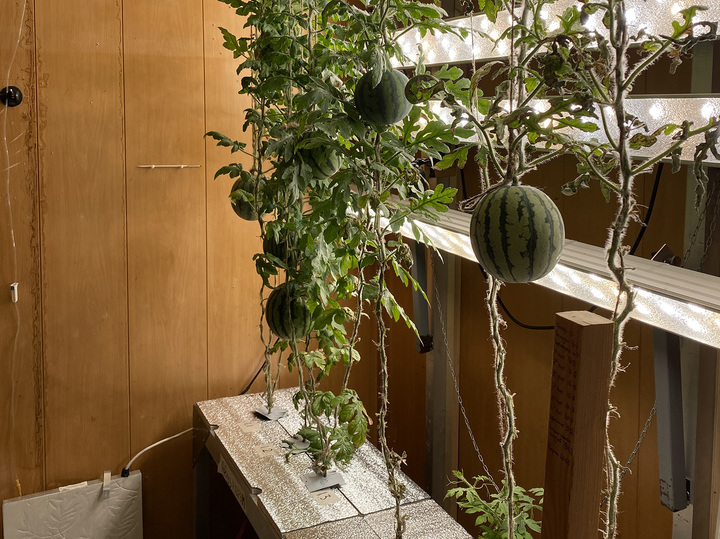 Photo: Arctic and Antarctic Research Institute
As MK was informed at the AARI, in order to create favorable conditions for a heat-loving melon crop, specialists from the Agrophysical Institute have developed a special phytotechnical complex. The soil for growing watermelons was replaced with a thin-layer soil substitute — panoponica, nutrients were added, and the lighting was made close to sunlight.
Two varieties of watermelons — red and yellow — were selected for Antarctica for their high palatability and ability to adapt to low atmospheric pressure and oxygen deficiency. They were pollinated at the end of May, and in July the explorers were able to taste the first fruits.
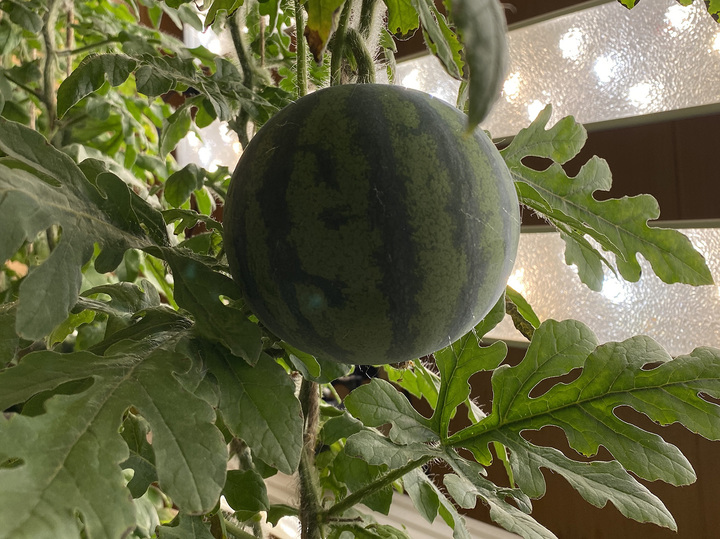 Photo: Arctic and Antarctic Research Institute
Fresh vegetables and fruits, as sources of vitamins, are indispensable in harsh cold conditions, but in addition to vitamins, they are also useful as an element of psychological support, said Alexander Makarov, director of the AARI.
— The greenhouse at the station has a positive effect on the emotional state of polar explorers, many months of being in an isolated team, in conditions of polar night, low temperatures and limited living space, he said.
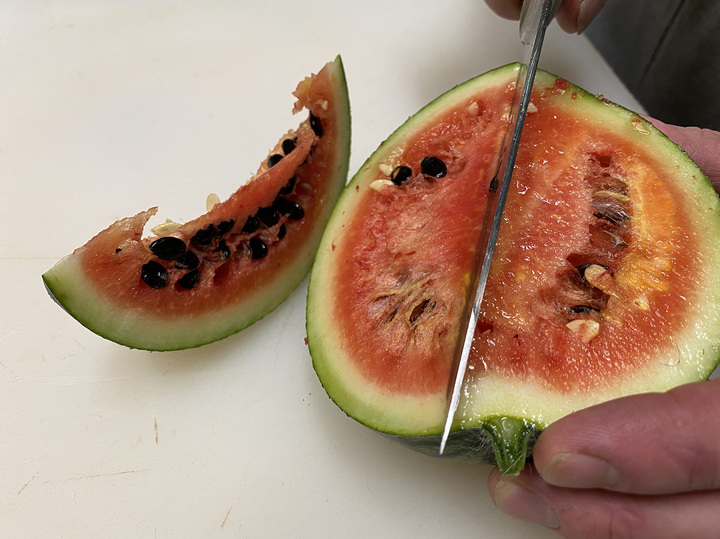 Photo: Arctic and Antarctic Research Institute
This “psychological” quality of the polar greenhouse was also of interest to those who have long been studying the features of the interaction of people in closed systems with an eye to the future conquest of the Moon and other planets by Russians, that is, scientists at the Institute of Biomedical Problems of the Russian Academy of Sciences. They carefully analyze the data on the physiological and emotional state of the polar explorers at the Vostok station.
 Photo: Arctic and Antarctic Research Institute
So, in 103 days, on six plants, happy polar explorers managed to grow eight ripe and sweet watermelons with red and yellow flesh, weighing up to 1 kg each. In the future, scientists intend to grow wild berries there — blackberries, strawberries and blueberries.