


It has become costly for the United States to punish violators for buying Russian oil
Having barely managed to impose new energy restrictions on Russia, the West faced its own hesitation in enforcing the sanctions. The United States, which was expected to take the most radical measures to combat oil sales from our country at prices above the “ceiling” of $60 per barrel, unexpectedly did not disturb the market, deciding first “in a good way” to persuade intermediaries and buyers of “black gold” to voluntarily comply with the conditions anti-Russian restrictions.
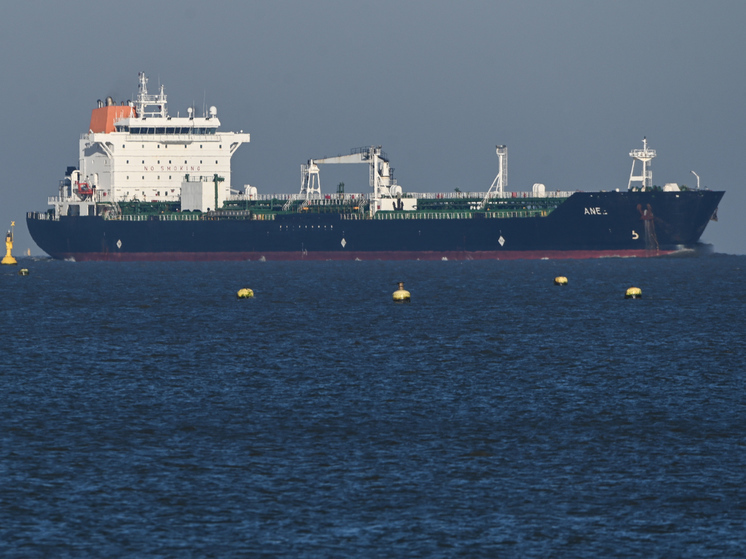
The attention of the White House, according to Reuters, will primarily focus on the world's leading trading, transport and insurance companies. It will be about «ensuring price restrictions» on the trade in Russian «black gold» Washington promises not to put pressure on anyone. Negotiations will be carried out in the format of correspondence and exchange of views by phone.
Nobody expected Washington, which was the initiator of a large-scale energy confrontation with Moscow, to a “soft policy” of supervising the implementation of the imposed anti-Russian sanctions. Why, in fact, American senators and congressmen, who until recently demanded a reduction in the restrictive price bar for Urals to $40-50 per barrel, are now in no hurry to severely punish intermediaries and resellers?
According to experts, at current prices, it is not yet profitable for the Americans to introduce full control over those who sell Russian raw materials up to the “ceiling”, and who are playing a double game and making deals with our “black gold” bypassing the bans. Each of the major international seaports, which have terminals for transshipment of hydrocarbons into pipelines or railway tanks, hosts hundreds of cargo carriers every day. It is theoretically possible to calculate among them those who carry raw materials at prices above the «ceiling» — satellite location systems allow tracking a fairly accurate route of each tanker. However, the cost of Urals at about $69 per barrel (namely, deals for the purchase of Russian “black gold” have been concluded at this level for two weeks now) does not seem to frighten the White House, which is in no hurry to open a new wide front of energy confrontation with Russia.< /p>
According to the head of the department of analytical research at IVA Partners Investment Company Dmitry Alexandrov, the change by the Americans of the tactics of preventing the export of Russian oil, among other things, was caused by the massive refusal to directly follow the sanctions restrictions (transport, trade and insurance structures — «MK»), and with sides of key US partners in various regions of the world. “It is simply cheaper to close one’s eyes to supplies with a relatively low excess of the “ceiling” than to carry out strict control and apply drastic measures of influence, so for now it is unlikely that any of the importers will be very scared,” the analyst believes.
Experts also have doubts about the correctness of the choice of interlocutors whom Washington is going to convince of voluntary compliance with price sanctions. “The Americans intend to persuade big business — shipowners, insurers or traders, but companies of this level have not cooperated with our country for a long time,” says Igor Yushkov, a leading analyst at the National Energy Security Fund, an expert at the Financial University under the Government of the Russian Federation. “Russian oil is transported to India, for the most part, by unknown, newly created companies that take on the solution of all possible issues that may arise during the delivery of energy resources from the supplier to the end consumer.”
The actual shipment, as well as the documented sale of raw materials, takes place at the buyer's port. This is where the latest prices are negotiated. Even all the imposed sanctions cannot prohibit such transactions: customers cannot be reproached for purchasing oil at high prices — they will refer to market quotes. And the fact that in the shipping lists Russian oil is supplied at a lower cost that fits into the G7 restrictions, the buyer seems to be not supposed to know.
“It can be said that importers are protected from most of the obstacles contained in the sanctions . The supplier provides both the goods themselves and provides services for insurance and transportation of raw materials. There is no reason to make claims to the buyer, and if the supplier is obstructed, then another unknown company will immediately take its place, so export deliveries will not suffer. According to Reuters, Washington, by switching to “soft politics”, is justifying itself to the Americans, explaining to voters why sanctions do not work and how Russia has learned to bypass restrictions,” Yushkov believes.