


In September, the Ministry of Finance may refuse to buy foreign currency for oil windfalls
The situation with a truly dramatic weakening of the rate of Russian banknotes to 94 rubles per dollar gives rise to a lot of moments that do not fit well with each other. On the one hand, for the first time this year, the Ministry of Finance announced a transition to buying foreign currency on the domestic market: by September 6, 40 billion rubles of raw material revenues will be allocated for this purpose. At the same time, Siluanov's department intends to deviate from the budget rule (creating additional reserves of dollars and euros) in the coming months due to events around the falling ruble quotes. All this looks very strange, evoking thoughts of systemic «confusion and vacillation» in the leadership of the government's economic bloc.
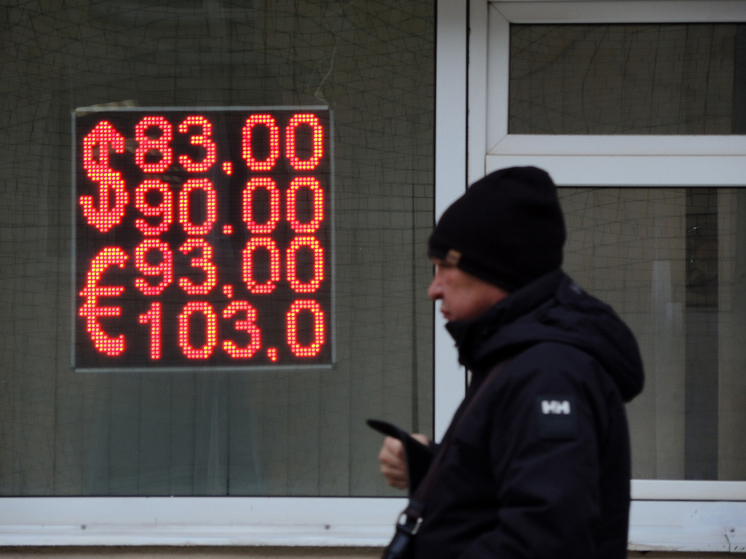
Under any circumstances, the monetary authorities in the face of the Ministry of Finance and the Central Bank face a non-trivial task: it is necessary to close the hole in the budget without particularly infringing on the national currency, which is already half dead. These are two things that are incompatible in the current macroeconomic conditions. Apparently, at least until the end of the year, the regulators will not make drastic steps. And whether the Ministry of Finance will refuse to buy foreign currency for commodity windfalls after September 6 is a very big question. More likely no than yes. Moreover, the sluggish ruble frankly plays into the hands of officials.
“According to the budget rule, the Ministry of Finance purchases yuan and gold through the Central Bank when oil and gas revenues exceed the base level set for the month,” recalls Artem Deev, head of the analytical department at AMarkets. — The currency (according to the new version of the rule, we are talking about amounts beyond the planned 8 trillion rubles in the budget) goes to the National Welfare Fund. However, since January 2023, the actual volume of income was lower than the base, so only sales of yuan were carried out, there was nothing to save in the NWF.”
Plus, the interlocutor of MK notes, against the background of the weakening of the ruble, from August 1, the regulator began to additionally sell foreign currency from the NWF, and the limit for such operations was set at 300 billion rubles for six months. In June alone, the ruble lost about 10% against the dollar, in July — another 2.3%. The Ministry of Finance attributes this to the deterioration of the trade balance against the backdrop of a reduction in foreign exchange receipts through the Russian export channel.
“In August, just the same raw material super-profits are expected that should have gone into the“ state ”sack,” notes Deev. — And it is quite reasonable to subsequently use these funds to cover the budget deficit, which, in turn, can stop the trend towards the weakening of the ruble. And foreign exchange interventions, if carried out in the same volumes, could collapse the exchange rate altogether.
A couple of days ago, Siluanov said that, judging by the price dynamics, the 8 trillion rubles limit set by the government would be partially exceeded by the end of the year. For seven months of the year, the average annual price of the Russian grade Urals exceeded $53 per barrel, and in July it amounted to $64.
Judging by everything, Nikita Maslennikov, a leading expert at the Center for Political Technologies, argues, we are waiting for a decrease in discounts and an overall improvement in the situation with oil exports. Plus, price effects are beginning to take effect, caused by two factors — Russia's voluntary reduction in oil production by 500,000 barrels per day (extended until the end of the year) and the fact that Saudi Arabia extended its similar decision to August, and we are talking about 1 million bpd. Accordingly, it would be absolutely reasonable to direct excess profits to finance the budget deficit.
“At the same time, the ruble exchange rate reacts to this conjuncture in a very peculiar way: even after the end of the tax period, it continues to roll down an inclined plane,” says Maslennikov. – Today, it is influenced not so much by the state of the trade and payment balance, but by the obvious signs of a shortage of foreign exchange liquidity in the market. Much will also depend on oil prices, but this area is poorly predicted, as it largely depends on macroeconomic trends. For example, the IMF foresees a rather serious decline in business activity in Europe, a weak recession in Germany.”
Neither the July increase of the key rate by the Central Bank to 8.5% per annum, nor the hypothetical refusal of the Ministry of Finance to purchase foreign currency for oil and gas revenues will allow to radically change exchange rate dynamics: by the end of the year we will observe a smooth devaluation of the ruble, Spartak Sobolev, head of the department for researching investment strategies at Alfa Forex, believes. According to him, next week the benchmarks will be 95 per dollar and 105 per euro. With a two-fold reduction in the positive balance of trade, much more time is needed to reverse the «bearish» trend of the ruble quotes.