


The main producers of «black gold» adjust the price of energy resources
In September, Russia will continue to voluntarily reduce oil exports, this time in the amount of 300,000 barrels per day instead of 500,000. Simultaneously with this news, voiced by Deputy Prime Minister Alexander Novak, similar information appeared from Riyadh. However, we are no longer talking about exports, but about production: a source in the Ministry of Energy of Saudi Arabia said that the kingdom is extending to September the reduction in production by 1 million barrels per day that began in July.
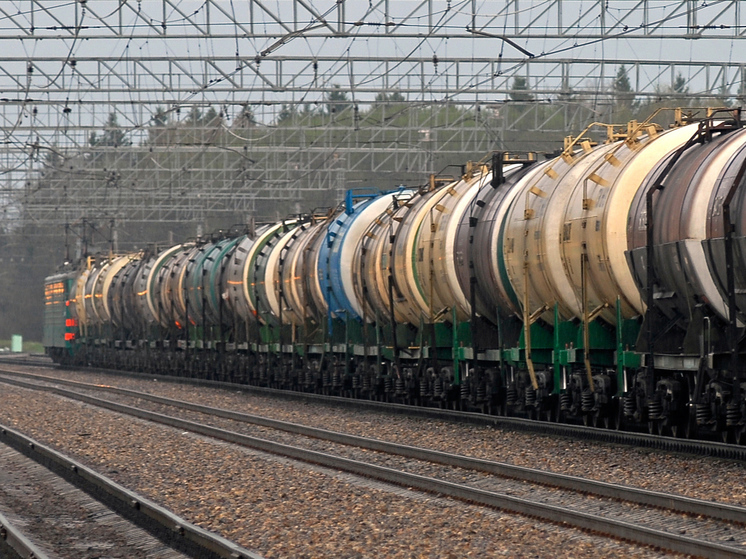
It is clear that there is a direct relationship between these two events. But the question is: how justified are Moscow's actions, given the frankly favorable price situation on the world energy markets?
Recall that at the beginning of 2023, the Russian government decided to voluntarily reduce production by 500,000 barrels per day (about 5% of the total volume of 10.2 million bpd, starting from March 1. This happened against the backdrop of the introduction of two types of new sanctions by the West — an embargo on oil supplies from the Russian Federation to the European Union by sea and a price ceiling of $60 per barrel for third countries.Saudi Arabia then took a similar step, other OPEC member states announced production cuts, but in smaller volumes.
And then Russia also pledged to cut supplies abroad as well, from July 1, by the same half a million barrels per day. According to the French company Kpler (which specializes in collecting information on commodity markets), the volumes redirected from exports went to refineries, which completed preventive repairs in June. That is, for domestic consumption. Meanwhile, today world oil prices are consistently above $80 per barrel, and the discount of the Russian grade Urals to the benchmark Brent has sharply decreased: in December 2022 it reached $40, and in July 2023 it dropped to almost $15.
Does it make sense then to continue to adhere to the previous obligations related to production and export, moreover, taken on a voluntary basis? What are Moscow's current motives? Igor Yushkov, an expert from the Financial University under the Government of the Russian Federation, answers these questions.
“It is not in vain that Novak's statement contains the wording — “as part of efforts to ensure market balance,” says Yushkov. — Russia in its actions continues to stand in solidarity with Saudi Arabia, its partner in OPEC+. Initially, Riyadh did not plan to extend the production cut to August, and, moreover, to September. However, in the middle of summer it became clear to everyone that the macroeconomic situation in the world is not improving, and it is too early to talk about the likelihood of such a scenario. In particular, both the US Federal Reserve and the European Central Bank are tightening monetary policy by raising rates. Accordingly, loans become more expensive, enterprises do not take them, less money enters the exchange, demand for exchange goods falls, including oil futures. It's getting cheaper. By cutting production and exports, Russia and Riyadh are trying to counter this monetary factor, which is pushing prices down.
– This issue was resolved in negotiations with commodity companies. It is rather difficult for the government to coordinate such moments with the oilmen: formally, it does not have the authority to tell them how much to produce and how much to export. Apparently, the parties have come to a compromise. In any case, from September the volume of deliveries abroad will grow by 200,000 bpd compared to August. Let not by much, but it will grow.
As for the technical side of the matter, I think we will store some of the dropping crude oil exports, and process and sell the rest abroad in the form of petroleum products. So far, one thing is clear: our joint efforts with Saudi Arabia have yielded results in the form of Brent quotes above $80 per barrel and a reduction in the discount on Urals. And as long as this conjuncture persists, as long as the financial and economic situation in the United States and Europe is far from stable, both countries will not retreat from their current, quite effective, as life has shown, tactics.