


Prehistoric baby's femur intrigues scientists
Scientists have discovered a new human species for perhaps the second time in recent days. Researchers claim that the femur of a baby who lived 45,000 years ago, found in France, belonged to an unknown human race. The remains of a prehistoric baby may belong to a previously unknown lineage of Homo sapiens. The bone is different from Neanderthal bone and looks a bit like modern human bone.
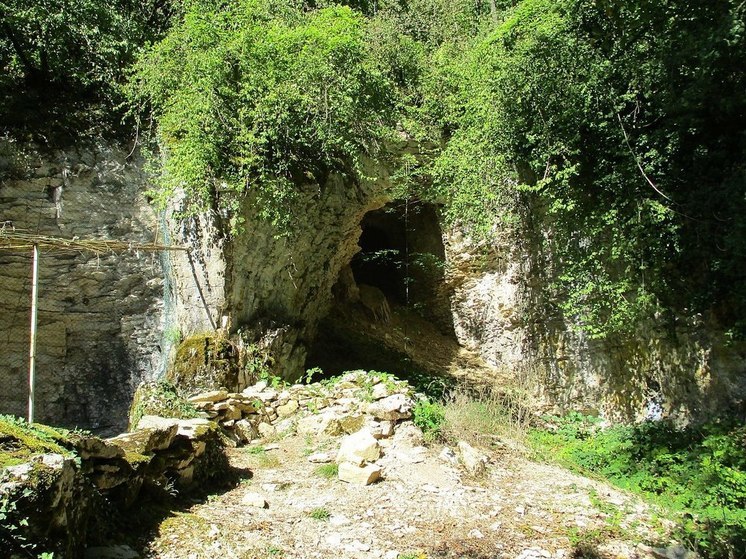 Grote du Reine < span itemprop="width" itemscope itemtype="https://schema.org/QuantitativeValue">
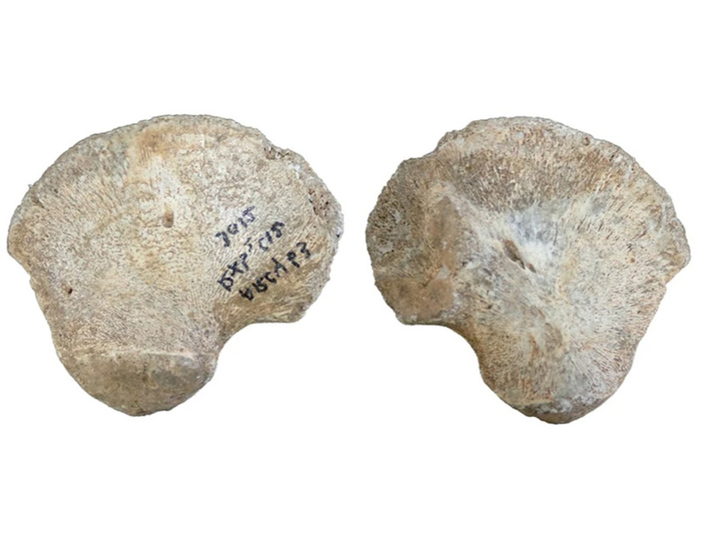
Anthropologists in France have discovered the pelvic bone of a 45,000-year-old baby that does not match either Neanderthals or homo sapiens.
The femur of a prehistoric baby was found along with the remains of 11 Neanderthals in the Grotto du Rennes, later inhabited by anatomically modern humans (AMH), suggesting that the child co-existed with the now extinct species.
The artifact was compared to two Neanderthal bones and 32 modern baby bones, finding that its shape differed from the bones of both species, but a little closer anatomically modern humans, according to the Daily Mail.
«We hypothesize that this is due to its belonging to an early lineage of modern humans, whose morphology is slightly different from modern humans,» the team wrote in a study published in Nature.
The news comes after a separate study showed that an ancient skull that belonged to a child who lived up to 300,000 years ago in China could also belong to a new human species. The fossilized remains, which included a jaw, skull and leg bones, were discovered in Hualongdong in 2019. What puzzled the experts, however, was that this individual's facial features did not match the lineage that split to form Neanderthals, Denisovans, or us, leading them to suspect that we may be missing a branch on the human family tree.
And here's what the latest discovery opened, continues the Daily Mail.
Anatomically modern humans appeared in Western Europe about 42,000 years ago, 2,000 years before the Neanderthals went extinct.
The Grottoes du Rennes is a site that was home to both species during the Middle and Upper Paleolithic, but provided evidence that Neanderthals developed aspects of modern behavior prior to contact with modern humans.
The layers of earth inside the cave give clues as to when the cave was inhabited by Neanderthals and when anatomically modern humans took over the site, but the middle layer contained a small pelvic bone, suggesting that another lineage of humanity also inhabited the structure. .
The bone of the baby was found on the same level as the remains of 11 Neanderthals, the publication writes.
This level refers to the Châtelperron cultural complex that existed 45,000-40,000 years ago, followed by the Mousterian culture.
The Châtelperron period was an era when stone tools and flint knives are considered to be a turning point in the evolution of the Neanderthals, although some scientists believe that these products were made by early people.
An infant's pelvic bone was found to have a completely different curvature to that of immature Neanderthal bones, but only slightly different from those of anatomically modern humans.
The team said the mysterious artifact was in samples taken from modern humans . «Thus, this coincidence may indicate variability in the curvature of the ilium [pelvic bone] common between Neanderthals and Homo sapiens,» the study says.
The researchers suggested that the infant was likely a member of the population anatomically modern humans that co-existed with the last Neanderthals during the transitional period.
If this hypothesis is confirmed, the team stated that the Chatelperronians may have «arose as a result of processes of cultural diffusion or acculturation, with possible mixing of the population between the two groups». This, the Daily Mail points out, means that Neanderthals learned from modern humans and used tool making to develop their technology.