


The ruble weakening trend is at risk of continuing
The Central Bank's increase in the key rate immediately from 8.5% to 12% per annum will not reverse the ruble weakening trend, giving only a short-term effect. Most of the experts interviewed by MK agree in this opinion. In their opinion, the problem faced by the Russian currency and the financial system has so many sources that it cannot be eliminated by a single, albeit radical, measure.
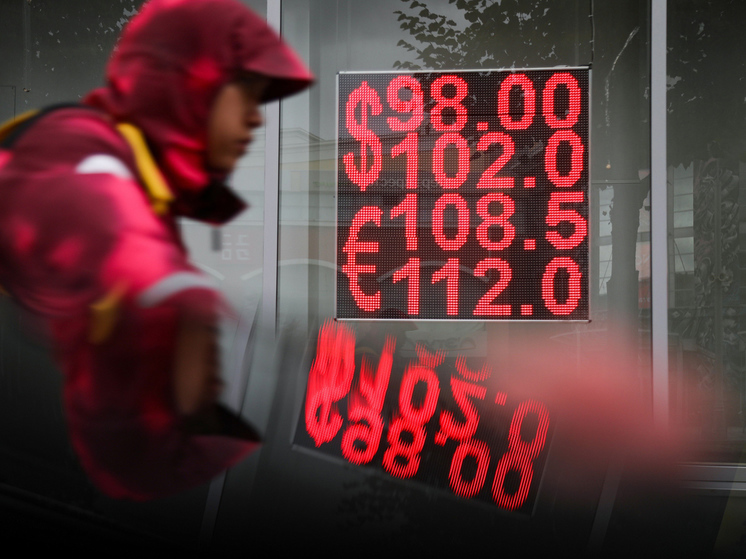
Of course, the regulator's decision to sharply and urgently raise the rate was expected, and there were at least two reasons for this. Firstly, on Monday, the dollar exchange rate exceeded the “psychologically important” mark of 100 rubles, the euro — 111.
Secondly, Maxim Oreshkin, presidential aide for economic issues, blamed the leadership of the Bank of Russia for what is happening. Which, according to him, “has all the necessary tools to normalize the situation in the near future.”
After that, in fact, a shout from the presidential administration, Elvira Nabiullina's department had to assemble the Board of Directors in a fire order, and the press release appeared already at 10.30 Moscow time (usually, decisions are announced at 13.30).
In In the arsenal of the Central Bank there is the practice of unscheduled meetings: the regulator resorted to it once in 2014 and three times in 2022. Last February, he raised the rate from 9.5% to 20% to bring down the stock market panic, then lowered it to 17% in April, and to 11% in May.
“Raising the key rate to 12% is aimed at returning inflation to the target of 4% in 2024,” the Central Bank explains. “The Bank of Russia proceeds from the fact that this rate level corresponds to the increase in stable inflationary pressure, the wobbling on it and inflationary expectations from the dynamics of the exchange rate.”
The effect followed immediately: soon after the start of morning exchange trading, the ruble won back the losses: the dollar traded at the level of 95.2, the euro — 104.1. However, as they say, the music did not play for long: after a couple of hours, the numbers corrected to 97.9 and 109, respectively.
The previous July increase in the rate from 7.5% to 8.5% per annum had no effect on the trend towards the non-stop weakening of the Russian currency. You can't say that now, but you can't count on any cardinal changes in exchange rate dynamics either. It should be recognized that a weak ruble in the current macroeconomic and geopolitical conditions is the norm, not a deviation from it.
“Will there be a trend reversal? The answer to this question was previously given by the Central Bank itself, — argues Igor Nikolaev, chief researcher at the Institute of Economics of the Russian Academy of Sciences. – Over the past few months, the regulator has rightly pointed to the fundamental factor affecting the exchange rate – negative changes in the state of the balance of payments.
Indeed, in the first half of the year, our surplus decreased by 68% compared to January-June 2022. Accordingly, if this root cause persists, the rate will continue to weaken. At best, a short-term upward correction is possible, then an inevitable decline will follow, which we are now observing: the dollar on the stock exchange is again at 99, the euro at 108.
is still in some euphoria from its decision on February 28 last year, when the rate was promptly raised to 20%, and this had a powerful positive impact on the rate. Meanwhile, at that time there was a fundamentally different macroeconomic and foreign trade situation: oil prices were rising, Russian raw materials were in demand all over the world, including Europe, the balance was improving, and imports were declining.
At the same time, Nikolaev recalls, in the spring of 2022, against the backdrop of sanctions pressure and the collapse of the ruble exchange rate, a currency panic was growing, which required the financial authorities to urgently intervene in the events. They did not limit themselves to the decision on the rate alone: in March, exporters were obliged to sell the lion's share (80%) of foreign exchange earnings, foreign exchange controls were introduced, and non-residents were blocked on the market.
According to Nikolaev, today the Central Bank and the Ministry of Finance are deliberately not returning to this administrative and regulatory practice, because, unlike the situation in the spring of last year, the financial sector is not in danger of collapse: then, against the background of the dollar exchange rate of 120, there were risks of a complete cessation of investment activities, bankruptcies due to massive investors run. Today there is nothing like it and close. Moreover, the strict restriction of the Central Bank continues to apply to individuals, providing for the withdrawal of up to $10,000 in cash (the rest is in rubles at the exchange rate).
“The decision of the Central Bank means a significant tightening of monetary policy,” says a financial analyst BitRiver Vladislav Antonov. – The goal is clear: to limit inflationary risks and slow down price growth.
Domestic demand is growing faster than the economy's ability to expand production. However, this measure will not have a serious impact on the exchange rate. We see that the ruble began to weaken again. It is under pressure from fundamental factors, including a trade deficit and geopolitical risks. By the end of the week, the dollar may return to the 100 mark.