


«The point is, first of all, that they, like the Russians, especially have nowhere to go»
Russian currency, but forced to convert it into all sorts of others. First of all, these are labor migrants — in Russia, according to various sources, there are now from 2.5 to 5 million people in this status. Social networks are worried: faced with actually significantly reduced earnings, about half of the migrants (according to experts from Telegram channels) may decide to leave Russia. Is this so — found out «MK».
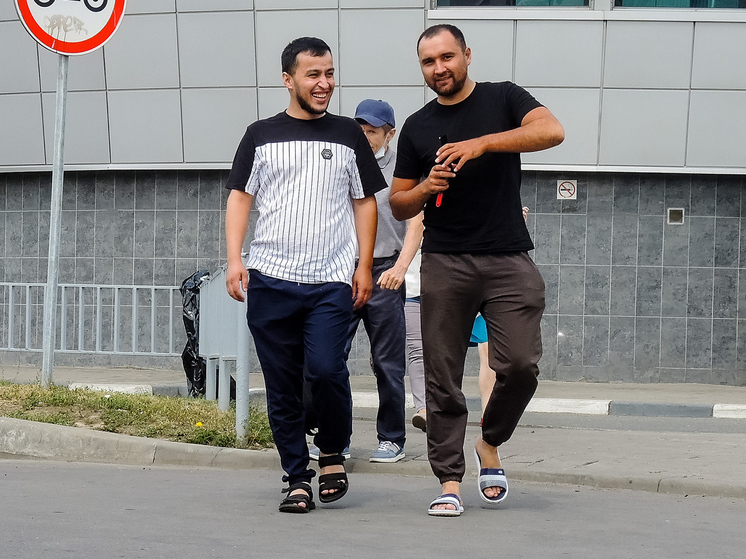 < p>The fact that the number of labor migrants in Russia may thin out was reported in the Uzbek diaspora in Moscow — even figures are given that the average earnings of Moscow Uzbeks, which a year ago amounted to 550 US dollars, have now “lost” by two hundred conventional units. Impressive, to be sure, — now, according to sources in the diaspora, incomes are becoming comparable to the level of salaries at home.
Add to this almost universal commissions for transferring money abroad (here I must say thanks not only to banks, but also to Russians who use these systems as one of the ways to circumvent Western banking sanctions) — and there really is no increase in optimism. However, professionals who study labor migration still adhere to a more optimistic point of view.
— The fears are generally unfounded, no one will leave anywhere, — the head of the Federation of Migrants of Russia, Vadim Kozhenov, believes. — Unless a couple percent of mentally unstable people leave. I will add that after the Central Bank raises the key rate to 12%, the exchange rate should stabilize.
According to the expert, there was no mass departure of migrants in February-March 2022, when the dollar and euro rates reached historic highs (not yet beaten). Therefore, even now we should expect a calm and balanced reaction.
“The point is, first of all, that migrants, like Russians, especially have nowhere to go,” comments Yuri Moskovsky, head of the Commission on Migration in the Council for Nationalities under the Government of Moscow. — Yes, someone will probably leave, but there will be few of them — because the number of people who want to work will still be large. Russia has a huge labor shortage, while the countries of Central Asia, on the contrary, have a significant surplus.
The situation, according to Moskovsky, can change only when China opens its labor market for Central Asian workers — the population in China is now aging, the birth rate is declining. “In this case, Russia will really miss the number of migrants, given that salaries in industry in many regions are much higher than in Russia.”
As for the decline in actual earnings, treat both migrants and Russians stoically: God gave God took. “People will work harder, who came to the Sabbath,” suggests Moskovsky. — They will evade taxes more actively, although everyone does this, including Russian citizens. Employers will also try to evade taxes, so the labor market may become gray, but there will be no fewer migrants.
The shortage of labor — including in the developing Russian industry — is very significant, the expert insists. “For example, in the promising industrial cluster Alabuga, where about 80 thousand employees are needed, they are forced to import labor already from Africa, Pakistan — both women and men,” says Moskovsky. — It’s just that all citizens of the Russian Federation are already “in business”, everyone is working and does not want to change their existing job for something else. Everywhere there are signs “Wanted …”, everywhere there are offers of work on a rotational basis in Moscow, St. Petersburg, in the North. . That is why many even work in shifts — a few weeks at home, a few in Russia.
Such seemingly promising labor markets for Central Asian citizens, like Turkey and Korea, were not able to «digest» many people at once, the scientist emphasizes. And the Arab countries of the Gulf — where wages are quite high — set strict requirements for labor migrants, up to a ban on free movement around cities.
— In these countries, sometimes there are up to ten foreign workers for one local, so it's quite understandable why there are such harsh conditions — the Arab monarchies simply do not want to lose their own identity. In Russia, of course, this will not happen: the ratio of locals and migrants is not the same, and wages are not so high.
In the unlikely event of a “collapse” of labor migration, Russia will face a corresponding “collapse” of the economy, Yuri Moskovsky suggests. “There will be no loaders – shops will be closed,” the expert says. “There are objectively not enough people, so the employer is looking for workers, while citizens need taxi drivers and salespeople.”
At the same time, the ratio of the ruble to the dollar is no longer so important, Moskovsky is sure. “We are gaining the lost financial sovereignty, that is, the ability to control the amount of money supply,” the expert explains. As for converting into other currencies, a significant part of migrants, according to him, no longer transfer money home, but for the most part spend it in Russia. So the “dollar” decline is not scary for them.
It is interesting that along with the “rubleization” of migrant spending, the attitude of Russians towards them is also changing: as shown by the VTsIOM material published on August 14, 47% of Russians have a positive attitude towards labor migration as a phenomenon (ten years ago this figure was 14%), and 40% of respondents are opposed to migration (against 74% in 2013).