


Specialists lack data on catastrophic climate change
Scientists complain about the «information desert» of the Southern Ocean (the so-called set of the southern parts of the Pacific, Atlantic and Indian oceans surrounding Antarctica), and also that the climate crisis is bringing about frightening changes. Loss of sea ice and rising temperatures in the ocean around Antarctica are having a huge impact on Earth's climate, but the ability of experts to track them is far behind.
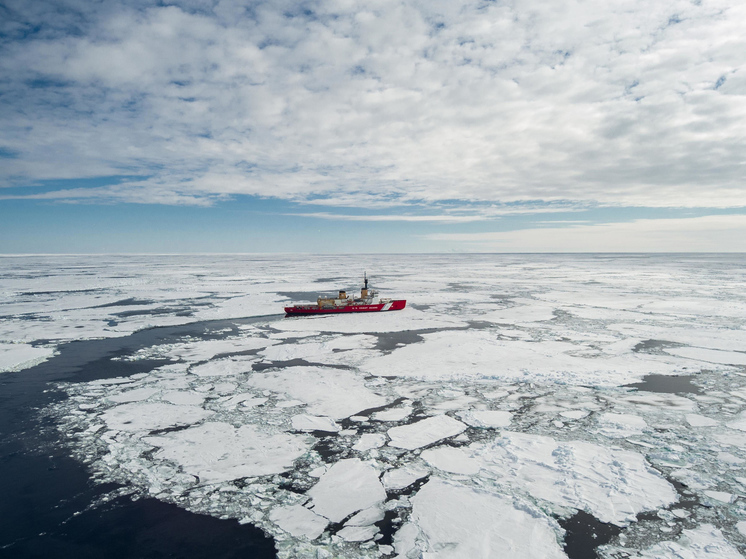
A chronic lack of observations of the vast ocean surrounding Antarctica is hindering more accurate predictions of the effects of the climate crisis, a meeting of 300 scientists concluded. The Southern Ocean has a huge impact on the Earth's climate, absorbing a lot of additional heat and carbon dioxide caused by human activities, writes The Guardian.
But at a time when the region is undergoing dramatic changes, including record low levels of sea ice, the ocean is like an “information desert,” scientists say.
About 300 scientists from 25 countries concluded on Friday a week-long conference in Hobart hosted by the Southern Ocean Observing System (Soos), a major international scientific initiative aimed at coordinating and improving observations around Antarctica.
The closing statement of the conference stated that the Southern Ocean is undergoing “critical change”, manifested by record low sea ice levels, record high temperatures and “dramatic” changes in the penguin population.
“The chronic lack of observations of the Southern Ocean throws a challenge to our ability to detect and evaluate the effects of change,” the scientists said in a statement.
The level of sea ice around Antarctica was the lowest on record over the past two summers in the southern hemisphere. As the region approached the peak of winter last week, satellite data showed that there was about 2.5 million square meters of ice. km less than the long-term average. Scientists say the dramatic ice melt this winter is unprecedented.
“We were completely unprepared for this, and it turned out to be completely unexpected, and this is due to the lack of our observing system,” laments Dr. Andrew Meyers, an oceanographer with the British Antarctic Survey.
According to him, global climate Models struggled to replicate changes in the Southern Ocean due to lack of data.
While satellites were good at capturing how much ice covered the ocean, scientists knew very little about ice thickness or changes underneath.
“Global warming is actually ocean warming, and the Southern Ocean is controlling the rate at which the Antarctic ice sheet is melting, which is the biggest uncertainty in predicting future sea level rise,” said Dr. Meyers.
According to Meyers, ecosystems Antarctica has been closely associated with the growth of phytoplankton and krill, which have themselves been associated with annual cycles of sea ice melt.
Earlier this month, Antarctic scientists warned that the number of extreme events on and around the continent — from loss of sea ice to melting ice sheets and heat waves — will almost certainly increase as the planet continues to warm, writes The Guardian.
< p>This year, scientists found that the deep current of the Antarctic Ocean, which carries nutrients around the globe and influences climate, has slowed by about 30% since the 1990s. A separate study found that the slowdown associated with increased ice melt in Antarctica is likely to intensify in the coming decades.
Dr Syan Henley, Soos co-chair and marine scientist at the University of Edinburgh, says the Southern Ocean plays a «disproportionate» role in the global climate system.
The world's oceans absorb about 90% of the extra heat the planet holds, mostly due to the fact that people burn fossil fuels and cut down forests. According to Henley, about 75% of this heat sink was in the Southern Ocean.
The oceans also take in about 30% of the extra CO2 from human activities, and about 40% of this ocean uptake occurs in the Southern Ocean.
p>
Syan Henley notes: “If you look at the coverage of the oceans, the number of observations has increased. But the Southern Ocean is still an information desert. There is a chronic lack of data to address some of the most pressing issues. It is now very clear that sea ice in Antarctica is in danger, and this is also jeopardizing its role in the climate system.”
Also present at the conference was Dr. Ken Johnson, an ocean chemist at the Aquarium Research Institute Monterey Bay, which is leading a project to install hundreds of ocean floats with sensors that measure temperature, salinity, oxygen, pH and nitrate levels.
“The Southern Ocean is the engine of Earth's climate. At a time when we need to measure it more, we monitor it less,” says Dr. Johnson.
According to the scientist, the number of observations from sensors aboard cargo ships was declining and thousands of kilometers of ocean were often without control, especially in winter in the southern hemisphere.