


“We need to fix the problem of the imbalance between exports and imports”
On Wednesday, August 16, the market rate of the Russian currency continued to stabilize, reaching a comfortable level of 95.6 per dollar and 104 .3 per euro. The only question is how long the fuse received as a result of the increase by the Central Bank of the key rate to 12% per annum will last for him. Experts have no doubts: this one-time measure, for all its radicalness, will not keep the ruble from further weakening.
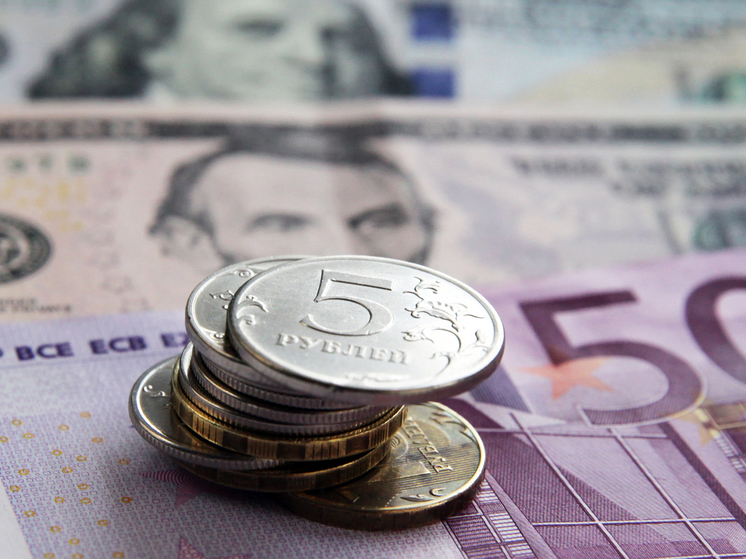
Recall that the trend for the national currency to fall was formed in early May, and last Monday, August 14, the dollar exchange rate exceeded 101 rubles, the euro — 111 for the first time since March 23, 2022. Having declared that there were no threats to financial stability, the Central Bank nevertheless convened an extraordinary meeting on the rate and raised it immediately by 350 basis points. Maxim Oreshkin, presidential aide for economic affairs, also added fuel to the fire, noting that Elvira Nabiullina's department «has all the necessary tools to normalize the situation in the near future.» It is only unclear what it means for the Kremlin and the government, the Central Bank and the Ministry of Finance to «normalize the situation.» How do they see the «normal» exchange rate — 95, 90, or maybe 85 rubles per dollar? And what will they do if this «normality» is never achieved? We talked about this with the leading expert of the Center for Political Technologies Nikita Maslennikov.
— The problem is absolutely not in size, not in some numbers, something else is fundamentally important for the authorities: for the exchange rate to stabilize, so that there are no jumps, — says the interlocutor of MK. – Financial regulators would consider it a definite success if they managed to reduce the fundamental risk associated with the trade and balance of payments. It is this factor that contributes to the weakening of the ruble in the first place. In July, from a formal point of view, the overall balance was in surplus, but if we take only its currency (non-ruble) component, the picture is not so good. Our monthly payments for import deliveries exceed our export earnings by about $1.5 billion in dollar terms. Accordingly, there is a steady shortage of foreign exchange liquidity, the demand for it is growing, which, in turn, pushes the ruble rate down. Thus, the situation is largely determined by the structure of foreign trade payments: we receive about 42% of our export earnings in rubles, while we pay for imports only for 30%, the rest — mainly in yuan. So the exchange rate is a secondary substance, a derivative of the disproportion between exports and imports.
— No, it's all right now. In June, large exporters sold 84% of their foreign exchange earnings. In fact, they should be able to keep some part of it on foreign accounts in order to pay for transport and logistics costs, which are very expensive for them: from 5% to 10% are lost on conversion. The now widespread idea to prohibit the outflow of capital is from the evil one: if it is implemented, exports will be guaranteed to be undermined. In order to try to solve the problem of imbalance in foreign trade, it is first necessary to change the parameters of the daily sale of foreign currency by the state, this would be a logical step on the part of the Central Bank. At the beginning of 2023, the volume of regular foreign exchange interventions amounted to 7 billion in ruble terms, later — 5 billion, now 2.3 billion. That is, it has been consistently decreasing. In addition, everyone was confused by the story when the Ministry of Finance announced the purchase of foreign currency from August 1 under the budget rule, and literally three days later the Central Bank announced that it was not going to do this. Speculators clearly took advantage of this discrepancy in the positions of the regulators, launching a powerful attack on the ruble and weakening it even more.
clarification from the Ministry of Finance about the budget rule: what are its prospects, whether it will be restored to its previous version, or, on the contrary, adjusted. Or maybe its action should be suspended for a while? In the context of tightening monetary policy, other regulatory measures are also needed regarding everything that affects the business activity of exporters and importers — import substitution, changes in the parameters of preferential lending rates, and so on.
-Of course, the psychological moment played a role. But by and large, from an economic point of view, the rate of 99 differs little from the rate of 100. Emotions only accelerated the process of making an already inevitable decision. I think that until September 15, when the next meeting of the Board of Directors of the Central Bank will take place, the regulator will take a break on the rate, monitoring and analyzing events around the exchange rate and inflation dynamics.