


On the territory of Japan, the shape of heads was specially “modified”
A long-standing mystery of the “modified” human skulls of ancient Japan has been revealed with the help of a new analysis. Deformed skulls found in an ancient tomb in Japan were deliberately altered in both males and females as an expression of collective identity. New research suggests that this practice may have also helped the group develop trade links.
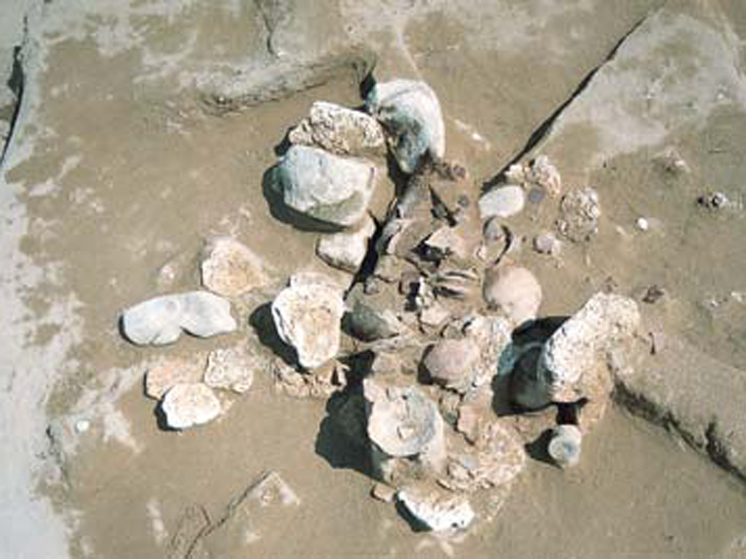 Photo: archeology.jp
All of the unusual skulls found in an ancient burial site in Japan have the usually rounded part at the back of the head flattened and acquired a square shape, possibly as a result of bandaging or pressing against a flat surface in infancy.
According to CNN, these skulls belonged to the Hirota people, who lived on the southern Japanese island of Tanegashima from the third to the seventh century. They were buried in a large burial that was first excavated in the 1950s and then later in the early 2000s, researchers reported in the journal PLOS One, hundreds of skeletons were found at the site, and 90% of the burials were richly decorated with glass beads and pendants, bracelets and shell beads, which suggests that all the burials contained people of similar status.
The research team found that Hirota people practiced skull deformity «regardless of social status or gender,» said co-authors Dr. Noriko Seguchi, assistant professor in the Department of Social and Cultural Studies at Kyushu University in Japan, and James Francis Loftus III, a research fellow at the university.
The shells that adorned the remains of the hirot were found in abundance, but were not native to the region. Artifacts were found thousands of kilometers south of the burial site, suggesting that the Hirota people traded them. Researchers have speculated that perhaps the reshaping of the Hirota skull played a role in their trading success.
“We hypothesize that the Hirota people deformed their skull in order to preserve their group identity and potentially facilitate the large scale shellfish trade. distance, as supported by archaeological evidence,» Seguchi and Loftus told CNN via email.
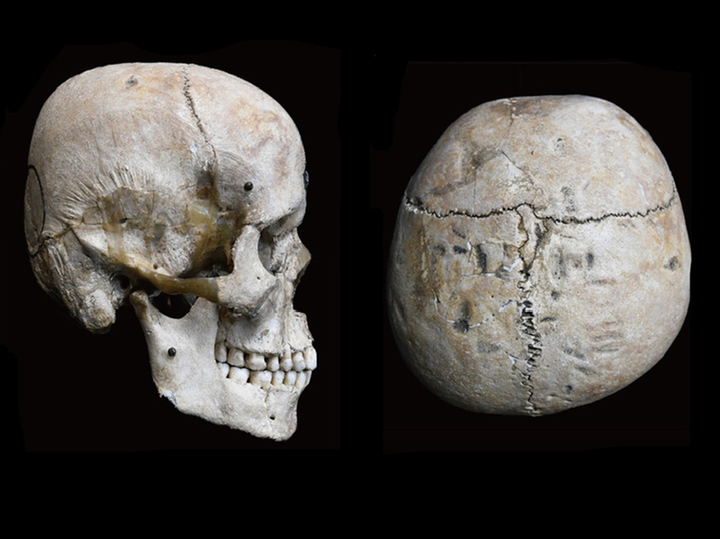
Deliberate reshaping of the skull is found in burials throughout Asia, Europe, and Mesoamerica. Modified skulls from medieval burials in Germany and Croatia show signs of deformation, and a 12,000-year-old elongated skull from China may indicate o that such modifications date back to Neolithic times.
This practice was also widespread among the Maya in Central America and what is now Mexico before the arrival of Europeans. Skull deformity among the Mayans is particularly well documented, with carvings depicting children wearing devices to shape their skulls, «such as a board on their foreheads,» Seguchi and Loftus said. «This could be the practice of mothers or caregivers of infants a couple of weeks or months old.»
Other researchers have previously speculated about flattened hirota skulls in Japan, but it was not known whether the hirota modifications were intentional or just a by-product of other cultural practices.
For the new study, the scientists 3D scanned and digitally modeled 19 adult Hirota skulls to conduct a more detailed morphological analysis. The team compared them to adult skulls from two other ancient Japanese groups — Jomon and Doigahama.
“We investigated abnormalities in the cranial sutures that may have formed during growth and development using a new method of 3D visualization of the skull surfaces” explained Seguchi and Loftus. This new technique allowed for an unprecedented level of detail in fine bone shapes.
In skulls, the occipital region is hirota — cranial bone behind — was markedly flatter than that of the Jōmon and Doigahama skulls, notes CNN.
The striking flatness of the hirota skull, depressions in the skull, and general changes in bone structure were consistent with examples of extreme skull modification in North and South American cultures. This suggested to the researchers that the Hirota people also deliberately altered the shape of their skull.
The authors hope that future excavations may uncover settlements that will provide further evidence of the daily life of the Hirota people, which will shed light on their motives for the deformation skulls.
“With these findings, we believe we have begun the process of unraveling the still mysterious nature of the Hirota people, their culture and potential trading practices,» said Seguchi and Loftus. — We hope that this study will open the eyes of researchers of this and other periods of Japanese prehistory to lines of thought that will allow us to look at Japan through an international prism, viewing cultural practices as a changing phenomenon.