


Expert Ivan Timofeev spoke about what Russia can and cannot do in the confrontation with the West
In times of large-scale geopolitical crises, much of what we used to take for granted suddenly turns out to be in short supply: security, the ability to freely travel abroad, the ability to pay in the same foreign country with domestic bank cards, and so on and so forth. But especially dangerous is the transformation of common sense into a «scarce commodity». Even experienced experts in the past are inclined to say hello to this self-control and come up with ideas whose implementation is capable of transforming a crisis into a universal catastrophe. And the more often this happens, the more valuable are the opinions of those specialists who know how not to break their mental connection with common sense even for a second. One such person is the CEO of the Russian International Affairs Council, the country's leading expert on Western sanctions, Ivan Timofeev. Here is his opinion on the most pressing problems and challenges facing Russia today.
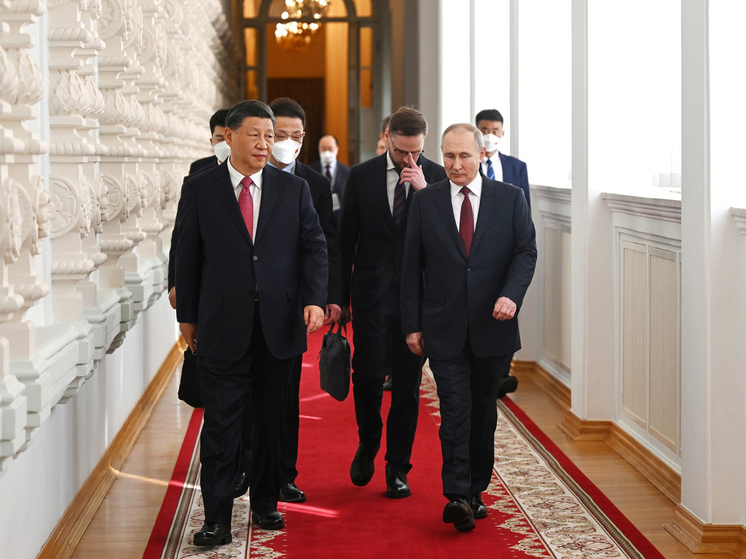 Both nearby and not nearby: “Beijing is trying to play the Russian card in order to put pressure on the Americans and gain advantages for itself.”
— Even without reference to moral issues and purely pragmatically: this scenario is very risky for us. He is arming our Western opponents with serious political arguments to increase Russia's isolation. It contributes to the expansion of the anti-Russian coalition at the expense of those countries that are now neutral and even friendly in our respect. It will provide additional opportunities for the Americans to impose their anti-Russian sanctions regimes even on countries that are friendly to us. It stimulates and sharply accelerates the arms race, which has already gained high momentum. We know that the Americans and their allies in Europe are now having difficulty modernizing the military industry. Their assistance to Ukraine is limited by production capacity. But a preventive nuclear strike on our part will give a colossal impetus to the mobilization of efforts, the concentration of finances and resources on containing Russia. And they have great resources. The economies of the US, the EU, Japan and other Western allies are huge, even with the difficulties they are currently facing. With such a strong political impetus, this mobilization will go much faster. If now the Western audience is gradually getting tired of the Ukrainian topic — of the Ukrainians themselves, of their accusations that they are getting little help, of the growing spending on supporting Ukraine — then the use of tactical nuclear weapons will sharply return the conflict to the top of the agenda. And this is still the most innocuous scenario in which NATO does not immediately respond to a nuclear strike.
Let's consider a theoretically possible scenario. Following the logic of Sergei Karaganov, a preventive nuclear strike is launched against Poland. NATO may well refrain from an immediate response, fearing an escalation to a larger use of nuclear weapons. But even if there is no response from all of NATO, a nuclear strike on Polish territory will inevitably lead to its direct entry into a military conflict. And this is actually the appearance of a second Ukraine on the front. Poland has a very large economy, a fairly decent army, which has recently received modern weapons and is being modernized. The deliveries to Poland will be no less large-scale than the deliveries to Ukraine, especially if the NATO countries sharply accelerate the mobilization of their industry for military needs. Even if only Poland enters the conflict, our load on the front is significantly increased. The front itself will have to be significantly expanded. Among other things, military threats to Russia in the Baltic region will rise sharply. Polish society has great patriotic traditions. And certainly in the event of a nuclear strike there will be colossal social mobilization. A huge number of people will voluntarily stand under the gun. NATO's task will be to further arm these people. As a result, we will have to fight on a wider front, with not one, but at least two motivated opponents.
 Sergei Karaganov's (left) ideas about the use of nuclear weapons should not affect the main direction of Russian foreign policy. Photo: svop.ru
And what should Russia do next — launch new tactical nuclear strikes? In the military sense, it is not a fact that this will lead to the disorganization of the enemy front. But new strikes will create an additional risk that NATO will also begin to strike back with either conventional weapons or tactical nuclear strikes. We will strike at some settlement or military facility. And they will hit. And what to do next — to switch to the regime of exchanging strikes with strategic nuclear weapons? But here the one who strikes first dies second. As for relations with friendly countries, it will not be easy for us to convince, for example, China, that it is the Poles themselves who are to blame for everything and that they deserved a nuclear strike. For China, such a scenario creates its own risks, and it will be difficult to expect Beijing's support. I do not agree that eventually China and others will have to accept new realities and work with Russia anyway. The cost of this acceptance will be very high for us. We are taking a serious risk. Sergei Alexandrovich believes that the West will roll away from us. But he won't back off. The crisis and confrontation will deepen even more. And if now there is still some chance that Russia's success on the battlefield will force the West to negotiate both on Ukraine and on the Euro-Atlantic security system, then crossing the nuclear threshold will lead to the disappearance of incentives to negotiate with Moscow.
 Ivan Timofeev. Photo russiancouncil.ru
— The Russian army was able to repel the offensive, which was so widely advertised in the West and from which they expected a quick victory. This is a serious result that strengthens the position of Russian diplomacy. It is impossible to impose one's formula of peace on Russia under such conditions. But the West is not yet ready to accept Russian conditions either. There is no such readiness within Ukraine itself. For the West and Kyiv, the fear of defeat, which is how negotiations on Russian terms are perceived, outweighs the losses that are inevitable if the conflict continues. What should Russia do to still force our counterparts in Kyiv and in the West to negotiate? Experts talk about two options. Or the continuation of the positional conflict, which depletes Ukrainian and Western resources. At the same time, the Russian economy is also having a hard time due to sanctions and tensions. But, apparently, the Russian economy is ready to withstand this — the pressure on it is not excessive, it is well managed, there is a political readiness for a long-term confrontation. Therefore, the choice of such a scenario is quite possible. Another option is a Russian offensive. Even partial success will be a signal that delay in the negotiations is fraught with the loss of more and more territories for Ukraine. But here, too, there are risks. Ukraine, being an urbanized country, is a complex theater of war. Everyone, even a small city, can theoretically become a fortress. Combat in urban agglomerations is complex. This conflict is seriously different from what happened during the Second World War, with its deep breakthroughs of large masses of tanks and armored vehicles.
— All these conflicts were on a different technical level. Now the role of unmanned aircraft has grown. New technical solutions significantly change the effectiveness of even outdated weapons at first glance. Relatively speaking, the D-20 and D-30 howitzers, in the presence of unmanned aircraft, advanced reconnaissance and target designation, can bring much greater results compared to their use 30-40 years ago. We are now faced with a fundamentally new type of conflict, which combines the complexity of offensive operations and new technical conditions. But there is an old axiom: armed conflict is not won on the defensive. It is won after all by achieving decisive results during the offensive.
— Some experts are skeptical about this point of view. It may seem overly alarmist. But there are some very specific arguments in its favor. Argument number one. For Western countries, the change of political regime in a foreign state is a normal, tried and repeated technology for solving a political problem. It is much easier to achieve the collapse of the political system of the opponent country than to try to force it to do something in the battle. Given the problems with the Ukrainian offensive, the West has even more incentive to hope for a collapse inside Russia, that a combination of circumstances will lead to some kind of revolution, confusion, rebellion. What happened in Russia at the end of June strengthens the confidence of some Western analysts in the very possibility of such a scenario. Yes, the political system survived and was able to resolve this incident very quickly and relatively bloodlessly. But if this happened, then other incidents that can be used may follow.
Argument number two. From time to time in the West, if not at the official level, various pseudo-expert conferences gather and draw maps of the “decentralization of Russia”, its “reorganization”, and territorial division. They are still marginal. But we do not know how marginal it will be tomorrow. Any realistic political leader would take such a threat seriously. From the intellectual exercises of freaks, at some point, such plans may become first a semi-official, and then an official position. There are no obstacles to the fact that at one moment it does not become official.
— I believe that the disintegration of Russia carries enormous risks for the West, including in connection with nuclear weapons. Any civil conflict on the territory of Russia is a serious problem, costs and risks of economic and humanitarian and even military plan for the West. Another thing is that this point of view of the realists will not necessarily be dominant. The historical experience of various countries shows that the point of view of radicals, hawks or even just active idiots sometimes becomes prevailing. Sometimes there is another thing: rationally thinking people try to maximize their rationality and end up with an irrational result. There are also circumstances. The fact that this scenario is extremely dangerous for the West does not exclude that at some point the West will not try to carry it out.
This is also an erroneous point of view. One should not be tempted to perceive the current conflict with the West as something eternal, permanent, leaving no room for diplomacy. The logic and experience of world politics show that any conflict comes to an end sooner or later. Sooner or later there are opportunities for diplomacy. Sooner or later, the conditions may ripen so that, by advancing our interests, we could reach agreements with the West — not an “agreement”, which is understood as an agreement to the detriment of Russia’s interests, but precisely agreements that would take into account our interests in one or another to a different extent would fix a new status quo acceptable to us. The conviction that the current conflict is existential for Russia has serious grounds. But it should not close off the opportunity for us to work on advancing our interests through negotiations and restoring relations where it is beneficial to us. The results may be temporary. But in politics everything is temporary. There is nothing eternal in diplomacy either. Everything changes sooner or later. You need to leave yourself room for maneuver and not rush to extremes. You can't play «end of story». Like, burn everything with nuclear fire! We want to win, not self-destruct!
— I would not speak about the global South, but about the non-Western world as a whole. I like the notion of «world majority», although it is also not without flaws. Most include very different countries with very different attitudes towards each other. Sometimes it's a relationship at stake. The position of the «world majority» should not be underestimated. But it should not be overestimated either. We should not have idealism about the «world majority». Any country of the «world majority» first of all pragmatically promotes its own interests. They will not be pro-Russian simply because they love Russia and want to throw off the yoke of the West. They have their own relations with the West, which many of them are not ready to give up. India, for example. She has very close ties with the EU, the US — both through the market and through the diaspora. China has its own ties with the West. Yes, US-China relations are gradually deteriorating. But they will definitely not accelerate this deterioration for the sake of Russia. On the contrary, Beijing is trying to play the Russian card in order to put pressure on the Americans and gain advantages for itself. China will not risk its fundamental national interests for Russia. Beijing will try to maximize its benefits from the Ukrainian conflict. China benefits from the fact that the Americans squander their resources in the European direction. Because of this, these resources do not go to the Asian direction: to contain China itself. At the same time, the defeat of Russia by China is unprofitable, especially since Moscow supports Beijing on a number of strategic issues. China will work to ensure that the conflict between Russia and the West does not cross a dangerous line.
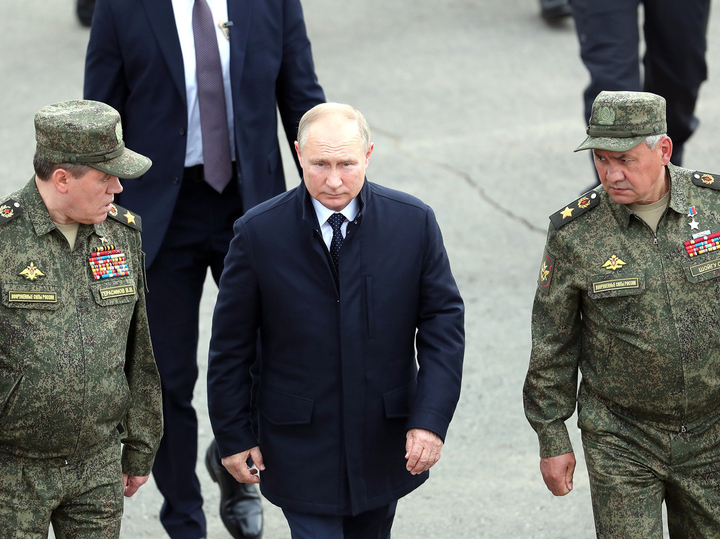 Russia's military-political leadership is now facing a difficult choice.
Even Iran, a country that is in a tough confrontation with the United States and under tough Western sanctions, is still very soberly calculating its interests. Tehran is looking at how the deepening of partnership with Russia will affect the possible outcomes of the nuclear deal. I do not see any opportunities for its resumption — primarily because of the peculiarities of the US political system. But in Iran, they are also not ready to 100% fit in with Russia. They are ready to deepen their partnership with Russia, primarily for their own sake, and we need to use this. We need to deepen trade and industrial ties with Iran, connect our financial systems, while understanding that everyone has their own interests. We also need to understand that there is no “united front of the world majority” and cannot be. The West in the current conditions cannot build it against Russia. But Russia cannot build it against the West either.
“The Americans are trying, where they can, to threaten business in non-Western countries with the possibility that it may lose the advantages of ties with the Western system — the advantages of using the dollar, Western technologies. Sometimes they get it, sometimes they don't. But, perhaps, the success for Russia is that non-Western countries are convinced that a large-scale sanctions tsunami is possible. And that the next object of such a tsunami, due to some political reasons, could be any of these non-Western countries. Surely, almost all of them thought that just in case, it would be good to study the Russian experience: how the Russians prepared for this, what their economic bloc did, what they did, what didn’t work, and how they can hedge at the expense of Russia. In this sense, Russia is turning into an asset for the non-Western world, with the help of which they diversify their foreign policy ties. In this «portfolio of assets» there are ties with the West, and there are ties with Russia. What does the theory of an effective investment portfolio teach? The fact that in this portfolio there should be assets that are orthogonal — not related to each other. For example, if you have bonds, their rise or fall should have nothing to do with fluctuations in the price of gold. And besides these bonds, it would be nice to have some more conservative assets — those that do not give super profits, but are reliable even in the most difficult times. Russia is turning into such a conservative asset in the political «investment portfolio» of non-Western countries. Such an asset is unlikely to be the main one. But it should be in the portfolio. At a critical moment, it is he who will make it possible to survive. And this means new opportunities for Russia, which we have yet to comprehend.
— I agree with those of our colleagues who believe that Russia's failure in Ukraine will have a negative impact on Russia's position in the non-Western world. The non-Western world as a whole does not like the weak. Completion of the conflict, taking into account Russian conditions, will allow us to maintain our positions in the non-Western world. But one should not think that they will give us some kind of excessive dividends. Russia will be considered a strong player that has been able to challenge the West and defend its interests. But this will not lead to Russia becoming the leader of the global non-Western majority and leading it. However, any final conclusions are now premature. The «world majority» now perceives Russia as a country that has challenged the most powerful force in the world and, as a result, is under tremendous pressure. And here they are, like spectators in a cinema with popcorn, sitting and waiting for what will happen. For them, this is a gladiator fight.

— Our economic bloc managed to do an important thing in the first weeks after the start of the NWO. At a critical moment, when harsh sanctions began to fall on us in a narrow period of time, there was a risk of a collapse of the financial system. And if this happened, then, of course, the economic crisis would be very serious. But to the credit of our financial authorities — the Ministry of Finance and the Central Bank — which is customary for everyone to blame, they did their homework well. An autonomous financial infrastructure was created — the national payment system «Mir», over which, when it first appeared, many also laughed. And what would happen now without Mir? After the start of the sanctions tsunami, the financial authorities reacted very clearly to it: both in terms of controlling the interest rate and in terms of the availability of liquidity in the economy. We managed to avoid panic and contain speculative moods. To understand the seriousness of the situation, one must recall recent historical experience. The disintegration of the Soviet Union was accelerated by the financial crisis. If this financial crisis had not happened, then perhaps we would now live in a completely different reality. At the beginning of 2022, the Russian economy managed to avoid a scenario of uncontrolled development of events, which could, if not throw us back to the Stone Age — this is mainly a figurative expression, — but lead to a much more serious recession. The country was helped by both the factor of luck and the factor of the ability to use this luck. Increased gas and energy prices, favorable market conditions in other areas — in particular, food. The inability of the US and EU to impose a ban on our imports immediately. They were forced to do it gradually, to spread the introduction of restrictions over several months, thus giving us a chance to take advantage of this time. And we took advantage of it. The transfer of oil exports to China and India, of course, was not without losses. We cannot replace the European oil products market in China and India. They have their own refinery. We have lost this market. But by and large, we survived the first round quite well. Now comes the long distance race.
“There is a school of thought in the United States that says you shouldn’t expect immediate results from sanctions. Let's play long game. Look: Iran has been under sanctions for 40 years. He succeeds in something. The country has both a functioning industry and a functioning agriculture, but it is still noticeable that Iran is suffering from a lack of normal supplies, from the fact that they need to be imported in various tricky ways. This affects both the modernization of the economy and the quality of life. Let's wait and see how the same will happen with Russia. With this approach, the main emphasis is placed on both financial sanctions and export controls. Over the past year, Russia has cut off the supply of everything that can be called dual-use goods: electronics, sensors, lasers, navigation equipment. These are hundreds of items — not only what is produced in the West, but also what is produced in third countries using American technologies. This is a ban on the supply of the widest range of industrial products, from trucks and trailers to cutting machines. These are bans even on consumer electronics. Now the Americans are saying: now you will have to import all this at exorbitant prices, and we will either catch your counterparties and put them in jail, or impose secondary sanctions against them. You can buy something in China, but not everything. You can produce some things yourself, but not all. In general, life will not be impossible for you, but much more difficult than before. At the same time, we will go ahead, and you will back away due to high costs and interruptions in supplies.
— Let's start with the fact that even with normal supplies without any sanctions, we still remained a peripheral country in the global economy. We imported planes, machine tools, equipment, but produced less and less ourselves. We lost competencies and lost skills. Learned to think. Sell resources — buy ready-made. We were getting discouraged, and the industry, by and large, was degrading. Of course, at the same time, we were integrated into global chains, somewhere our competencies, on the contrary, increased. But Russia, as an industrial country, basically still faded away. Now the layout is fundamentally different. The West will not abolish export controls, in my opinion, neither in the coming years, nor even in the coming decades. In order to survive, we will simply have to learn how to work again. This should be treated as a non-alternative choice. Without too much propaganda pathos, but also without too much irony.
— The task of obtaining modern technologies will have to be segmented. Where we can quickly restore something and quickly learn something, this should be done. Where we can do something in cooperation, for example, with China, this should also be done. Where we need to study, study and study again, but it can be bought in the same China, it must be bought in China. Where what you need is not available in China, you still need to try to learn — even if it takes decades — and at the same time get this necessary by roundabout ways. The only alternative to all these forks is to sit back and wait for that same Stone Age.
There is a connection, but not a direct one. Sanctions are not the only factor in the change in the ruble exchange rate. Last March, the sanctions were indeed such a trigger. They created a lot of uncertainty in the market, and the price of our currency went down. Now sanctions are just one of the factors that put pressure on the currency in a long-term way. If we imagine such a – I will say right away, absolutely unrealistic – scenario in which sanctions suddenly disappear, then the ruble exchange rate will, of course, go up. But further escalation of sanctions will not cause a directly proportional fall of the ruble. The ruble has already adapted to some extent to the new packages of sanctions and reacts not to them, but to other factors: energy prices, the policy of the Bank of Russia, and the general macroeconomic situation. The price of foreign currency used to be held back to some extent. Now it has been released to smooth out the discrepancy between the official exchange rate and the real conditions in the economy.
 Hiroshima after the atomic bombing. Do we really want to see scenes like this on the European continent?
— We see an obvious increase in cases of secondary sanctions. They have been in many recent sanctions packages. Americans apply blocking sanctions against those foreign companies that are involved in schemes to circumvent US export controls or financial sanctions. These companies are located in both friendly and unfriendly countries for Russia. These are India, and China, and Liechtenstein, and Finland, and Estonia, and Germany. Usually these are small companies, majors do not get there: they are extremely cautious about sanctions transactions. Often, these are companies created after the start of the SVO specifically to service transactions related to sanctions. For example, on July 20, four companies in Kyrgyzstan fell under sanctions. All of them are small and new, sharpened, apparently, to bypass American export controls.
Americans are still concentrating within a fairly narrow thematic framework. Secondary sanctions hit those who help circumvent bans on electronics and dual-use items. The EU has also created a legal mechanism that is not called secondary sanctions, but de facto they are. This is paragraph H of article 3 of regulation 269/2014, which states that attempts to circumvent restrictions may be grounds for imposing blocking sanctions. And here is one Russian company that imported chips to Russia through Dutch intermediaries, they recently blocked. At the same time, the director of the Dutch intermediary company was arrested. So far, there is only one such case. This is not a common practice. But business — both Russian and its foreign counterparts — is afraid of this. The West has managed to achieve a large-scale psychological effect. But he does not force secondary sanctions — apparently, fearing the growth of distrust in the American financial system and the US dollar.
— Invest in yourself, your knowledge, health, education. Invest in your children. Read books instead of TV and social networks. Move, don't sit still. Stop drinking if you haven't already. Equip your life, as far as possible, your immediate and immediate environment — family, house, yard. Help those who can, for starters in your immediate environment. Even a trifle. The set, in general, is obvious and may even seem «petty-bourgeois». But millions of such small and local victories of those very ordinary citizens lead to big changes in the whole society. By and large, all of us, one way or another, are “ordinary citizens”. We are all Russia.