


Expert Uzun: “The reasons must be sought not in the grain, but in other ingredients used in cooking”
It seems that Russia, even without a grain deal is quite confident in its exports cereals. So successful that our fellow citizens even have doubts: if we sell our bread abroad, what will we be left with? In social networks, forecasts are flashing that by the end of the year our daily bread may rise in price by 7-10%. It turns out that with any abundance of raw materials, we are not immune from the rise in price.
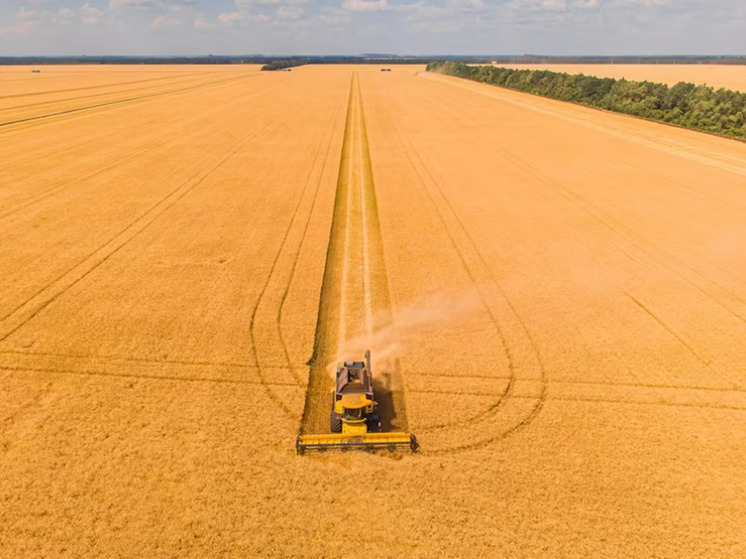
In August, Russia, compared to the same period last year, increased export supplies of grain by 27%, shipping 6.4 million tons. According to the Russian Grain Union, wheat shipments increased by 29%, barley by 15%, and corn by 60%.
Demand for Russian wheat in the world is consistently high. Egypt is among the leaders in purchasing our new (and still partly the remnants of the old) crop. It is followed by Algeria, which purchased from us 6 times more than in previous years. And an honorable third place is occupied by Turkey, although it significantly, by 43%, reduced the volume of purchases.
As Moscow promised at the beginning of this agricultural year, large volumes were delivered to the poor countries of Africa. In particular, shipments to Kenya increased by 9 times, to Sudan by 2.5 times. The states of Latin America are not forgotten and not abandoned: Mexico, Venezuela, Peru… But most of all Russian bread is loved in Bangladesh: purchases there have increased 47 times!
However, the fears of Russians that with a high grain harvest and success in exporting bread may rise in price are not without foundation. According to experts, producers (peasants) will gather a noble grain harvest this year. Less than last year's record (158 million tons), but still high, about 137 million. But the «weak link» the baking industry is acting, which consumes the recently risen in price & nbsp; 15-18% flour. Shipping costs for the delivery of flour also increased and for the first time in the history of modern bread baking, they exceeded the cost of the product itself. If we arithmetically calculate the increase in all production costs, it turns out that & nbsp; bread should rise in price by 10 percent.
But it's still half the trouble. Bakers complain that they lack premium flour that meets their industry standards. Most likely, you will have to bake rolls from other varieties, simpler. It is possible that the more expensive bread will not be of the best quality. How to understand this, where did the first-class flour go?
Analysts suggest that it most likely began to be widely used in the production of pasta. Which is actually good, because not the grain itself, but the final product (pasta) gives the maximum surplus value. And we can only be glad for our processing industry.
True, Vasily Uzun, Doctor of Economics, Chief Researcher at the RANEPA Center for Agricultural Policy, believes that it is too early for us to rejoice. “We get high yields of grain — This is good. We increased the export of flour — Before, we only supplied grain. But, unfortunately, we have not yet reached pasta, it is necessary to invest very large funds in their production. And Russia, a great grain power, needs to compete with other countries first of all & nbsp; for the export of final food products. Sell grain without processing — the same as trading in crude oil.
— The reasons for the rise in price should be sought not in grain, but in other ingredients used in cooking, and the costs of which are growing. In the structure of the cost of bread, wheat occupies no more than 20%.
— In my opinion, the main thing here is not the volume of supplies, but discounts, discounts on goods that we used a year ago. Approximately $50 per ton. Today we deliver directly and there are no such losses. And prices on the world market are quite stable and high.
— Compared to last year, prices are higher, but grain growers complain, asking to cancel the export duty altogether. Funds for its payment go to the budget and must be returned to producers in the form of subsidies. However, this return is only 10-15% of the total volume.