


Growing turbulence in the foreign exchange market necessitates state intervention
In August, the level of 100 rubles per dollar was broken through in the foreign exchange market. Such a weak national currency was seen only in March 2022, immediately after the start of the NWO. The authorities see the reasons for the devaluation in the negative data on the trade balance, the acceleration of inflation and the outflow of capital. Meanwhile, if we recall the history, our country had much more difficult times, but the ruble then remained stable. About the experience of stabilizing the exchange rate of the national currency in the USSR and the possibility of using it in today's realities, «MK» talked with the head of the analytical department of the BKF bank Maxim Osadchim.
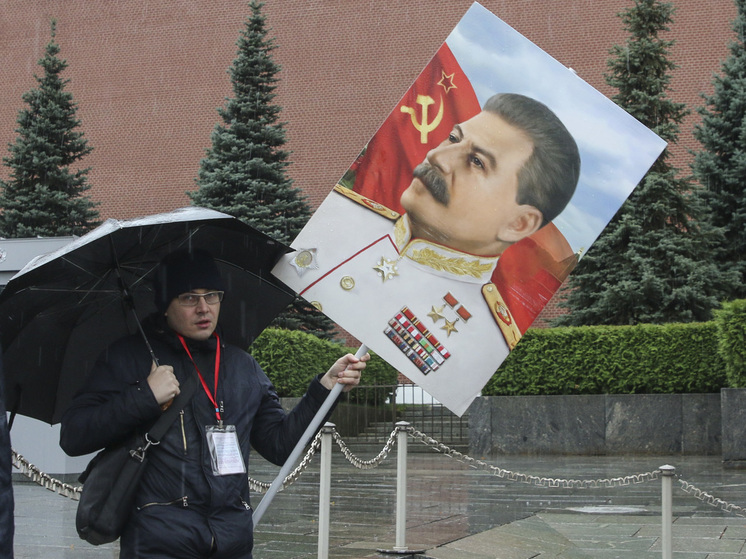
— Yes. On July 19, 1937, the State Bank of the USSR «pegged» the ruble to the dollar. The exchange rate of the American currency was set at 5.30 rubles per dollar. This course remained unchanged (with some nuances) until March 1, 1950. Further, in the context of the flaring cold war, primarily with America, the then Soviet leader Joseph Stalin demanded that the ruble be pegged to the American currency. In addition, for the bloc of socialist states, it was necessary to create an alternative to the Bretton Woods agreement, which formed the «dollar-centric» financial system of the capitalist world. The dollar was pegged to gold, and the currencies of the other parties to the agreement were pegged to the dollar. It was necessary to create a «socialist Bretton Woods», a «ruble-centric» financial system of the socialist world. That the ruble be pegged to gold, and the currencies of other socialist countries to the ruble. The Decree of the Council of Ministers of the USSR of February 28, 1950 transferred the ruble to a gold basis, the peg to the dollar was canceled. The gold content of the ruble was set at 0.222168 grams of pure gold. On March 1, 1950, the purchase price of the State Bank of the USSR for gold was set at 4.45 rubles per 1 gram of this precious metal (for comparison: the current market price of gold is about 6 thousand rubles per gram). The ruble exchange rate of 4.45 rubles per gram of gold remained unchanged until 1960. At the same time, the dollar exchange rate was set at 4 rubles per unit of US currency.
“A beautiful story is being told about this reform, which has spread virally on the Internet. In February 1950, the Central Statistical Office of the USSR, on the instructions of Stalin, recalculated the exchange rate of the new ruble. Soviet experts, focusing on the purchasing power of the ruble and the dollar, deduced the rate of 14 rubles for 1 dollar. In the presence of Finance Minister Arseniy Zverev, State Planning Committee head Maxim Saburov, as well as Chinese Prime Minister Zhou Enlai and Albanian leader Enver Hoxha, on February 27, Stalin allegedly personally crossed out this figure and wrote: “At the most, 4 rubles.”
< p>
— Immediately after this reform, on March 9, 1950, one of the members of the leading Soviet «Areopagus» Lazar Kaganovich at a meeting of voters of the Tashkent-Lenin constituency said: «We are confident that the Soviet ruble will continue to grow stronger; in competition with the dollar, the ruble is guaranteed victory, since our ruble has as its base a growing socialist economy, and this base is stronger than any base of capitalism shaking in a fever. Who defeated whom, Lazar Moiseevich saw with his own eyes, because he lived until 1991, only a little short of the dissolution of the USSR. True, the dollar did not notice this Stalinist devaluation — the rate of 35 dollars per ounce of gold lasted until the end of the 1960s.
— With the current market price of gold of about 6 thousand rubles per gram, the state would instantly lose its gold reserves. Fixing the exchange rate in an open economy is fraught with an outflow of capital and the loss of international reserves. This was convincingly proved at the time by the notorious George Soros, who collapsed the pound sterling in 1992 and earned a billion dollars on this “proof”. Therefore, only closed economies or economies with a monopoly of foreign trade and severe restrictions on the capital market can afford such macroeconomic tricks. Let me remind you that both under Stalin and the Soviet rulers who followed him, trading in cash was a criminal offense. Under Khrushchev, three people were shot for such activities.
Indeed, the current destabilization of the ruble raises doubts about the justification for switching to a floating ruble exchange rate, especially in the face of powerful sanctions pressure on the Russian economy. Let me remind you that in 2014 the Central Bank of the Russian Federation abandoned the policy of “dirty”, that is, controlled, floating of the ruble in the corridor, let the ruble float freely and switched to an inflation targeting policy. As a result, official inflation is low — only 4.3% in July 2023, and the ruble collapsed: in mid-August, the psychologically significant level of 100 rubles per dollar was broken.
— The character of «Operation Y» said: «This is not our method! Where is the humanism? However, it would be reasonable to adjust the monetary policy taking into account the sanctions risks. Moreover, the yuanization of the Russian economy and the solid reserves of Chinese currency in the NWF allow the regulator to intervene in the foreign exchange market.
— In relatively calm conditions on the foreign exchange market, the use of inflation targeting is quite justified. However, the growth of turbulence in the foreign exchange market makes it necessary for the state to intervene in order to avoid a crisis in foreign exchange liquidity. Moreover, it is logical to “treat” the destabilization of the ruble exchange rate not with such a powerful “medicine” as a sharp increase in the key rate, but with foreign exchange interventions that are more gentle for the economy.
— After Because of the sanctions in February-March last year, Russia lost half of its international reserves, it seems to me that nothing can scare us anymore.
— The budget rule, which in August showed its clear inadequacy. During the collapse of the ruble, according to the budget rule, it was necessary to buy foreign currency, thereby intensifying the collapse of the ruble. Therefore, the rule was suspended: in fact, instead of buying yuan, the Ministry of Finance sells them.
— Here is the uncertainty with the rate, it is possible that until the Central Bank changes it.< /p>
— With the ongoing geopolitical conflict and tougher sanctions, the ruble is doomed to weaken. It is unlikely that anyone will doubt that the level of 100 rubles per dollar will be broken again soon.