


Heat, floods, earthquakes, storms claim not only lives, but also huge amounts of money
A new study based on combined data from a New Zealand university found that the climate crisis costs $16 million per year hour due to damage from extreme weather conditions. The analysis shows that damage between 2000 and 2019 due to an increase in storms, floods and heat waves amounted to at least $2.8 trillion.
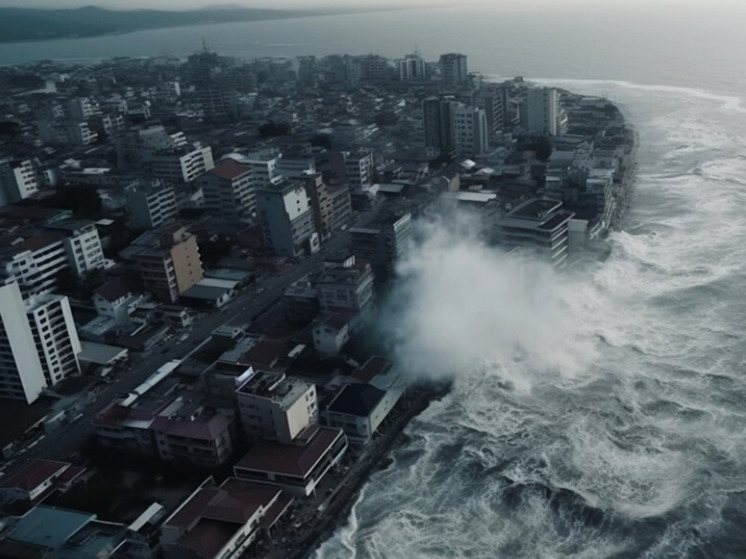
The researchers produced the report by combining data on how much global warming has made extreme weather events worse with economic data on the damage. The study also found that the number of people affected by natural disasters was 1.2 billion over two decades.
In recent decades, hurricanes, floods, heat waves and droughts have claimed many lives and caused enormous property damage, and global warming has made these events more intense. The study is the first to calculate the global cost directly associated with human-caused global warming. Two-thirds of the damage was due to loss of life, and a third to the destruction of property and other assets: 16% due to heat disturbances and 10% due to floods and droughts.
Victoria University of Wellington (New Zealand) professor Ilan Noy and his colleague Rebecca Newman looked at the statistics and estimated the average cost of disasters. Average climate damage will be between $60 and $230 billion. These figures are much higher than those produced by computer modeling, which are based on changes in average global temperatures rather than the extreme temperatures that are increasingly being experienced around the world. The Guardian notes that this figure is significantly lower than the $7 trillion a year that the fossil fuel industry operates.
The total cost of climate change over the past 20 years has been $140 billion, but this is an average figure. Scientists say that the calculation was carried out without data on declining land productivity and rising sea levels. In the report, the professor compared the data with the $100 billion that rich countries allocated from the budget to the poor. It is noted that 90% of the allocated money was aimed at reducing carbon dioxide emissions.
Professor Noy noted that there were many extreme weather events for which there was no data on death toll or economic damage: «This indicates that our overall figure is a significant understatement.» For example, he said, statistics on heat wave deaths are only available in Europe: “We have no idea how many people died in all of sub-Saharan Africa.”
Years with the highest climate-related costs , include 2003, marked by a devastating European heat wave; 2008, marred by Cyclone Nargis in Myanmar; and 2010, affected by drought in Somalia and Russian heat.
The analysis used the statistical cost of mortality due to disasters: “A lot of people really don't like the idea that we put a price on life. This is standard economic practice, and it arises because, ultimately, we need to make decisions about investments in various things,” Noah admitted.
According to the World Meteorological Organization, recorded damage since the 1970s from extreme weather disasters increased sevenfold. However, it is difficult to separate global warming from population growth and migration.
The study, published in the journal Nature Communications, took a different approach. It is based on exactly how the climate has changed. There have been hundreds of studies that have calculated how much global warming is causing extreme weather events. This allows us to estimate the proportion of damage resulting from anthropogenic heating.
Recall that at the UN Cop27 climate summit in 2022, countries agreed to create a fund to compensate for losses and damages to help poorer countries recover from natural disasters. Professor Noy called for the use of his methodology, pointing out that «it could help quickly identify the specific climate costs of individual disasters, allowing for faster delivery of funds.»
Dr Stefan Allegatt of the World Bank, who was not part of the research team, said: “The key message is that climate change is markedly increasing global economic losses from natural disasters. This has been the subject of controversy, with some arguing that the effects of climate change are minor compared to other factors such as economic growth and urbanization.»