


«Squares» have risen in price for the last time
In September, against the backdrop of a weakening ruble, an increase in the key rate of the Central Bank and expectations of higher mortgage prices, prices for finished apartments increased again. However, in October the situation will change dramatically. A powerful cold “cyclone” is approaching the “overheated” capital’s secondary housing market. According to analysts, the season of gradual decline in prices for the capital's square meters will last for several quarters in a row.
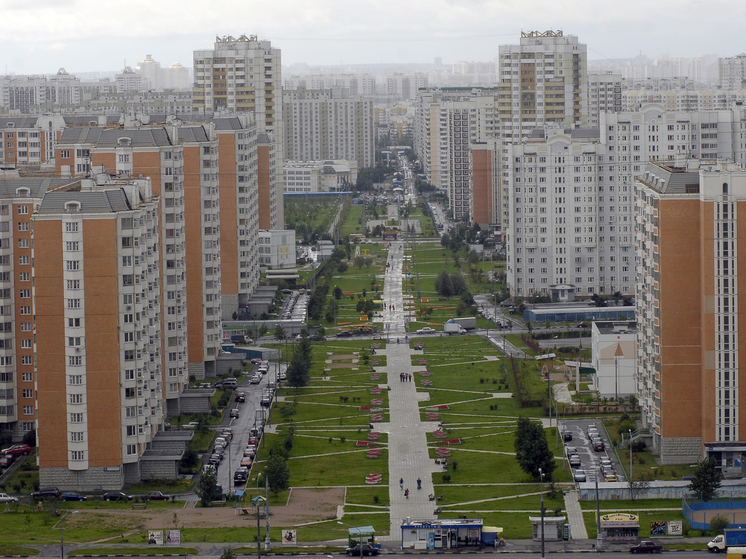
As reported by «MK» Head of AC «Real Estate Market Indicators» Oleg Repchenko, in September the average cost of 1 sq.m. on the secondary market of the “old” Moscow reached 264.8 thousand rubles. — this is 1.6% more than in August. Apartments in New Moscow increased in price by 1.3% — up to 203.1 thousand rubles. per sq.m on average. According to the analyst, the most expensive apartments were offered in the central areas of the capital — Ostozhenka (on average 529.8 thousand rubles per 1 sq.m.), metro station. «Kropotkinskaya», «Park of Culture» (529.8 thousand per 1 sq.m.). We are talking about prices for old housing stock, excluding new luxury housing. The most affordable apartments are traditionally located in “castle” buildings. and “primary” areas. These are remote Zelenograd (190.6 thousand rubles per 1 sq.m. on average) and areas of the non-prestigious south and southeast: Zhulebino and Nekrasovka (197.9 thousand), South Butovo (202.1 thousand), Western and East Biryulyovo (203.1 thousand).
Today, furnished properties are popular: citizens prefer to buy an apartment that is as ready for living here and now as possible, reported MK. Director of the Est-a-Tet secondary real estate sales office Yulia Dymova. In her opinion, this request contributed to the activation of flipper buyers — citizens who purchase apartments without finishing, improve them in a short period of time and sell them at a price higher than the original cost. We are talking mainly about objects in the “comfort” segment. and “business” in recently completed new buildings. Today the share of flippers is approximately 20%. “Today, the region no longer plays a determining role in pricing. It is formed from the qualitative characteristics of the residential complex, the development of the project’s infrastructure,” — added by the expert.
Head of the city real estate department at NDV Real Estate Supermarket Elena Mishchenko noted a sharp increase in the number of transactions in New Moscow, which is primarily due to the relatively low cost of apartments compared to prices in the “old” Moscow. Moscow. Another interesting trend — buyers sought to quickly purchase real estate due to rising mortgage rates. “Everyone is trying to catch the last car and buy housing on more favorable terms. In September we observed a slight increase in prices for apartments — on average by 5–10% depending on location. This trend affected both new buildings and secondary lots,” — Mishchenko emphasized.
According to her, today the most affordable secondary apartments are concentrated in New Moscow and in the southeast of the “old” Moscow. Moscow, in particular in Nekrasovka. Lots in the west, southwest and north are more expensive. Next come the southern and eastern administrative regions. So, a one-room apartment in the “Khrushchev” can be bought for an average of 8.5 million rubles, and a lot with exactly the same characteristics in the west of Moscow will cost from 11 million rubles. Prices may vary, despite the same footage, category of the house, year of its construction. The difference in cost often reaches 30%. At the same time, price differences between similar apartments in the southeast and east of Moscow are much smaller and amount to only 5–10%.
“The policy of curtailing preferential mortgages for new buildings has not yet had any impact on the secondary market. Increasing the down payment — insignificant factor of influence», — noticed «MK» Managing Director of the Miel chain Alexander Moskatov. In his opinion, the secondary housing market is now in a transition phase. In the summer months, demand exceeded supply, and adjustments are likely to begin in October.
According to Repchenko, after record demand in August, the market began to cool slightly in September against the backdrop of increased mortgage rates and due to the large volume of previously realized advanced demand. That is, those who planned to buy an apartment in the coming months did so at the end of summer, so a pullback in demand is inevitable.
At the moment, buyer interest, according to experts, is focused on two categories of lots — classic multi-room apartments and two-room Euro-format properties. “Multi-room people, as a rule, buy for themselves — There are now quite a large number of large families. But two-room Euro-format apartments are in demand among tenants. Some citizens invest in real estate of this format for their further rental,” — Dymova explained.
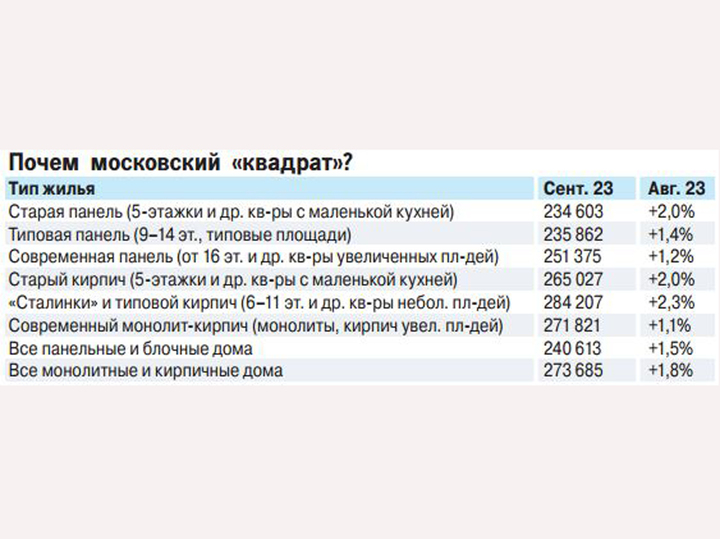 According to IRN data.
In the Moscow region, more than 35% of the total volume of resale supply falls on the mass segment. “The overwhelming majority of buyers have an average income or even below average. People want to live in comfortable houses in Moscow, so they are looking for budget options,” — Mishchenko said. According to her forecast, in the near future the cost of secondary apartments will increase by another 5-7%: “In the current geopolitical situation, it is difficult to predict what will affect price dynamics. The cost will change if a second wave of mobilization begins or in the event of a pandemic. Amendments to tax legislation may also have an impact.”
Oleg Repchenko thinks differently. In his opinion, in October-November, the growth in housing prices may stop, and a period of long-term stagnation will begin: mortgage rates have reached a barrier level, and when banks complete issuing loans previously approved at the old rates, demand in the secondary market will sharply decline. The remaining demand will go to the primary market, where there are still preferential programs with rates that are adequate by today’s standards. Although their conditions are also deteriorating. Following the decline in secondary demand, prices will also creep down. “The period of stagnation, unlike last year, may drag on significantly, because if last year the Central Bank, having raised the rate to 20% at the end of February, began lowering it already in April, now the regulator has made it clear that the high key rate which means an unaffordable mortgage — this will last for a long time,” — the analyst concluded.