


«High prices for hydrocarbons allowed our budget to collect an additional 800 billion rubles»
The cost of a barrel again exceeded the psychological mark of $90. A reduction in supplies by global industry leaders, as well as local factors, such as falling fuel reserves in the United States, continue to keep oil prices high. There are only a few steps left to reach the coveted “hundred”, to which barrel prices were already approaching a month ago. Experts believe that by the end of the year, “black gold” will reach a three-digit mark, and even an increase in supplies from Venezuela after the easing of Washington’s restrictions against Caracas will not prevent the price of raw materials from soaring.
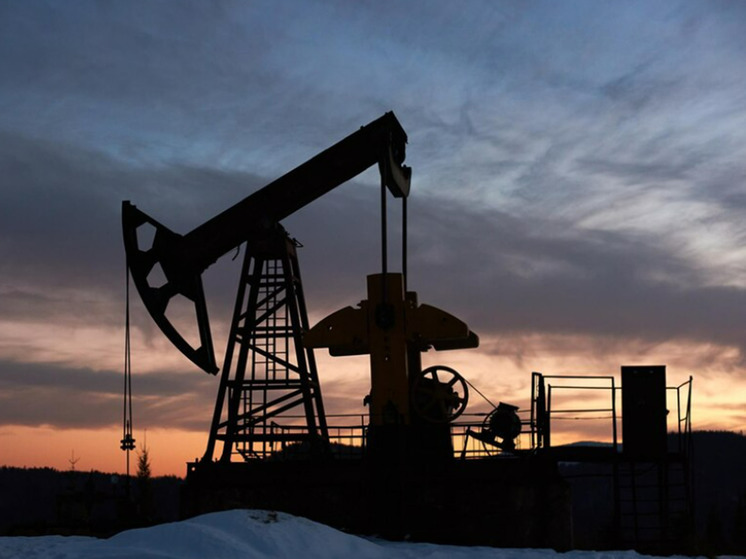
The current rise in oil prices can be considered a kind of attempt to return to former heights. Comparison with the end of September, when the cost of a barrel reached $97, is not yet in favor of current quotes. Then market players were looking forward to the price of “black gold” finally breaking the coveted three-digit mark.
But this never happened: pessimistic forecasts about the future of demand for energy resources, both in the Western and Eastern markets, prevented this. Disappointing macroeconomic indicators demonstrated by the leading countries in Europe may lead to a fall in purchases of raw materials, and, consequently, to a decrease in fuel consumption. As analysts at the Institute for Economic Research at the University of Munich write, the German economy has entered a technical recession (GDP risks falling by 0.4%), among the reasons for which are a decrease in purchasing power due to high inflation (5.8%) and rising energy prices. A similar situation is observed in France, whose economy has already shrunk by 0.5% and continues to show a negative trend amid a decline in business and consumer activity.
On the Asian front, the reduction in hydrocarbon imports was caused by the threat of a new strain of coronavirus and the accompanying decline in industrial development in the region. Investors had to temporarily forget about the recovery of the Chinese economy, on which commodity traders were betting, and switch to new investment instruments. This market situation was changed by the aggravation of the situation in the Middle East — a new military conflict between Palestine and Israel provided oil prices, no matter how cynical it sounds, with significant support.
Since the positive and negative trends for the price of oil have balanced out, reaching a certain balance around $90 per barrel, any event, even an insignificant one, can now swing the clock in one direction or another. What can tip the scales towards growth? Again — war. The situation in the Gaza Strip promises to develop into a large-scale and long-term conflict, into which neighboring countries risk getting involved. According to the head of the sales and customer support department of Alfa-Forex, Alexander Shneiderman, first of all, Iran can join the military clashes in one way or another. The country is under sanctions, but through “gray” schemes it continues to provide international buyers with significant volumes of hydrocarbons. A complete stop of exports by Tehran will support the barrel with additional arguments on the way to $100.
More trivial reasons can swing the oil cup towards a price fall. Mainly, the easing of US sanctions on the oil and gas sector of Venezuela. Washington has already issued licenses to Caracas allowing it to enter into transactions with foreign counterparties, while lifting the ban on secondary foreign trade transactions. “Having lifted the bans, Venezuela is able to quickly increase the daily volumes of raw material production by 250-300 thousand barrels,” notes Sergei Suverov, investment strategist at Arikapital Management Company. — For comparison, the current level of production in the country is estimated at 750-800 thousand barrels per day. Saudi Arabia and Russia, with the support of other OPEC+ members, had difficulty removing 1 million barrels from the market. Now Caracas can neutralize by almost a third the alliance’s efforts to stabilize prices, which could ultimately collapse to $75-80.”
For the Russian economy, such oil swings can be considered as a time for respite. “The discount that our producers previously had to give to Asian and other buyers of energy resources for agreeing to buy “sanctioned” raw materials has dropped to a minimum and now the difference between Urals and Brent is approximately the same $3-4 as several years ago,” says a leading expert Center for Political Technologies Nikita Maslennikov. — High prices for hydrocarbons have already allowed our budget to collect about 800 billion rubles in additional oil and gas revenues this year, exceeding the budgeted planned volume. Maintaining oil prices at least at the current level will bring similar profits, and an increase in quotations to $100 will double raw material receipts.”