


This title for the text was invented by AI
Imagine that you had the opportunity to ask Bulgakov to write an alternative ending to The Master and Margarita. Or you can sing a duet with John Lennon on his famous Imagine. And a smart speaker in the morning will wake you up not with a mechanical, albeit pleasant, female voice, but with the voice of your long-dead grandmother.
The generation of digital doubles of people, both living now and those who have long since left this world, has already a reality that artificial intelligence can create. Only now it remains to understand how “digital immortality” will turn out to be a blessing or a punishment for humanity.
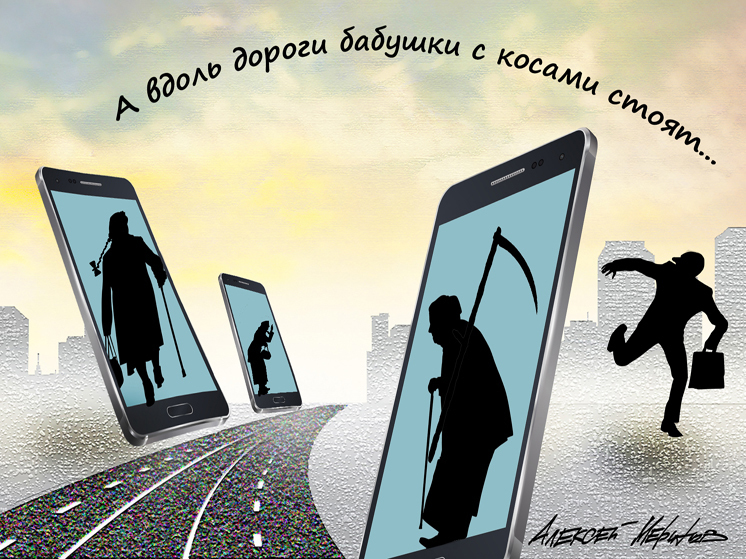
So far, the results of the creations of Artificial Intelligence are frankly clumsy. It needs to be rechecked and errors corrected. But he’s still just learning.
So today the main issue in the field of AI is ethical. Is it normal to entrust the creation of journalistic texts, music, poetry, scientific and analytical notes to machine intelligence? Is it normal to replace the voice of a live interlocutor in a telephone handset on the hotline of a bank or clinic with AI? Well, what about creating a full-fledged digital copy of a person who died a hundred or two hundred years ago? Russia has already outlined the “red lines” for AI. In 2021, the country adopted a Code of Ethics in the field of artificial intelligence.
These days, a forum on ethics in the field of AI is being held in Russia. A survey has been launched on the event website. IT people are interested, for example, in how you would feel about a digital copy of your relative—living or deceased? Such a double could well become a voice assistant for housework. You forgot, say, to turn off the stove in the morning. And then a voice assistant calls you, looking like two peas in a pod like your late grandmother: “Vasya, you idiot! You’ll start a fire!” And immediately my soul feels so warm.
What about grandma? It is possible, after all, to create a digital double of Pushkin and Dostoevsky. Programmers say that to create a digital copy of a writer or poet of the past, it is enough to “drive” all the fruits of his work into the AI database, and the “surrogate” will be able to produce not only an alternative version of the original work with a new ending and plot twists, but also new masterpieces. If there is a recording of the voice of a deceased person, AI can use it to create a copy that can read the news to you in the morning. Summary in Levitan's voice in 2023 — what is it like? The developers say it's possible. Lawyers warn of danger: the voice is not protected in any legal sense at all. A person (photo, video image) — yes, is protected by the Civil Code. And with your voice you can do whatever your heart desires. So here is another problematic point for both an ethical and a full-fledged digital code.
AI is quite applicable in medicine. Only we are no longer talking about machine intelligence insuring the doctor and looking at his MRI images. This won't surprise anyone anymore. Today we are talking about replacing a real doctor with a digital double. For example, in a small town there is only one excellent cardiologist. The queue for him is months in advance. The church prohibits human cloning, so AI can help…
But, unfortunately for the developers, religious leaders were not particularly enthusiastic about the idea of “digital immortality.”
“Respect for life and the perception of death as an integral part of a person’s spiritual path will disappear,” says the head of the Spiritual Assembly of Muslims of Russia. “Faced with the possibility of digital preservation of consciousness after physical death, we are entering a new era where the traditional understanding of life and after it is being revised. The essence of digital immortality is that a copy of a person will have the same way of thinking, reactions, and behavior. The problem of death in the biological sense will simply disappear.
The head of the Synodal Department for Relations between the Church and Society and the Media noted that the creation of digital doubles of writers and artists can lead to the fact that people will not be able to understand what they are dealing with — with original or fake. He recalled: this plot was used in the film “Incognito”: the main character, a talented artist who made copies of famous paintings, took aim at Rembrandt and painted a canvas that was exactly like the original.
— A commission of experts met, and two out of three experts recognized the painting as an original by Rembrandt. And only one female expert said it was a fake. When asked why she decided this, she replied: “Too similar.” Rembrandt could never repeat himself,” Legoid retold the plot of the film and added on his own: “AI operates according to pre-compiled algorithms.” This can become a very tempting niche for all sorts of pseudo-psychologists and coaches who give everyone the same advice on creating a “better version of themselves.”
Moreover, there is a risk that the neural network will undertake to confess people who are in a crisis situation in life and do not dare to go to a real clergyman or a normal psychotherapist.
—The meaning of pastoral practice is that there are no algorithms. Two people will receive two different answers from the priest to the same question,” said Vladimir Legoyda.
The priest is convinced that today AI can be controlled by humans. The main thing is not to miss the moment:
— This is just a thing that works according to our algorithms. So let’s regulate these algorithms,” Father Alexander urged and said that priests are also experimenting with AI. — The priests asked GPT chat to write a sermon. And he writes! It’s quite a text, it has a right to exist. But no normal priest would address his parishioners with such a sermon. As long as we act this way, everything will be fine.