


Expert Krokhin: “This approach threatens consumers with abandonment of boilers, air conditioners and washing machines.”
Soon, every extra kilowatt spent on lighting their apartment will cost Russians more and more. The government proposed that the regions transfer the population to a differentiated system of payment for electricity: those who spend more will have to pay a double tariff. This is being done as part of reducing the burden on business through cross-subsidization, when legal entities actually pay extra for residents. According to experts, the proposed scheme is not beneficial to either local authorities or ordinary consumers, so its entry into force will be conditioned only by the strict requirements of the federal center.
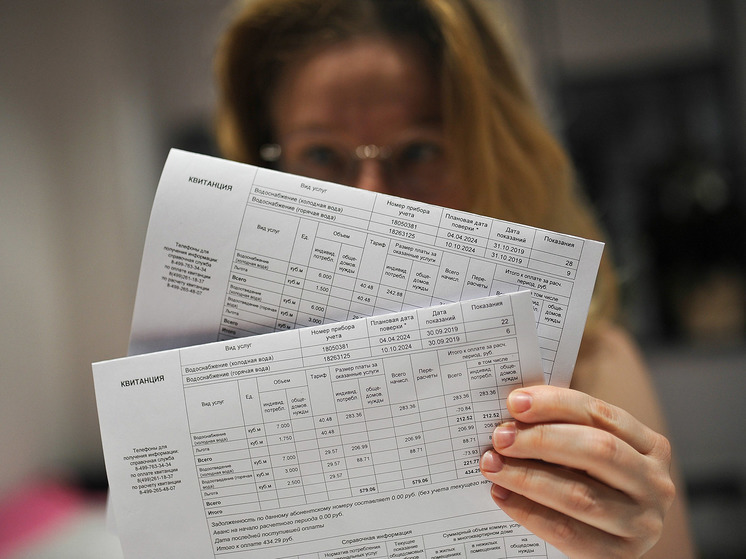
Regions that decide to support the Cabinet's initiative will be given the right to exceed the maximum amount of cross-subsidization, within which business representatives pay extra to reduce tariffs for the population. Although regions have been able to differentiate tariffs for two years now, due to the constant increase in electricity consumption (this year it amounted to 4% in the country as a whole), most administrations constantly exceed the cross-subsidization limits, so they are in no hurry to use the implemented tool. How much the system being implemented starting next year will be in demand from the regions and how the implementation of the government measure will affect the population, explained the chairman of the Union of Moscow Housing Organizations, Konstantin Krokhin.
— Until the last moment, the regions were not eager to take this path. On a direct line with Vladimir Putin, one elderly Russian woman asked a question: why the increase in utility tariffs is ahead of the increase in pensions. The head of state replied that tariffs would increase only once — in July 2024. But if we think theoretically, then the transition to a differentiated model is, in fact, narrower. is an increase in electricity tariffs: a certain amount of electricity consumption will not fall under the proposed system, and additional fees will be charged for exceeding the allocated quotas. Similar requirements were going to be introduced several years ago through a similar system of regulations. This measure proved unpopular and was abandoned. The current mechanism actually repeats the criteria proposed then, only with a different name. A grid of limits will be used — for example, 100-150 kilowatts consumed by a person, village or household will be paid at low prices, and exceeding the approved level will be paid at extremely high prices.
“The federal center has long been pushing local authorities down this path, warning that otherwise they risk finding themselves on the edge of an economic abyss. In addition, the regions were threatened with depriving them of the opportunity to increase the volume of cross-subsidies. In other words, the federal center is forcing regional and territorial administrations to increase payments for electricity. If the federal authorities increase pressure on the issue of differentiation, then the governors will have no choice but to agree.
However, the president said that electricity tariffs will not increase until July 1. Meanwhile, the implementation of the government initiative will mean that the corresponding utility bills will still increase. So far, the regulations do not provide for such changes. It is to be hoped that the country's leadership will have enough political wisdom not to take such steps, at least until the elections scheduled for March next year. But after this period, it is quite possible to make decisions that will increase payments for housing and communal services in general, and for electricity in particular.
— It seems to me that this is rather a psychological technique. On the eve of the presidential elections, the federal government wants to act as a “good investigator” by blaming the unpopular decision on the regional authorities. But none of the local leaders wants to dress in the uniform of an “evil investigator” and come out with negative initiatives. For now, such maneuvers can only be considered verbal interventions. But after the elections, it is possible that voluntary initiatives will replace state laws, and the federal center will have the opportunity to shift responsibility for their implementation to the heads of the federal subjects. And then the governors will have to transfer to themselves the share of discontent of our compatriots, for whom it is increasingly difficult to bear the financial burden of paying for the ever-increasing prices for housing and communal services.
— Undoubtedly, this proposal will increase the financial burden of the population. It is normal that any modern person strives to improve his own well-being. But it turns out that Russians are offered to pay for electricity at European prices, but wage plans in our country do not reach the EU level. This means that the population will have to reduce their electricity consumption. In fact, this is exactly what the authorities are pushing towards with their decisions. For the average consumer, this trend threatens to give up boilers, air conditioners and washing machines, which require unnecessary energy costs. People will have to worsen their lifestyle, because due to rising prices, ordinary people will not have enough money to pay for the electricity previously spent on affordable equipment. This situation leads to a decrease in the quality of life of people and runs counter to the main objectives of the government, whose work should be aimed at improving the well-being of the country's population.