


Is this a response to US attempts to appropriate Russian assets or makes it easier for foreign brands to work within the country, experts argued
If we are talking about paying off debt to foreign creditors, then from January 3 to these funds cannot be recovered by executive documents. This decree was signed by Russian President Vladimir Putin. It was published on the legal information portal and came into force from that moment. Speaking in financial and legal language, seizures of funds and assets in accounts of type “C” and “I” are now officially prohibited. Experts disagree on why such a law would be adopted now.
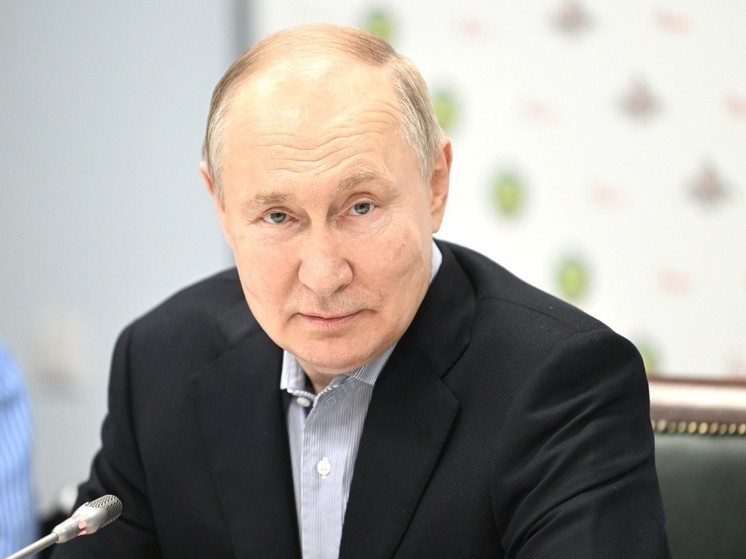 Vladimir Putin. Photo: Kremlin.ru.
The President of Russia signed a decree on the temporary procedure for fulfilling obligations to foreign creditors on March 5, 2022, that is, almost a week and a half after the start of the special operation and the introduction of the first wave of Western sanctions. At the same time, the Central Bank and the Ministry of Finance were empowered to determine a different procedure for fulfilling obligations to pay profits to foreign creditors. The decree published on January 3, 2024 is an addition to the previously valid regulatory act. “Foreclosure cannot be made under executive documents, arrest can be imposed, and other interim measures cannot be taken in relation to them,” the document says regarding accounts of type “C” and “I.”
Type “C” accounts appeared in Russia after the start of a special operation in Ukraine and the West’s imposition of sanctions against our country, including the seizure of funds belonging to our state in unfriendly jurisdictions. The purpose of their appearance was the desire of the authorities to “freeze” the funds of unfriendly residents (foreigners and foreign companies — editor's note) in response to foreign restrictions. These accounts have been receiving dividends, interest and other payments in favor of non-residents since last March, but foreigners from unfriendly jurisdictions cannot withdraw these funds from such accounts from Russia.
Type “I” accounts are used for investments by non-residents within the territory of our country. They are used to purchase currency for rubles in connection with the repatriation (that is, returning to the homeland — editor's note) of income received as a result of investments in Russia.
It should be noted that the arrest of accounts “C” and “I” was carried out only once during the validity of the decree in the case of Euroclear Bank, but even in this case the court of the next instance recognized the measure of arrest as excessive.
The presidential decree was signed against the backdrop of renewed discussion in government circles about the need to develop counter-sanctions in Russia, the purpose of which would be the legal protection of foreign companies that decide to stay in our country despite pressure from Western governments. Such an initiative, in particular, was made by State Duma deputy Alexei Didenko. He pointed out that there is no point in Russians giving up hundreds of popular brands in a variety of niches — from food to construction equipment. “They said that they do not want to leave Russia even under pressure from abroad, we need to give them tools to protect themselves from this pressure,” the parliamentarian explained his initiative. However, the experts interviewed by MK did not come to a consensus on the document signed by the Russian President.
Thus, according to , perhaps the decree of January 3 is a reaction to an attempt to pass in the United States the Rebuilding Economic Prosperity and Opportunity (REPO) for Ukrainians Act — editor's note), which will allow use frozen Russian assets to restore the Ukrainian economy. These attempts intensified at the end of December due to the growth of the US national debt, which at the beginning of this year already exceeded $34 trillion. Unfriendly foreigners whose assets are frozen in Russia are “human shields” against attempts to confiscate frozen Russian assets. This shield must be protected from being torn apart. In addition, the decree closes the loophole for unfreezing the assets of non-residents using a simple scheme: creating a fictitious debt of a non-resident to a resident and foreclosure on frozen assets, the banker claims.
At the same time, he believes that this decree is aimed at easing to foreigners. “Perhaps Russia is waiting for some kind of reciprocal, proportionate measures from other countries,” the lawyer suggested. “The decree is aimed at protecting the interests of foreign creditors primarily over Russian ones, that is, such accounts are now protected from foreclosure.” However, this also opens a loophole for abuse. Now malicious defaulters will be able to specially open such accounts and transfer money to them in order to save them and escape from their creditors, the lawyer warned.