


But the country's economy needs robots and automatic lines
Russians have not yet had time to celebrate the arrival of the New Year in the old style, when life is already returning us to harsh everyday life. By 2030, another 2 million jobs need to be added to the economy. Analysts at the All-Russian Research Institute of the Ministry of Labor come to this conclusion. Where can we get them if unemployment in the country is at a historically low level, only 2.9%? Will we be able to recruit new workers in the conditions of a deep “demographic hole”?
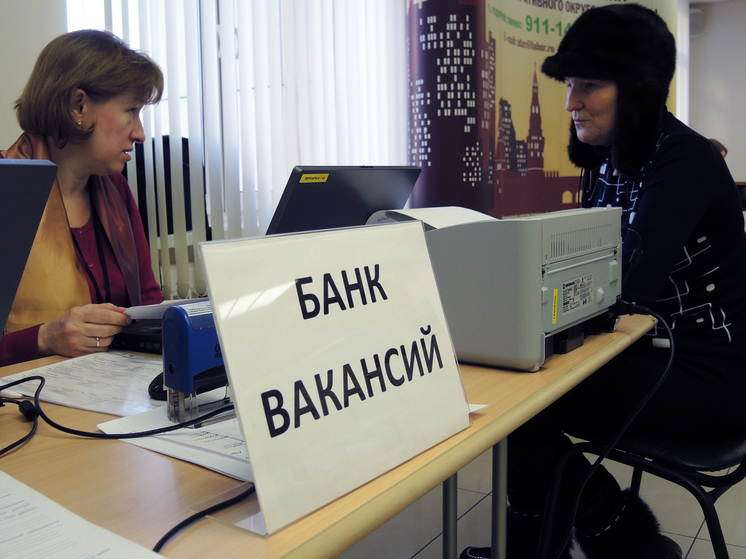
According to VNII experts, this is quite realistic by 2030. According to their forecasts, by then the quality of the workforce will change significantly. Outdated professions will disappear into oblivion and new ones will appear in their place. Especially at the intersection of different specialties — these are the professions that will be especially in demand in the labor market.
The forecasts are quite optimistic. We will live and work in a new way. But so far, the only new professions we see are pizza delivery people on scooters. To a certain extent, they are ousting sellers in stores from the market; now products are delivered to your home. However, further qualitative changes in the labor market are not particularly noticeable.
The situation here is like this. Today, the labor shortage is almost 5 million people. If by the end of this decade 2 million people join the workforce, then after 2030 the economy will be short of another three million. Where can I get them?
Everything ingenious is simple. Humans in the workplace should be replaced by automation and robots. There have been discussions about this in Russia for a long time. At one time there was even panic: what would millions of workers do if they were replaced by modern technology? Will everyone end up on the street?
But things are still there, in terms of introducing everything “advanced and progressive” we have not made much progress. Much, as in the old days, is done “on the knee” or “on the navel.”
This is surprising. After all, we have made great strides forward in the digitalization of the economy, almost ahead of the rest of the planet. Why are we marking time when it comes to modern production? Without them, we cannot increase labor productivity. And raising staff salaries in the fight against competitors for personnel, without increasing production standards, will lead to further inflation.
Will a 2-million-strong army of additional workers be able to change the situation in the country's economy?
According to the former Deputy Minister of Labor of the Russian Federation, trade unionist Pavel Kudyukin, this problem can be completely solved without radical changes in the technological base we won't succeed.
“The labor balance is tight,” he says. — It is important to understand: the introduction of new jobs will be accompanied by the withdrawal of old jobs? But here the question immediately arises of retraining people and how will this be organized? Are all employees capable of retraining from “bad” industries to “good” ones, that is, modern ones?
Or is it simply about additional saturation of the market with new employees? It is clear that with the current level of unemployment there are practically no such opportunities left. In addition, such a measure will indicate an extensive path of economic development.
— This also has its difficulties. Due to the weak exchange rate of the ruble against other currencies, working in Russia has become less profitable and the flow of guest workers is generally declining.
I don’t see any other sources: transfer of personnel from obsolete production facilities to new ones and external migration.< /p>
— We will not increase the volume of labor resources. We will increase tax revenues, including for social funds, this is very important. But this will not affect the number of jobs in any way.
— I wouldn’t be surprised if difficulties arise with such a task
— Robots should replace people. Any entrepreneur begins to consider — what is more profitable for him? Keep, say, 10 people with a certain salary fund? Or buy one robot that will replace his staff? It turns out that it is cheaper to pay salaries to employees than to acquire automation.
Given the fact that we are a country of cheap labor and low wages, high technologies are not always beneficial for the country and business.