


“Maybe this is what was intended?”
By shelling merchant ships in the Red Sea, the Houthis seem to have confused the maps of the United States and Israel, creating a source of tension that was unexpected for them. According to Western analysts, the actions of Yemeni militants could dramatically change the situation to a geopolitical, military and, at a minimum, economic disadvantage for Washington. What consequences for the situation in the Middle East, and throughout the world, could be caused by Houthi attacks on ships in the Red Sea and Anglo-American strikes on Yemen, said Doctor of Law, Honored Lawyer of Russia, Professor Yuri Zhdanov.
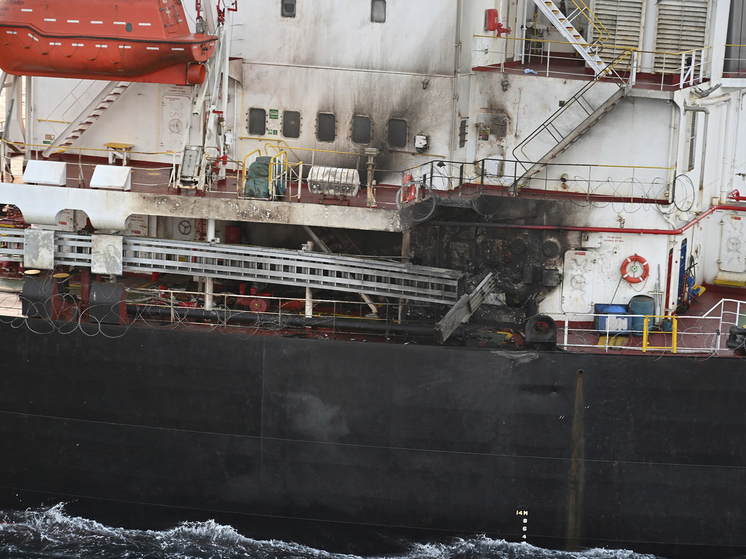
“It’s not like that here.” The Houthis did not just attack some ships somewhere, but struck sensitive commercial traffic in the Red Sea, vital for many countries, and became another party to the military conflict in the Middle East. They specifically “fit in” with Hamas against Israel – well, as best they could. And taking into account the fact that the war there is flaring up in earnest and is about to develop into a large regional one, this is serious.
– Christian Edwards tried to answer this question in a recent article on the CNN website: “The Houthi movement, also known as Ansarallah (Supporters of God), is one of the parties to the civil war in Yemen that has raged for almost a decade. It emerged in the 1990s when its leader Hussein al-Houthi founded the Believing Youth, a religious revival movement of the centuries-old branch of Shiite Islam called Zaidism.
The Zaidis, Edwards says, ruled Yemen for centuries but were marginalized under the Sunni regime that came to power after the 1962 civil war. The al-Houthi movement was founded to represent the Zaidis and oppose radical Sunnism, especially the ideas of the Wahhabi of Saudi Arabia. His closest followers became known as the Houthis.
The civil war in Yemen began back in 2014 when Houthi forces stormed the capital Sanaa and overthrew the Saudi-backed government. The conflict escalated into a wider war in 2015 when a Saudi-led coalition intervened in an attempt to repel the Houthis. Eight years later, the coalition has failed to oust the Houthis, who still control most of Yemen. A ceasefire agreement was finally signed in 2022, but it expired after just six months. However, the warring parties never returned to full-scale conflict. “Since the ceasefire,” Edwards recalls, “the Houthis have consolidated their control over much of northern Yemen. They also sought an agreement with the Saudis that would end the war and strengthen their role as the country's rulers.»
— Hardly. As Christian Edwards writes, “the war triggered one of the worst humanitarian crises in the world, killing hundreds of thousands of people and causing famine in some parts of the country.”
Seventeen million people in Yemen are currently food insecure, the World Food Program says, warning that the humanitarian situation and shortages of food and other vital supplies “could push millions closer to famine and death.” The conflict has also damaged the country's infrastructure, exacerbated economic collapse and led to massive population displacement.
Today, more than 24 million people — more than 80% of the population — are in need of humanitarian assistance and protection, according to the UN. About 3 million people have been forced to flee their homes, hundreds of thousands have lost their jobs, and more than half the population now lives in extreme poverty.
According to a 2021 United Nations Development Program (UNDP) report, the conflict has killed approximately 377,000 people, more than half of whom died from indirect causes related to the conflict, such as lack of food, water and health care.
< p>According to the United Nations Office for the Coordination of Humanitarian Affairs (UNOCHA), only 38.9% of Yemen's humanitarian funding needs are being met, and a $2.7 billion funding gap remains urgently needed.
– The Houthis are supported by Iran, which began increasing its aid to them in 2014 as the civil war escalated and rivalry with Riyadh intensified. According to a 2021 report from the Center for Strategic and International Studies, Tehran has provided weapons and technology to Houthi militants, including sea mines, ballistic and cruise missiles, and drones.
– The Houthis form part of Iran's so-called «Axis of Resistance.» Along with Hamas in Gaza and Hezbollah in Lebanon, the Houthis are one of three known Iran-backed movements that have recently launched attacks on Israel.
It is not surprising that Tehran on January 12 condemned the US and British strikes against the Houthis, calling it a violation of international law and an attempt to divert attention from the war in the Gaza Strip.
— Present. American military experts are monitoring the constant improvements in the characteristics of the Houthi missiles of their own making — range, accuracy and power. Initially, their weapons were largely assembled from Iranian components that were smuggled into Yemen piecemeal, a U.S. intelligence source told CNN.
But Houthi engineers made «progressive» changes that led to great overall improvements. The Houthis eventually used medium-range ballistic missiles against Israel, firing a salvo of shells at Eilat in early December 2023. True, as Israel claims, it intercepted these missiles.
Again, the Houthis have used drones and anti-ship missiles to attack commercial shipping in the Red Sea. According to Western analysts, this prompted the USS Carney in the Red Sea to respond to distress signals.
— Well, first of all, any war with the “infidels” is for them — its. After all, they are “Supporters of God” after all. And, secondly, they were, to put it mildly, “asked” about this by the main sponsor and curator — Iran.
“Nevertheless, the Houthis can – and have – caused pain, so to speak, to Israel and its allies. The global economy has received a series of poignant reminders of the importance of this narrow stretch of sea, which stretches from the Bab el-Mandeb Strait off the coast of Yemen to the Suez Canal in northern Egypt. 12% of global trade flows pass through this section, including 30% of global container traffic.
Here's just one episode: In 2021, a ship called the Ever Given ran aground in the Suez Canal, blocking a vital trade artery for about a week. Even so, the incident delayed up to $10 billion worth of cargo each day and caused disruptions in global supply chains that lasted much longer. Note that this was not a deliberate action, but just an “inevitable accident at sea.” But now there have been quite targeted attacks.
– Western experts have concerns that Houthi drone and missile attacks on merchant ships, which have occurred almost daily since December 9, 2023, could cause an even greater shock to the global economy. Four of the world's five largest shipping companies, along with oil giants such as BP, have suspended shipping through the Red Sea due to fears of attacks by the Houthis — actions that have driven up oil and gas prices.
Attacks could force ships to take a much longer route around Africa and cause insurance costs to soar. Companies could pass on the increased costs of transporting their goods to consumers, raising prices again at a time when governments around the world are struggling to rein in post-pandemic inflation.
The Houthi strikes may be aimed at causing economic damage to Israel's allies in the hope that they will pressure it to stop destroying Gaza.
Advocating the Palestinian cause may also serve as an attempt to gain domestic and regional legitimacy as they seek to control northern Yemen. It could also give them an advantage over their Arab adversaries, Saudi Arabia and the UAE, whom they accuse of being «lackeys» of the US and Israel.
– Not a fact, that they generally count on anything other than the will of Allah. If anyone is betting on Houthi attacks, it is Iran. But countries whose ships pass through the Red Sea are still forced to react.
The United States and its allies — more than 20 states — have deployed naval forces in the Red Sea as part of Operation Guardian of Prosperity. In turn, the UN Security Council approved a resolution calling on the Houthis to “stop their brazen” attacks in the Red Sea. 11 representatives voted in favor, 0 against, and four abstained, including Russia and China.
However, the United States and Great Britain still carried out strikes on Houthi targets in Yemen on January 12. US President Joe Biden said he ordered the strikes «in response to unprecedented Houthi attacks on international shipping in the Red Sea.»
— No, of course, as expected. The Houthi spokesman promised that their fighters would “continue to obstruct the navigation of Israeli ships in the ports of occupied Palestine in the Arabian and Red Seas.” Interestingly, the Houthis are hinting that Asian ships can pass through the Red Sea unhindered.
Mohammed al-Bukhaiti, a Houthi spokesman, told Al Jazeera back in December 2023 that the group would oppose any US-led coalition in the Red Sea. The attacks in January signal that confrontation along the waterway will continue throughout this year.
“No sudden collapse has occurred yet, but very alarming symptoms have appeared. David J. Lynch and Evan Halper write about this in The Washington Post article, “Houthi Attacks Begin to Shift Shipping Flows”: “Just as global supply chains were finally returning to normal, a group of rebels in Yemen began attacking container ships and oil tankers passing through Red Sea.
Continued Houthi attacks have increased shipping costs around the world, forced cargo carriers or their customers to take longer alternative routes from Asia to Europe and the United States, and raised alarms about the economic costs of the wider conflict.
Nearly a fifth of U.S. cargo arrives at East Coast ports after transiting through the Red Sea and the Suez Canal, according to Moody's. Solar panels, electric car batteries, toys and vacuum cleaners are among the items you can buy on this trip. But for now, economists don't expect a major impact on the prices paid by U.S. consumers—unless the violence intensifies.
With uncertainty over how long the attacks will last, manufacturers and retailers are already feeling the economic impact. Automakers Tesla and Volvo said in recent days they would shut down factories in Germany due to shortages of parts related to the outages. The British oil company Shell has stopped all its supplies through the Red Sea, the Wall Street Journal reported on January 16.”
– That’s what we’re talking about. Lars Jensen, chief executive of Vespucci Maritime in Copenhagen, admitted: “The situation is getting worse, not better. This shows that the military intervention did nothing to alleviate the situation.»
Indeed, the escalating conflict in the Middle East threatens everyday trade. Thus, another cargo ship was attacked in the Red Sea on January 16, while a second major oil company began to move its tankers away from the waterway. The Greek cargo ship Zografia was hit by a missile a day after the US-owned Gibraltar Eagle was damaged in a similar strike. According to the UK Maritime Trade report, again on 16 January, four small boats came within 400 meters of the vessel in the Red Sea north of Eritrea but were driven off by small arms fire.
The attacks are beginning to spread beyond the Red Sea into the Gulf of Aden, which leads to the Arabian Sea and the Indian Ocean. It threatens maritime access to Djibouti, a trade gateway for Ethiopia's 120 million people, and complicates the challenge facing U.S. and allied military planners.
Ami Daniel, CEO of Windward, a maritime intelligence company based in London, was very blunt. Three months into the war in Gaza, the maritime danger zone extends hundreds of miles from its original location in the Red Sea, he said. And the naval forces that protect global trade are now dangerously stretched.
He expects the Suez Canal, through which 10 to 15 percent of global oil trade passes, will be effectively closed to international shipping as a result. Sending a ship through the Suez Canal will now cost between $3 million and $5 million, including higher insurance fees, security fees and hazard pay for the crew. He recalled that rounding the Cape of Good Hope in southern Africa adds seven to nine days to the journey from Asia and can cost as little as $2 million for the same type of ship. Overall, Ami Daniel sums up, the attack on the Gibraltar Eagle «rendered the Suez Canal obsolete.» Western analysts believe that if attacks in the Red Sea continue, many US East Coast shippers may choose to bring their goods through ports of the West Coast.
– I repeat, there is no disaster yet, but still…
So, back in December 2023, BP announced that it would suspend the transportation of oil by tankers along the disputed waterway. Shell CEO Bernard Wael, speaking at the World Economic Forum in Davos on January 16, also confirmed that his company had suspended deliveries through the Red Sea. But oil markets took this news calmly.
Since fighting began in the Middle East, the cost of shipping a standard container from China to Europe has risen from less than $1,000 to more than $4,700, according to the Freightos Index. That's a significant increase, but it falls short of the pandemic-era peak of about $15,000 two years ago. Delivery costs have not increased further as there is sufficient spare capacity in the industry.
In response to supply chain challenges during the pandemic, cargo carriers such as Maersk and Hapag-Lloyd have ordered dozens of new container ships. This additional capacity allows the industry to cope with the current turmoil by shifting ships to longer sea routes around the Cape of Good Hope.
Although rising shipping tariffs are bad news for companies transporting goods from Asia to Europe or the United States States, they are good news for freight carriers, which are feeling the financial pressure of high investment costs amid sluggish demand.
Maersk's profit fell to $521 million in the latest quarter from $8.9 billion in the same period a year earlier. Quarterly revenue fell by almost half. Maersk said it cut its workforce by 7,000 people in 2023 and planned another 3,500 cuts this year.
For now, the fighting in the Red Sea is considered unlikely to have an immediate impact on the U.S. economy. But higher shipping costs are likely to be reflected in higher prices, especially in Europe.
Gregory Daco, chief economist at EY Parthenon, is hopeful that the current situation is unlikely to increase the annual US inflation rate of 3.4 percent by more than 0.1 percentage point: “It would take either a prolonged or worsening situation for disruptions to occur.” Companies that reduce bloated inventories may reverse course and start ordering more goods to protect themselves from supply disruptions, according to Phil Levy, chief economist at logistics services provider Flexport. Such a shift could make it difficult for the Federal Reserve to beat inflation. Under different circumstances, a decision by major oil companies such as Shell to stop shipping through the Red Sea could have serious consequences. But the demand for energy and its supply are still sufficient. But this is for now.
As Western experts rightly worry, if the Houthi attacks continue “indefinitely,” they could ultimately lead to rising oil and gas prices and, as a result, a collapse of the global economy.
Perhaps this is intended?