


Analyst Chernov: “No one can stop our exporters from pumping raw materials in neutral waters, where no restrictions apply.”
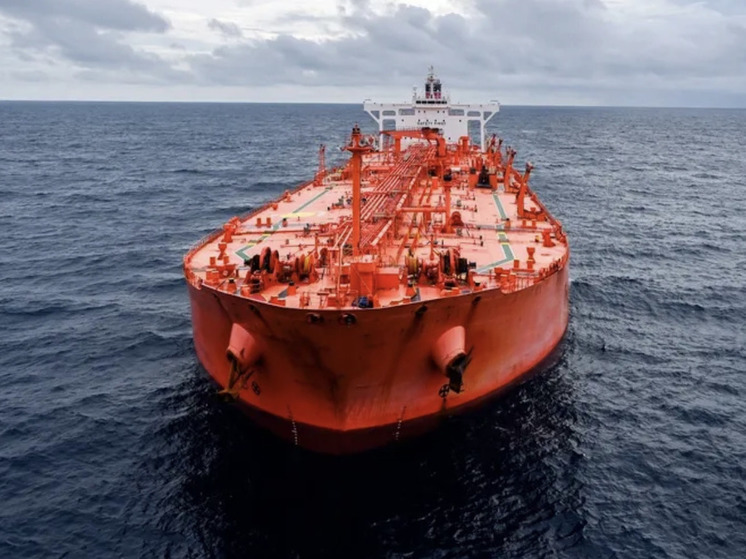
G7 participants plan to further tighten their sanctions against Russian oil exports. Judging by reports in the Western press, another method, which, however, cannot be called new, is to track and arrest ships transporting “black gold” from our country. In addition, the alliance is going to develop a ban on the sale of tankers to unknown owners, which will allegedly force Moscow to abandon the “shadow fleet”, which domestic manufacturers continue to actively use to export energy resources.
The G7 currently takes an ambiguous position. On the one hand, they limit export prices for Russian oil to $60 per barrel and impose sanctions on sea transportation of raw materials. On the other hand, they are afraid of going too far, because without hydrocarbons from our country, which continue to enter the world market in large quantities, they risk facing a fuel shortage and soaring oil prices.
However, at present the main threat of the energy crisis does not come from Russia. The countries of the Old World are rather concerned about events in the Red Sea, where, due to the escalation of hostilities, supplies of “black gold” from the largest mining countries on the planet are being slowed down. Shipowners, brokers and traders are all complaining that tanker charters, orders for which are placed at least a month in advance, are now being rented for raids, bypassing the alarm zone. It is more convenient for suppliers to sell their fuel not to Europe, but to Asia, where they are neutral about the military conflict in the Middle East.
Meanwhile, as Artem Tuzov, director of the corporate finance department at IVA Partners, believes, the Houthis are quite selective in attacking ships passing through the Red Sea. Problems with movement along transit lines mainly arise for ships associated with Israel and the United States. This is confirmed by Reuters, reporting that, despite the threats to shipping, Russia has been able to maintain oil export volumes along the unstable route because our tankers are not subject to rebel attacks. Similar information can be heard from Bloomberg, whose analysts calculated that in the first week of February, Russian oil exports by sea reached a five-week high: deliveries increased by 880 thousand barrels, consolidating at a level of almost 3.7 million “barrels” of supplies per day . For comparison, this volume exceeds the daily consumption of “black gold” in Germany, France and Italy combined.
Reconfiguring foreign sales of Russian oil plays into the hands of Asian states. “In February, Russia sent 2.86 million barrels per day to the eastern market, increasing sales by 100 thousand barrels per day. Understanding the narrowness of our country’s export market, Asian importers are again demanding a discount,” explains Arikapital Management Company investment strategist Sergei Suverov.
Another direction for sea deliveries of Russian oil, according to Bloomberg, will be the port of Tema in African Ghana, where the processing of “black gold” has already begun at a new oil refinery. The initial volumes are only 40 thousand barrels per day, but the Chinese contractors participating in the project promise that after the implementation of the second stage of construction, by the end of 2025 the production capacity of the enterprise will increase to 100 thousand barrels.
Will the tightening of Western sanctions against tanker carriers affect the situation? “Arrests of tankers allegedly transporting Russian oil, regardless of their connection with our producing holdings, have already been made,” notes Igor Yushkov, an expert at the National Energy Security Fund. Turkish and Arab ships were detained, suspected of transporting hydrocarbons at prices of $75-80 per barrel. The Americans insisted that these raw materials had Russian “citizenship.” “However, it is quite difficult to prove that the supplied raw materials are somehow connected with our country, as well as the fact that hydrocarbons were supplied in excess of the established price limit,” the expert believes.
“Statements about expanding energy claims against Russia, as well as about extending sanctions to shipowners transporting our raw materials, at first glance, look like a declaration of another large-scale economic war. However, the final result will depend on the reaction of both international markets as a whole and on the position of individual consumers,” says Alexander Shneiderman, head of the sales and customer support department at Alfa-Forex. Consumers are still voting in favor of Russian hydrocarbons. According to Argus Media, in the first four weeks of 2024, the domestic grade of “black gold” ESPO traded $13 above the G7 ceiling.
“The main innovation of the G7 sanctions measures is the ban on the sale of tankers that can be used for maritime oil transportation,” says Suverov. “In fact, it is extremely difficult to carry out such control: each ship, as well as the cargo on the ship, can simply be resold in a matter of minutes after the first transaction, so the hope of tracking the supplier and the final buyer in advance is reduced to zero.”
Russian exporters, as foreign experts previously reported, since the announcement of Western restrictions on the supply of raw materials, have created their own “shadow” fleet of approximately 600 ships, which is comparable to 10% of the total world number of large tankers. “This maneuver allowed Russia to bypass Western prohibitions,” says Vladimir Chernov. “The risk of encountering prohibitive measures has decreased, because international regulators cannot prevent our exporters from pumping raw materials in neutral waters, where no sanctions apply.”