


Lawyer Maxim Bozhko spoke about new trends in legal practice
The current political and economic situation leaves its mark on legal practice. Lawyer Maxim Bozhko, Chairman of the Russian House of Law Bar Association, Candidate of Legal Sciences, expert in crisis management and conflict resolution in business, talks about what new trends can be observed in terms of protecting the rights of citizens and companies.
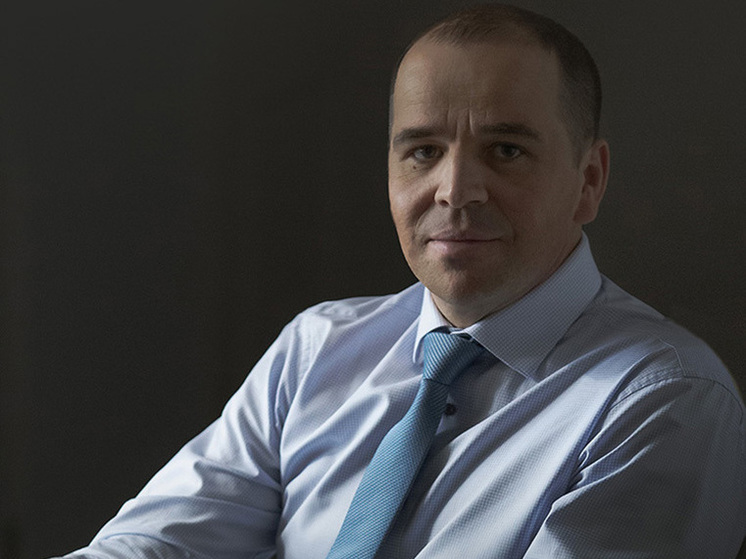 Photo: Svetlana Postoenko
— Sanctions are a tool of influence on those over whom there is no legal authority, if these persons commit actions unacceptable to the sanctioning party (when there is jurisdiction, then such actions are subject to civil or criminal liability). When it comes to sanctions, we cannot, strictly speaking, talk about legality. Russia can defend its interests only with counter-sanctions. If the assets of our citizens are frozen, it means that we will freeze the assets of citizens of European countries, we have the moral right to act in the same way.
In general, arbitrary seizure of property is an anti-legal phenomenon; it is legally difficult to justify its application to a non-personal circle of persons. This is arbitrary. The sanctioned asset freeze was actually “wholesale”, but temporary. The possibility of exemption from seizure of assets of those persons against whom sanctions are not applicable — that is, the majority of citizens — has been declared. There are examples of exemption from seizure of individual assets of those who can afford to solve this problem for themselves personally. The rest can only wait and hope for the actions of Russia, which protects its citizens and Russian businesses with counter-sanctions. This may compensate for the actions of the West in relation to Russian property. But for now we are witnessing a crisis in private law.
— Litigation begins when the parties were unable to reach an agreement on their own. Now businesses are looking for ways to negotiate, for example, companies are leaving, retaining trust management in the form of Russian top management. In addition, apparently, the judiciary can include the principle of reciprocity: as you are with us, so we are with you. We come to the limit of the effectiveness of this issue: justice may not work in favor of Western partners. Therefore, European companies simply choose the path of least resistance.
— Not long ago, the Supreme Court of the Russian Federation allowed the bankruptcy in Russia of foreign companies with assets in our country: if a foreign company does business in Russia and has a center of main economic interests here, then its bankruptcy case should be heard here . Potentially, Russian creditors may have priority over foreign creditors in bankruptcy.
The idea of rehabilitation procedures is also being heard more actively. It is known that when forced to collect from a debtor, especially if there is already a criminal case or bankruptcy, you can get a weak result, roughly speaking, 5 kopecks per ruble. And if creditors are ready to wait, be patient, and rehabilitate the enterprise, provided that the debtor himself is able and willing to pay, this is more effective. That is, if earlier crisis management in bankruptcy was surgical in nature, and as a result it was possible to sell serious equipment at the price of scrap metal, now there is a tendency to allow a company in crisis to rehabilitate itself. These could be deferred payments, debt restructuring, agreements. Such initiatives come from both creditor companies and government agencies. And, in particular, our team is capable of solving such problems.
— Bankruptcy and criminal practice is growing. Cases that were previously few began to appear, for example, the distribution of assets of a liquidated or absent debtor. This occurs when a company that has assets, money, real estate, is liquidated or, more often, removed from the register as non-operating. Or she remained in Russia after her foreign beneficiaries left. Or the beneficiaries of such a company fell under criminal risks and left the management of the business, effectively abandoning it. Such assets are distributed among creditors; this is a new trend in legal business practice.
— Crisis management is the art of solving a problem and achieving results with limited resources. This is always communication work, the ability to negotiate with various kinds of stakeholders. During the pandemic, business problems boiled down to a crisis of non-payments. Let's say the stores did not make any revenue during the lockdown and could not pay their landlord, the landlord could not pay off his payments, the circle closed, everyone was holding on only to their own airbags. The task was to keep the business afloat, to prohibit, for example, the introduction of bankruptcy procedures, so that the economy did not collapse like a house of cards.
Now there is no such collapse. But it has its own characteristics. Including against the backdrop of such an urgent task as the development of import substitution. Here's an example: a Russian company produces coronary stents, but now 80 percent of such products are imported. There is a corporate conflict in the company — it is difficult for it to develop. But today, against the backdrop of the importance of import substitution and support for domestic production, we can use a wider range of tools: if an enterprise produces products that are potentially important for the country, then there is an opportunity to reach out to authorities, financial organizations, and relevant ministries in order to help overcome the crisis and resolve the conflict as quickly as possible . This is work not only in the interests of shareholders, but also for the well-being of the country. Previously, the state did not care about corporate conflicts, even in relation to strategically significant assets. Today the level of sensitivity is changing. Resolving the conflict as quickly as possible is in the interests of the state and business. Now is not the time for conflict.