


“We will have to increase the tax burden”
How much exactly will the implementation of all the projects announced by Vladimir Putin in his address to the Federal Assembly by 2030 cost the Russian treasury? The authorities did not announce the exact amount. “The necessary money will be allocated,” said Finance Minister Anton Siluanov confidently and at the same time mysteriously. Meanwhile, in the absence of official clarification, the first independent estimates of potential costs have emerged.
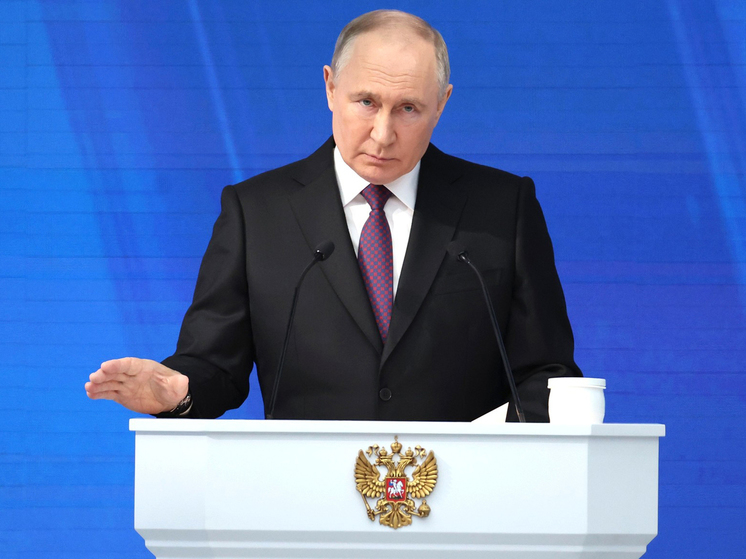
In total, Putin gave instructions for approximately 17 trillion rubles, RIA Novosti experts calculated. The agency used, firstly, the figures voiced in the presidential address (total — 9.7 trillion rubles), secondly, the available budget parameters, and thirdly, data from statements by officials. In turn, Rosbank analysts write: “Taking into account the already budgeted expenses for 2024-2026, the cost of the initiatives is about 12.8 trillion rubles, and with the inclusion of tax expenses (benefits), the total cost could approach 14-15 trillion rubles.” At the same time, the volume of budget spending on new initiatives alone is estimated at 5.7 trillion rubles. We are talking about five national projects: “Family”, “Long and Active Life”, “Youth of Russia”, “Personnel” and “Data Economy”.
In general, the largest amount of funds is expected to be used for the modernization of utility infrastructure — 4.5 trillion rubles. Next comes the social sphere — 3.3 trillion (and the extension of the maternity capital program will cost the state 2.3 trillion rubles); regional development and support for science — 2.3 trillion each; construction, repair and equipment of healthcare facilities — 1 trillion; national project “Data Economy” — at least 700 billion rubles over six years. According to calculations by the Sinara investment bank, additional costs could amount to “at least 1 trillion rubles annually.” Their growth, the bank's analysts believe, «may entail an increase in taxes paid by public companies.»
“Six years is a fairly long track, and on such a time horizon it is difficult to assess sources of funding and how things will go,” says Nikita Maslennikov, leading expert at the Center for Political Technologies. — Therefore, all forecasts are obviously conditional. External factors are also changing, primarily the contribution of net exports to GDP, which decreased almost threefold over the past year — from 12.3% to 4.6%. Which, in turn, reduces the intensity of investments from the National Welfare Fund. Our export situation is not impressive; this year it will be clearly weaker than last year. The prospects for the global economy do not look cloudless; high demand for energy resources cannot be expected. In general, there are enough questions. Some clarity will appear only by the end of summer, when the draft budget for 2025 and the new financial three-year period will be presented.
— In my opinion, Rosbank is closer to the truth with its upper limit of 15 trillion rubles. But there are many different components here. Among other things, the implementation of national projects is associated with private investment. In turn, investment activity depends on the tax climate. It is clear that it will not be possible to do without increasing the fiscal burden. But the effectiveness of the progressive taxation system that the government is aiming to switch to is rather conditional. In the 1990s, this mechanism, then tested for the first time, practically did not work (it was abandoned in 2001), and the outflow of capital from the country was very significant. Today it has nowhere to go, but there is a risk of going too far, scaring off potential investors. The measure requires a very balanced approach.
— It is unlikely that the government will take money from the open market, since this means shifting the costs to future generations. Debt borrowing will be limited in the coming years. Even if the current Central Bank rate drops to 12.5-13.5% by the end of the year, the OFZ yield should be at approximately the same level. And this is too expensive. The more you borrow now, the more you will have to pay back later, including interest. But we still need to finance the budget deficit (in addition to national projects), which will continue in the coming years. Where? So far only from the National Welfare Fund, since the current year will be a busy, transitional year for the economy. Much depends on how exports will be diversified, how much it will be possible to reduce the share of imports in foreign trade, and what kind of impetus projects on import substitution and stimulation of industrial production will receive.
— This thing is extremely unstable. Of course, we will receive our 8 trillion rubles within a year. But they don't solve the problem. Russia, in fact, is cut off from European markets, and the situation with Asian markets is not easy, as experience has shown. You should not count on sustainable growth in raw material exports: volumes will remain approximately at the current level, with a downward trend. Their growth is hampered by infrastructure restrictions (in particular, the lack of gas pipelines in the eastern direction, as well as the gas carrier fleet) and uncertainty with the external price environment and demand. Plus, we have obligations to OPEC+ to reduce production. Yes, oil and gas exports are a necessary tool, they need to be used, but there is no point in making the main bet on it.