


What are the advantages of old houses
In the Russian capital, there remains a steady demand for secondary apartments in old buildings. More than half of the transactions on the finished housing market are for USSR-era properties. Why the demand for old housing stock is not decreasing, even despite the growing number of new buildings in the capital, and what factors influence the choice of buyers, MK found out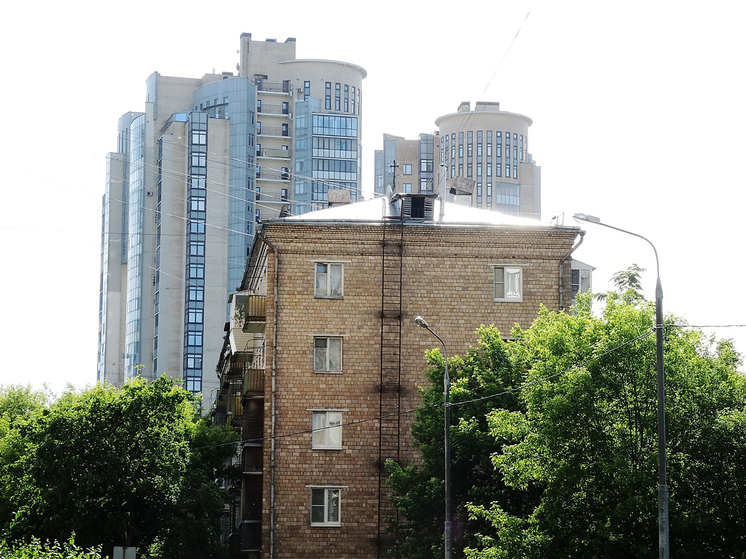
The old housing stock is considered to be houses of three standard buildings. The first is the “Stalin” buildings, built from the 1930s to the mid-1950s. Often such houses are in no way inferior to many new business and premium class buildings in terms of the quality of construction, materials and sophistication of architectural solutions, especially when it comes to post-war buildings with improved communications and reinforced concrete floors.
Apartments in such houses have large area (from 50 to 100 square meters), high ceilings (on average up to 3 meters), spacious kitchens and good sound insulation achieved thanks to thick walls.
The younger brother of the “Stalin” — “Khrushchevka”, the construction of which began in the mid-1950s with brick houses, and in the 1960s continued using panel construction technology to speed up work and resettle Soviet citizens from “communal apartments”. Among the features of residential buildings from the time of Khrushchev are a relatively small area (on average from 30 to 50 square meters), small-sized kitchens (about 4-6 square meters), most often a combined bathroom, strict and functional architecture without frills.
Improved version of «Khrushchev» — “Brezhnevki”, which appeared in the capital at the end of the 1960s and were built until the end of the 1980s. The houses combined the advantages of their predecessors and were improved: the area of apartments, and, in particular, kitchens, increased, the bathroom became separate, and the layouts were more comfortable and functional, communications improved, the number of floors increased, and elevators appeared.
“The first important reason cited by buyers who purchase apartments in old housing stock is location,” comments the head of the urban real estate department of the company “NDV Supermarket Real Estate.” Elena Mishchenko. — Many “Stalinists”, “Khrushchevites” and «Brezhnevka» located in areas with good transport accessibility and already established infrastructure. They are often located near the center or prestigious residential areas, close to important cultural and entertainment locations and parks. In addition, apartments from the Soviet Union are on average 20-30% cheaper. For example, buying a “one-room apartment” in the «Khrushchevka» with an area of 40 square meters in the Babushkinsky district will cost an average of 10-11 million rubles, in a new building – at 14-15 million.
A small part of consumers are considering “Khrushchev” buildings. in the old housing stock, wanting to later get an apartment in a new building under the renovation program. The main share among such buyers are investors who plan to further resell or rent out the lot in a new house.
“Of course, the main reason for buying an old housing stock is habit,” notes Elena Mishchenko. — Almost all Muscovites, including the younger generation, managed to live in “Stalin”, “Khrushchev” apartments. or “Brezhnevkas”. This format is understandable and comfortable for them. Demand is especially high among older and middle-aged buyers, who have had much more time to “get used to it.” At the same time, they often get the impression that Soviet houses are of higher quality, which is confirmed by their high wear resistance and durability. It’s hard to argue with this, but when choosing an apartment in an old building you should be especially careful. These are objects with a long history, most often having changed owners several times. Possible disadvantages also include problems with communications, old renovations, and a mixed contingent of neighbors.