


Researchers have taken a step towards bringing the furry giants back to Earth
The return of the long-extinct woolly mammoth to Earth looks like it could become a reality: Scientists have successfully reprogrammed elephant stem cells — and it could allow them revive the extinct species by 2028. Colossal Biosciences has produced elephant induced pluripotent stem cells that could be used to create elephant-mammoth hybrids in the future.
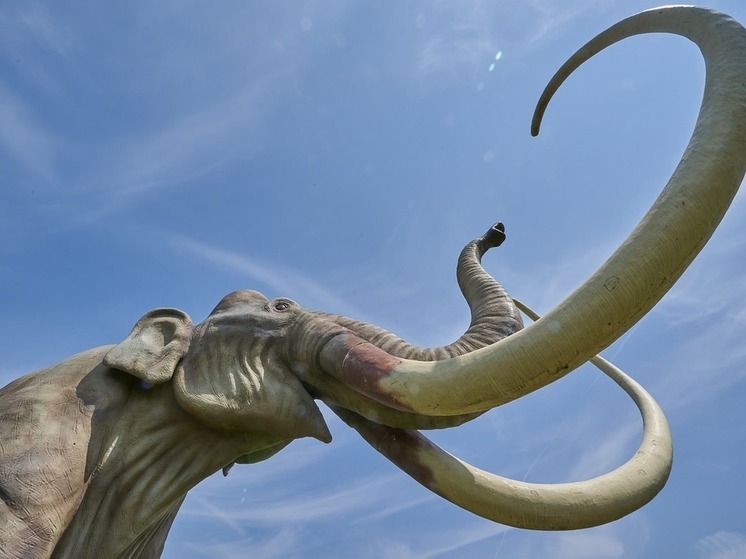
It's been more than 4,000 years since the woolly mammoth last walked the Earth, but these extinct giants may not be gone forever. According to the Daily Mail, researchers have made a major breakthrough that could lead to the return of woolly mammoths to life before 2028.
Scientists from Colossal Biosciences have successfully created “pluripotent” elephant stem cells that can grow into any cell in the body .
Dr George Church, Colossal's co-founder and lead geneticist, told MailOnline that creating these cells «opens the door» to ending the extinction of the mammoth. «It's not a big extrapolation to think that in the future we will be able to synthesize on a large scale,» he said.
The key to this development is the ability to induce the conversion of elephant cells into pluripotent stem cells.
According to the Daily Mail, in 2006, a scientist named Shinya Yamanaka discovered a way to use a chemical cocktail to turn adult animal cells into stem cells — those that have the unique ability to turn into any other type of cell.
While this has already been done successfully with humans, rabbits, big cats and even the northern white rhinoceros, until now it had never been done before with an elephant.
To move from these cells to a living, breathing mammoth, scientists hope to edit them using genes taken from the frozen woolly corpse of a mammoth. The cells could then be forced to grow into an egg, which could be fertilized and grown in an artificial womb.
While the ultimate goal may be to stop the extinction of the woolly mammoth, Dr Church says the first step is to create an elephant-mammoth hybrid.
Dr Church told MailOnline: «What we are doing is creating a special hybrid that will both enrich the Asian elephant and restore mammoth diversity.»
Colossal hopes the resulting hybrid will help elephants thrive and restore damaged Arctic ecosystems.
Asian elephants are currently stranded in areas with high population densities, creating problems for both elephants and people. But if they could be bred to withstand more extreme conditions, they could potentially thrive away from people in areas where the woolly mammoth once roamed.
«We hope to harness the diversity that comes from from their more recent ancient relatives to help them cope with the new conditions that may be required for them to thrive,» Dr Church said.
However, without the development of induced pluripotent stem cells, none of this would have been possible.
It hasn't been easy, according to Eriona Hysall, head of life sciences at Colossal Biosciences, who said it took a lot of time to develop methods to produce these cells. elephants took years.
Most mammals have a set of genes called TP53 retrogenes that are involved in suppressing tumor growth. While humans have only two copies, elephants have almost 40. By using a set of processes that suppress the action of these genes, researchers have finally overcome this barrier and managed to create induced pluripotent stem cells.
Because Different animals have this gene, but in different amounts, which may partly explain why some species are more susceptible to cancer.
Dr Church said: “This could help us understand why mice almost always die from cancer. while elephants almost never.»
Colossal Biosciences hopes these cells will boost their efforts to test cold resistance genes in elephants and preserve existing populations.
Scientists can edit the genes of living animals using a technique called CRISPR, but it is too slow to do large-scale trials.
Dr Church explains that by using stem cells, scientists can see whether their genetic changes were successful within a couple of weeks, instead of waiting for the almost two-year gestation period in elephants.
Best of all, induced pluripotent stem cells are “immortal,” meaning scientists will be able to create thousands of tests at once in much less time.
The team now plans to continue testing cold-tolerance genes in elephants and work to grow eggs and sperm for use in conservation and research.
And Colossal Biosciences isn't stopping there—it wants to revive the extinct woolly mammoth and dodo.