


Archaeologists called the find unique
Archaeologists in Turkey say they have discovered the oldest known bread in the world, dating back to 6600 BC. In other words, its age is almost nine thousand years.
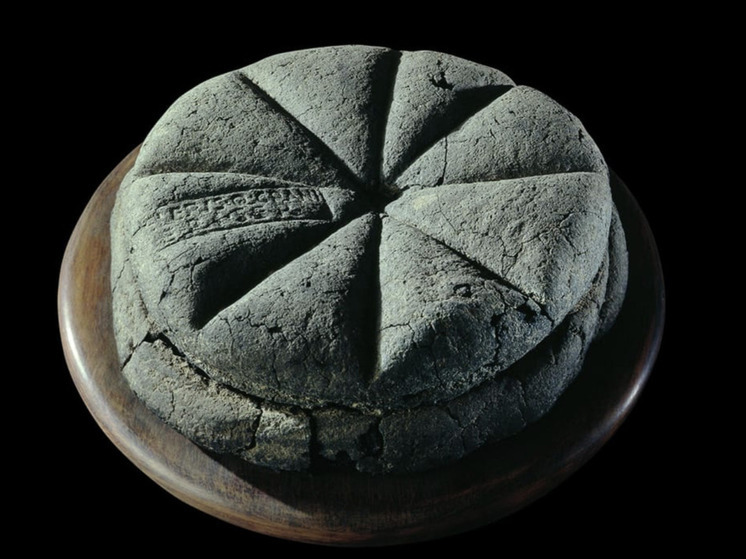
According to the Center for Scientific and Technological Research and Application (BITAM) of the Turkish Necmettin Erbakan University (Turkey), in an area called “Mekan 66”, which is adjacent to mud brick houses, at the archaeological site of Çatalhöyük in the southern Turkish province of Konya, a significant amount of The structure of the furnace was severely destroyed.
According to CNN, around this furnace, archaeologists discovered seeds of wheat, barley, peas and round “spongy” remains the size of a palm, according to a press release published recently.
Analyses determined that the organic residue was raw, fermented bread 8,600 years old.
“We can say that this discovery at Catalhöyük is the oldest bread in the world,” archaeologist Ali Umut Türkkan, head of the excavation delegation and associate professor at Anadolu University in Turkey, told Turkish state news agency Anadolu on Wednesday.
“ This is a smaller version of a loaf of bread. It was pressed in the center with a finger, it was not baked, but was fermented and preserved to this day with starch inside. To date, there is no similar example of something like this,” he added.
Scanning electron microscope images showed the presence of air spaces in the sample, and the presence of starch grains “removed our suspicions,” biologist Salih Kavak, a lecturer at Gaziantep University in Turkey, said in a press release.
The scientists added that tests revealed chemicals found in the plants and signs of fermentation. Flour and water were mixed and the bread was cooked next to the oven and stored for a while.
“This is an exciting discovery for Turkey and the world,” Kavak said.
According to Türkcan, the organic matter — both wood and bread — was preserved by the thin clay that covered the structure.
At Çatalhöyük, a UNESCO World Heritage Site, during the Neolithic period, according to BITAM , from approximately 10,000 to 2000 BC, was home to approximately 8,000 people and is one of the world's first sites of urbanization.
Explorations at the well-preserved site have revealed distinctive dwelling plans and extensive features, such as wall paintings and reliefs, making it “the most significant human settlement documenting the early sedentary agricultural life of a Neolithic community,” according to the UNESCO website.
“Catalhöyük was already the center of many pioneers. The world's first weaving products were already in Çatalhöyük when it was excavated. Wooden artifacts were also found at Çatalhöyük. To this were added wall paints and paintings. Konya and Turkey are very lucky in this sense,” said Turkkan.