


March 9 marks the 90th anniversary of the first cosmonaut of the Earth
How Yuri Gagarin once turned away from the English princess, how he was preparing to fly around the Moon — these and other pages from the biography of the first cosmonaut of the Earth until recently were not well known to the public. In general, the entire post-flight period, including his foreign trips, needs more careful understanding and coverage. On the day of the 90th anniversary of Gagarin's birth, we turned to cosmonautics historian Anton Pervushin for help.
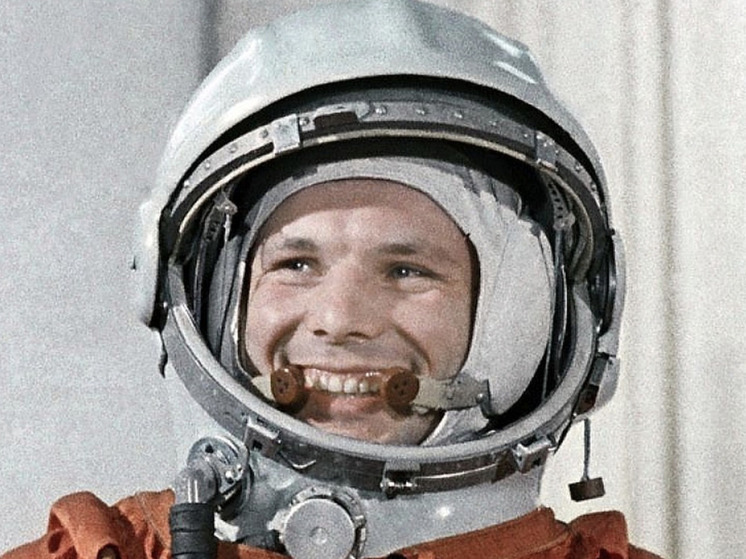
– Indeed, the biography of Yuri Alekseevich Gagarin is usually divided into two parts — for the period before the flight and the next 7 years, – says Pervushin. – And to this day, much of what happened during the seven-year period remains hidden. I managed collect together scattered data from the memories of Yuri Alekseevich himself and his colleagues.
– Official invitations came from eighty (!) states. The Soviet political leadership readily responded to them. Gagarin's life schedule that year was scheduled months in advance. The first country where the astronaut went was the Czechoslovak Republic, then there were: Bulgaria, Finland, Great Britain, Poland, Cuba, Brazil, Canada.
– Let's start with the fact that on April 28, 1961, Gagarin arrived in Prague on a regular Tu-104, in which almost all the passengers took his autograph, and the crew commander, Hero of the Soviet Union Pavel Mikhailov, invited him into his cabin and presented his book memoirs. During his visit to Czechoslovakia, Gagarin visited one of the largest engineering plants — “ChKD-Stalingrad”, where, as a former foundry worker (before the flight school, Gagarin studied at the Saratov Industrial College), a bronze figure of a foundry worker was made overnight.
On approach to Sofia, the IL-14 with Gagarin on board was greeted by an honorary escort of jet fighters. A solemn procession moved through the streets of the Bulgarian capital, which could well be compared with how Moscow greeted it immediately after the space flight. In Bulgaria, the cosmonaut visited several cities at once, including Plovdiv, where he bowed to the “Monument to Soldier Alyosha.” By the way, the famous photograph of Gagarin with a dove in his hands was also taken in Bulgaria. The astronaut was there to celebrate the Day of Education, Culture and Slavic Literature “Cyrillic”, which was accompanied by mass dancing in the central square of Sofia. Interestingly, during the procession, columns of demonstrators released doves. One of the photojournalists called the pioneers with the birds and asked Gagarin to take one of them in his hands.
In the Republic of Finland, where Gagarin arrived in June, one of the leaders of the Finlandia &mdash. Soviet Union» said about this: “Our people are reserved, silent, reluctant to go to meetings. To stir us up, we need… how can I say this?… an effect. Strong effect! It seems that the «effect» Gagarin stirred many hearts.” However, after, at a press conference attended by representatives of capitalist countries, a journalist from their Associated Press tried to divert the topic of conversation about the achievements of Soviet science and technology to everyday trifles, asking in broken Russian what brands of wines and cognacs our cosmonaut prefers. Smiling softly, Yuri Alekseevich tactfully explained to the American that the Soviet cosmonauts, busy with their very responsible and complex work, simply did not have free time to study wine brands in detail. At the same press conference there were questions about the technical features of Soviet ships. It was impossible to talk about much then, and Gagarin very cleverly avoided any specifics.
– No. It looks like it's nothing more than a story. For certain, at a breakfast in the White Hall of Buckingham Palace, which once hosted the Russian Tsar Nicholas I. Yuri Gagarin said, addressing Queen Elizabeth II: “I have never been in such a high society before and I don’t know at all how to behave correctly.” . Please help me with this.» She reassured the guest, saying that “specialists” also told her the subtleties of etiquette. Perhaps it was from this episode that the story you mentioned about the lemon slice grew.
However, apart from the rather famous breakfast in the palace, other details of Gagarin’s visit to Great Britain remained in the shadows for a long time. It would be worth remembering at least that he officially arrived there at the invitation of the United Foundry Trade Union, which reasonably considered Yuri Gagarin a colleague and would like to see him among the honorary members of its organization. It was drizzling upon Gagarin's arrival at Heathrow Airport, but despite this, tens of thousands of citizens took to the streets to enthusiastically greet Gagarin. By the way, he was given a car with a personal number “YG1”: only the President of the United States was once awarded such an honor.
On the way to the Soviet embassy, a small incident occurred. The astronaut was struck by the fact that when driving along Posolskaya Street, on one side of which there are private buildings and palaces, there was no one, and everyone meeting him was located on the other side. He turned to face them and rode the entire street, answering the greetings of the Londoners. But it turned out that on the “free” Standing outside in the rain was Princess Margaret, who was a big fan of the idea of space flight. Gagarin, it turns out, did not pay attention to her, which the British press was quick to sarcastically report.
And the Soviet embassy had another incident: one of the girls, making her way through the autograph lovers, jumped up to Gagarin as he entered the building and planted a passionate kiss on his cheek. It was 23-year-old nurse Olivia Bryden, who later told inquisitive journalists: “Now I have made history.” I'm the first English girl to kiss him. I decided to do this as soon as I saw him — he was the very first of those who made my heart flutter.”
 Wishes left by Yuri Gagarin at the Center for Deep Space Communications in Evpatoria on March 5, 1968
The astronaut undoubtedly managed to charm the British. They say that his right hand hurt badly from continuous handshakes.
– On August 5, 1961, he arrived in Halifax to attend the Pugwash Conference of Scholars on Disarmament, International Security and Cooperation. He was invited there by a prominent American industrialist, laureate of the International Lenin Prize “For Strengthening Peace Between Nations.” Cyrus Eaton, who in the West was called a “Kremlin agent.” It is noteworthy that Eaton invited the first American astronaut, Alan Shepard, who made a suborbital jump in the Mercury capsule, to the conference he organized. May 5, 1961, but he refused, probably realizing that not he, but the first cosmonaut of the Earth, Yuri Gagarin, would be the center of attention.
Afterwards, already in the next year, 1962, Gagarin’s foreign flights continued. He flew to the United Arab Republic, India, Liberia, Greece and other countries.
– Gagarin, like many other cosmonauts from the first detachment, dreamed of the next step for humanity – flight to the moon. Already in October 1961, chief designer Sergei Pavlovich Korolev under the pseudonym “Prof. K. Sergeev» outlined the following goals for the Soviet space industry: “The creation of huge, weighing tens of tons, interplanetary spacecraft with a crew of several people will make it possible for the first time to carry out long-term, about two to three years, space flights to the near worlds of our solar system… ».
The heavy interplanetary complex, according to Korolev’s plan, could be assembled on a “support” orbit from separate blocks, – says Pervushin. – To test this, Korolev proposed launching three Vostok spacecraft into space at once, each with an interval of a day. However, the Air Force command, on which the Soviet cosmonautics strategy largely depended, showed caution and decided to limit itself to a group flight of two ships.
In 1962, Yuri Gagarin participated in the direct preparation and conduct of the first group flight of Soviet spacecraft Vostok-3. and «Vostok-4». They were piloted by Andriyan Nikolaev and Pavel Popovich. All the time Gagarin remained in contact with Nikolaev and Popovich, actually carrying out duties of a shift flight director, and coped with them excellently.
In 1963, Yuri Alekseevich received the rank of colonel ahead of schedule, but did not have a position corresponding to the rank.
On the initiative of Air Force Lieutenant General Nikolai Kamanin, they decided to train Gagarin to become the head of the Cosmonaut Training Center, and for this he had to improve his educational level by completing his studies at the Air Force Academy. Zhukovsky. Kamanin wrote in his diary that “two and a half years of world fame did not spoil Gagarin,” therefore, he would make a very good boss for astronauts.
In November 1963, Yuri Alekseevich was offered to become deputy head of the Air Force Center for flight and space training and head of the flight and space training department. He agreed.
But in vain everyone decided after that that they would save the “Columbus Cosmos”, as they once did Gagarin was named Kamanin, because of unnecessary, in their opinion, risky space flights. Yuri Alekseevich still dreamed of returning to flight work, hoping to get into space again. After all, back in February 1963, he underwent a medical examination to obtain a certificate of fitness to fly.
– Judging by numerous evidence, after his space flight, Gagarin fully fit into the system of training personnel for the expansion of extraterrestrial expansion, and in a format that did not prevent him from engaging in socio-political work and studying at the academy.
Gagarin participated in the preparation of the first spacewalk flight of Alexei Leonov, advocated for expanding the line of domestic spacecraft, and together with other cosmonauts wrote letters to the country's leadership about the need to design multi-seat maneuvering ships. The management heard the voices of Gagarin, Bykovsky, Leonov, Komarov… And soon the “Union” project proposed by Korolev was launched. Moreover, the well-known manned spacecraft was born within the framework of military themes. And at the same time, it was a ship for flights to the moon. It was designed as a command and service module, and Gagarin was included in management's plans as one of the first to test it.
 Yuri Gagarin's office at the Cosmonaut Training Center named after. Yu.A. Gagarina
Intensive crew training began in February-March 1967. Vladimir Komarov and his backup Yuri Gagarin mastered the skills of approaching and docking Soyuz spacecraft. on a special simulator. Complex training lasted thirty hours! The leader of the program, Vladimir Komarov, shortly before the flight, on March 16, celebrated his fortieth anniversary. Some dissuaded him from this step: there is a belief that one should not celebrate forty years — There was trouble, but he didn’t listen…
Due to the parachute not opening, Komarov crashed during landing. The planned subsequent launch, naturally, was postponed to a later date; there was no longer any talk of sending Gagarin into space.
– The death of a comrade and the closed door to space for an indefinite time was a big blow for him. Nikolai Kamanin advised Gagarin to concentrate on studying at the academy until the general shock passed. Yuri Alekseevich did just that. By that time, he had been studying at the academy for six years and was at the head of a group that was designing a supersonic single-seat aircraft with lattice wings. Eventually it turned into a spaceplane – orbital plane launching on a launch vehicle. Yuri Gagarin received a higher engineering education with the prospect of rising to the rank of candidate and, possibly, doctor of technical sciences. Unfortunately, these plans were disrupted by his sudden death: as you know, the plane he was flying crashed in the Vladimir region on March 27, 1968.
Not long before that, he celebrated his last birthday, but nowhere somewhere, but at the Evpatoria Center for Long-Range Space Communications, where he arrived to observe and remotely control the flight of Zond-4, simulating a flyby of the Moon. Its apogee reached 300 thousand kilometers.