


«The financial system has turned its back on the tasks of socio-economic growth»
The famous academician of the Russian Academy of Sciences, economist Abel Aganbegyan proposes to reform the financial system of Russia, turning it towards the needs of domestic industry, education, science, and healthcare. We talked with the scientist about what useful things could be borrowed from the Soviet economy, about the existence of the country under sanctions, about the urgent need to improve people's well-being.
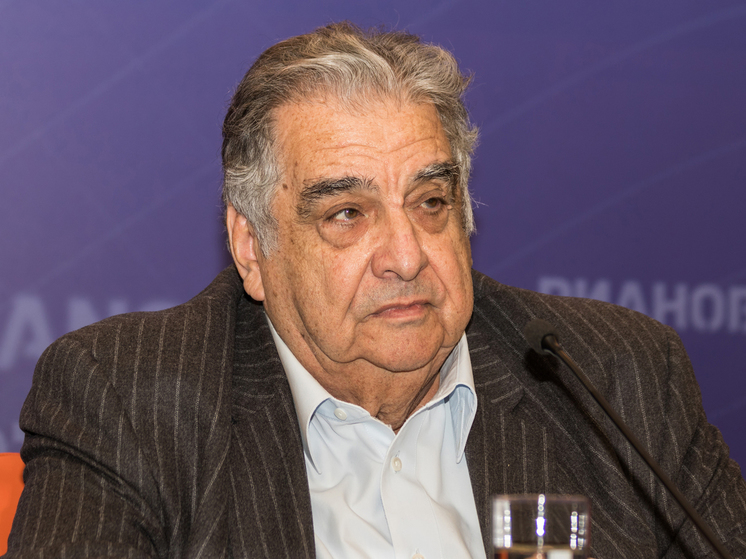 Abel Aganbegyan.
Abel Gezevich Aganbegyan, academician of the Russian Academy of Sciences, Soviet and Russian economist, specialist in econometrics and macroeconomics.
— Sanctions are becoming tougher, moreover, they are strictly controlled, new restrictions are being introduced. They negatively affect our socio-economic development and constantly require countermeasures on our part to avoid worse consequences. Both our government and other authorities, in my assessment, cope with their tasks quite skillfully, ensuring economic growth by 2.4% over the past two years of sanctions: in 2022, GDP decreased by 1.2%, and in 2023 increased by 3.6%. The situation is better with real incomes of the population: in the first year of sanctions they decreased by 1%, and last year they increased by 5.4%.
Sanctions hit not only Russia. Germany's GDP fell by 0.3% in 2023, the United States «added» only 1.5%, the European Union — 0.5%.
At the same time, it was not possible to cope with inflation, and in February this year, compared to the corresponding period last year, it increased to 7.4, and its level expected by the population reached 11.9%. Because of this, the Central Bank is not yet able to reduce the extremely high key rate of 16%, which is holding back our development and “enslaving” our citizens if they take out mortgages, car and consumer loans at market prices.
There is an acute shortage of financial resources in the country, and we have to have a deficit budget, where expenses exceed income. We have to increase taxes and various fees, as more and more funds are invested in defense. If before the start of the SVO, in 2021, defense spending amounted to 3.56 trillion rubles, then in 2022 — 4.7, in 2023 — 6.8, and in 2024 it is planned to spend 10.8 trillion rubles . So half of the total economic growth went to defense needs, and next year this share will increase to 2/3. According to the forecast of the Ministry of Economic Development, GDP growth next year will decrease from 3.6 to 2.3%, and according to expert consensus — to 1.4%. Growth is being held back, among other things, by a chronic labor shortage, so that the number of unfilled vacancies has exceeded 4 million people, and the influx of labor migrants to Russia has decreased due to the depreciation of the ruble against other currencies.
< /p>
— Trying to act within the framework of the law, we nationalize or give to commercial organizations the property left with us by foreign companies from unfriendly countries leaving Russia. But if, for example, large state-owned companies at one time took out a loan in the West, at the expense of which they commissioned their facilities, then these funds must be returned, otherwise they will be declared in default and will not be able to export their goods or take them abroad. Funds will be legally taken for debts.
— Russia’s external debt, the overwhelming majority of which is corporate debt of enterprises, amounts to $327 billion as of January 1, 2024, while as of January 1, 2014, before we were excommunicated from the world market and before sanctions were imposed on Russia after annexation of Crimea was equal to $728 billion. We have returned $400 billion and have been paying significant interest all this time. Our country, compared to other countries, has minimal external debt, about 20% of GDP, while the leading countries of the world have debt that usually exceeds their GDP. This also applies to China.
“If they also kept their state funds with us, we could arrest them.” But they do not keep such funds with us, and it is impossible to seize loans from private Western investors to our commercial organizations, because these organizations did not seize our funds. The question of the selection of our seized funds, as well as the profit they provide, is still under discussion. International courts have not yet considered them. Let's see what happens next.
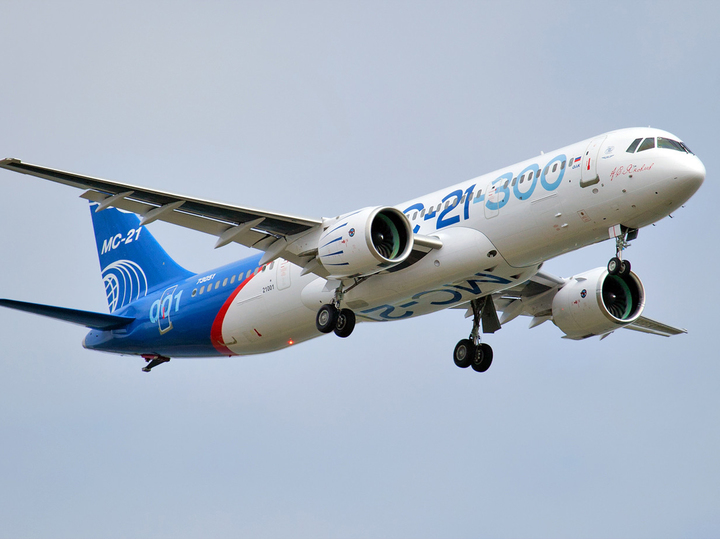 The Russian medium-haul passenger aircraft MS-21 is undergoing certification. The start of operation is expected in 2025–2026.
— During the Soviet period, when the first satellite was launched, the United States conducted an in-depth study of the reasons for the primacy of the USSR. Their conclusion: the root cause of the USSR's superiority was its superior education system. And school, and special, and secondary, and higher.
John Kennedy, the US President at the time, said bluntly: “The USSR won the race to space at a school desk.” In those years, the USSR financed education as a percentage of GDP by a third more than the United States. And today, according to the UN international ranking of 199 countries on education financing as a percentage of GDP, Russia ranks approximately 120th with 4%. Advanced countries spend 7–8% of GDP here.
In terms of healthcare spending, Russia currently ranks approximately 140th, trailing twice the EU countries and 3.5 times behind the US (EU — 10%, US 17% of GDP). But they could take an example from the USSR, which already in 1964-1965 achieved an increase in life expectancy at the level of developed countries (it was 70 years).
“In the 1960s, our country achieved such a high life expectancy with worse nutrition and much worse living conditions thanks to free healthcare and the creation of a health system for the population with developed primary care — a network of clinics, dispensaries at enterprises, with sanatoriums, pioneer camps. And all this against the backdrop of a longer vacation than in developed countries (USA — mostly 12 days, Japan — 5). The WHO International Conference, held in Almaty in 1978, recommended that all countries adopt this experience.
Now, according to the D.I. Mendeleev Institute of Demographic Policy, Russia lags behind advanced countries in life expectancy, ranking 91st in the world with 75 years, while advanced countries in this regard have long crossed the 80-year mark . The top three places for this indicator are occupied by: Monaco (87 years), Japan (84.9), Liechtenstein (84.7).
The successful experience of the USSR must be used to solve current vital problems — the transition to sustainable socio-economic growth to achieve the technological, economic and social level of the leading countries of the world, for example, by 2035 or 2040. We need to reach the life expectancy of the world's advanced countries, raising it to 81–85 years. This assumes a reduction in mortality in Russia from 1.75 to 1.2 million people, including from cardiovascular diseases from 860 to 400 thousand people.
It is impossible not to note the achievements of the new Russia, especially the development and the implementation in 2005–2014 of two national programs: “Demography” and “Health”. Over these 9 years, we managed to increase the birth rate by 490 thousand people, reduce mortality by 390 thousand, and replace the largest depopulation (excess of mortality over birth rate) of 800–900 thousand people per year with natural population growth.
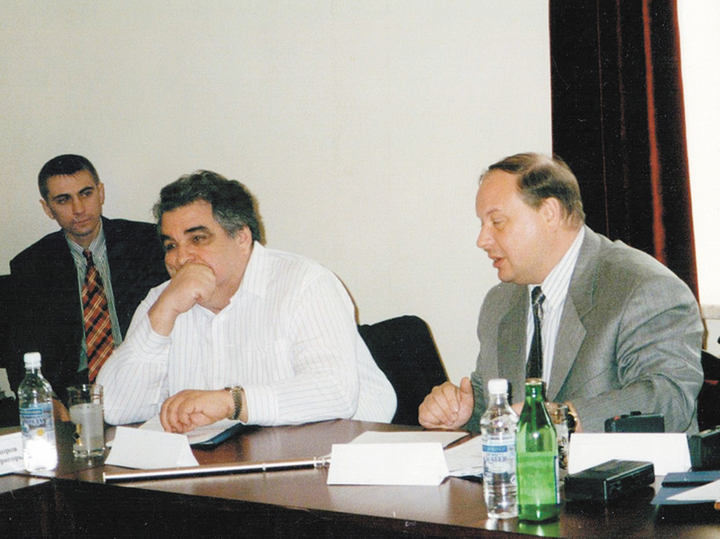 Abel Aganbegyan and Acting Minister of Economy of the Russian Federation from September 1993 to January 1994 Yegor Gaidar.
— After the collapse of the USSR, the single national economic complex ceased to exist, everyone survived as best they could. Centrifugal processes began to occur in Russia, the autonomous republics demanded sovereignty, various programs for future development for the transition to a market were proposed, very general ones, shortages grew in the country, goods at low prices disappeared due to a large overhang of money, gold reserves were spent. Russia fell into large debts with developed countries, the ruble was depreciating before our eyes and ceased to play the role of a real currency, an urgent and immediate transition to the market was needed in these terrible conditions, otherwise the country would face economic collapse. Lacking experience and time to prepare, the new government, where Yegor Gaidar and like-minded people played a key role, carried out price liberalization in conditions of general shortages, and prices soared upward. As a result, prices increased 28 times in 1992. This government was dismissed.
After that, our economy had many more waves of stabilization and decline, but after 2014, as you know, sanctions were imposed on us due to the annexation of Crimea, then followed pandemic and SVO in Ukraine.
Over the 15 years of the third period, the economy grew at an average rate of 1% per year, with a recession in 2015 and crises with a decline in GDP in 2020 and 2022. The matter was aggravated by the large annual outflow of capital from Russia, the growing lag in the technological level and innovation, the continuing low percentage of investments in fixed capital (18–20%) and even lower percentage of shares in GDP of the “knowledge economy” sector (R&D, education, information and communication technology and healthcare) — 15%. But these investments and investments are the main drivers of socio-economic growth, but their low share in investments is enough for simple, not expanded production.
This is the main factor that for 33 years the country has been “marking time” and GDP has grown by 20% compared to one and a half times in Europe, two times in the USA, 2.5 times in the post-socialist countries of Europe, 8.5 times in India and 13.7 times in China. In addition, favorable conditions for doing business have not been created in Russia. The financial system is not engaged in the reproduction of “long-term money” and has turned away from the tasks of socio-economic growth. The country has created a system of state-oligarchic capitalism with an unfinished market and a lagging social sphere. Therefore, the country is naturally in stagnation.
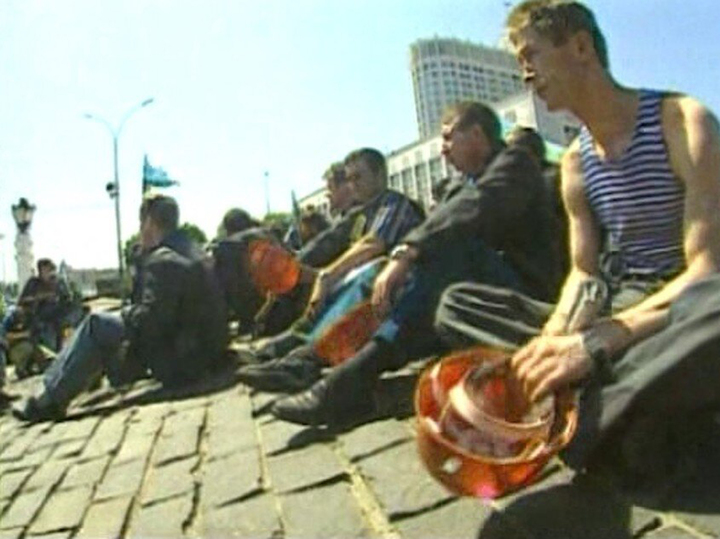 After the collapse of the USSR, the single national economic complex ceased to exist and everyone survived as best they could. Miners striking due to lack of wages.
“Unfortunately, we failed to create a developed and efficient market. In such a market, the engine is the capital market, supported by a competitive environment. We do not have an efficient capital market to drive the economy forward through investment. This requires a mechanism for the expanded reproduction of “long-term money” (the ability to lend to enterprises for a long period of time.). But in our financial system there is no corresponding mechanism. Our stock exchange consists of short money, is semi-speculative in nature and therefore also helps little in the reproduction of investments.
Of all the assets of our banking system (in 2022, 138 trillion rubles), only 1.3 trillion are used for investments in fixed capital — this is 1%, while in developed market countries this is an order of magnitude higher.
< p>On the other hand, our competitive environment is not developed, since key industries are monopolized by state concerns or oligarchs.
— Our country invests 18–20% of GDP in fixed capital , and in the “knowledge economy” — 14–15%. In industrial developing and post-socialist countries, the share of investment in fixed assets averages 25–35%, and in China even 45%. At the same time, they invest on average 15–25% in the “knowledge economy.”
As for developed countries, they have entered the era of post-industrial development, their main engine is the “knowledge economy” sector, the share of which in GDP in EU countries is 30–35%, and the share of industry in GDP creation is 20–25%.
— After the completion of the SVO, when the country switches to a peaceful footing, we need, through the mobilization of resources, to ensure a financial boost to the growth of investments in fixed and human capital, increasing their annual growth to at least 10%, which will require an additional 6–8 trillion rubles to be found annually. These funds can be found by reorienting the banking system towards the reproduction of “long-term” money. Given Russia's extremely low external public debt, just over 3% of GDP, it could borrow up to $100 billion.
They can begin the massive technical re-equipment of the country's most significant enterprises (payback 5–7 years), the creation of new enterprises of medium- and high-tech production (payback 10–12 years), the formation of a modern transport and logistics infrastructure (payback 20–25 years) and increase the growth rate of housing construction is 1.5–2 times.
With such a financial boost, in 3–5 years the share of investments in fixed and human capital will increase significantly (up to 25–30%) and will provide us with an annual increase in GDP of 3–4%. This will allow us to seriously improve the living standards of the country's population every year. According to our calculations, by 2035–2040 we will be able to move to natural population growth and reach a population of 150 million people. At the same time, 61 countries of the world, according to UN forecasts, including China, will reduce their population.
At the same time, following the proposals of the President of the Russian Federation V.V. Putin, we need to significantly accelerate the improvement of the well-being of low- and medium-income citizens of Russia, reducing social inequality in income by 1.5–2 times, exempting low-income people from taxes and establishing a progressive tax, which is being developed, as is known, for relatively wealthy families.
—40 countries around the world used planning for their accelerated development. Among them are China, which is implementing the 14th Five-Year Plan, India, which in 2017 successfully completed the 12th Five-Year Plan, Turkey, which is now implementing the 11th Five-Year Plan, developing at 6% of GDP annually.
Experience shows that that government planning is a very effective tool for boosting the economy. So, after the war, France, following the USSR, successfully went through six five-year plans, Japan also added 10% of GDP annually during six five-year plans, South Korea at one time, including through planning, moved from a backward country to an advanced one, which also it took six five-year plans. Russia could start with a five-year plan for 2026–2030.
Russia is a country of enormous opportunities, especially the high knowledge of the working population. In any production and in any industry, we have individual enterprises and even regions with leading global indicators. This gives us optimism for the future.