


For the first time, the world clock will have to reduce the time
In the next couple of years, every person in the world will lose a second of their time. Humans will influence exactly when this happens, according to a new study, as melting polar ice changes the Earth's rotation and time.
The hours and minutes that make up the length of our day are determined by the rotation of our planet, which is not constant. The fact is that this rotation can change very slightly, depending on what happens on the surface of the Earth and in its molten core. These almost imperceptible changes sometimes mean that the world clock must be set to “leap second.” After a long trend of slowing, the Earth's rotation is now speeding up due to changes in the planet's core. And as a result of these processes, for the first time in history, one second will need to be removed.
“The negative leap second has never been added and has never been tested, so the problems it could create seem unprecedented,” says a time department employee International Bureau of Weights and Measures Patricia Tavella.
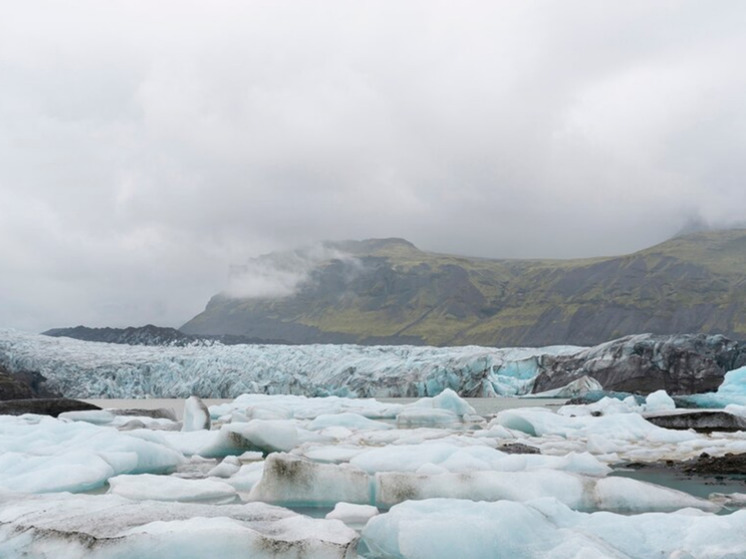
Exactly when this happens is influenced by global warming, according to a study published in the journal Nature. Melting polar ice delays the leap second by three years, moving it from 2026 to 2029.
“Part of understanding what will happen to global clocking depends on understanding what is happening to the effects of global warming,” explains University of California geophysics professor Duncan Agnew.
Let us explain: until 1955, a second was defined as a certain fraction of the time during which the Earth makes one revolution around its axis in relation to the stars. Then came the era of highly accurate atomic clocks, which proved to be a much more stable way of determining the physical second. Since the late 1960s, the world began using Coordinated Universal Time (UTC) to define time zones. UTC is based on atomic clocks, but still keeps pace with the planet's rotation. But since the rotation speed is not constant, the two time scales gradually diverge. This means that from time to time it is necessary to add a «leap second» to make them match.
Changes in the Earth's rotation over the long term were caused by the action of tides on the ocean floor, which slowed its rotation. According to Agnew, a significant factor recently has been the melting of the polar ice caps, caused by humans burning fossil fuels to heat the planet, and meltwater moving from the poles to the equator, further slowing the Earth's rotation rate.
Glaciologist Ted Scambos describes this process as a figure skater spinning with his arms raised above his head: as he lowers his arms to his shoulders, his rotation slows down.
Geophysicist Agnew admits that the melting of polar ice has been significant enough to have an unprecedented impact on the rotation of the entire Earth, and the fact that humans caused the rotation of the Earth to change is kind of amazing.
Although melting ice slows down the Earth's rotation, there is another factor that affects global timing — processes occurring in the Earth's core.
The planet's liquid core rotates independently of its solid outer shell. According to Agnew, if the core slows down, the solid shell speeds up to maintain momentum, and that is what is happening now.
“Very little is known about what is happening approximately 2,900 kilometers below the Earth's surface, and it is unclear , why the core speed changes. This is fundamentally unpredictable,” Agnew emphasized.
According to the study, it is clear that although polar ice melt is slowing, the Earth's rotation overall is accelerating. This means that soon the world will have to subtract a second for the first time.
“A second is not that long,” Agnew reassured humanity. At the same time, the computing systems used in the stock exchange must be accurate to the thousandth of a second. Many computer systems have software that allows you to add a second, but few can subtract. People will have to reprogram computers, which could lead to errors.
The glaciologist says the importance of the study is that it shows that «changes in the Earth's core are now more pronounced than trends in ice loss at the poles, even as ice loss has increased over the past decade.»
Duncan Agnew says the findings could be a powerful tool to help people understand how they are changing the planet.